Posted on

WW2 Air Battles Over Hungary Detailed in New, Comprehensive, Richly illustrated Account

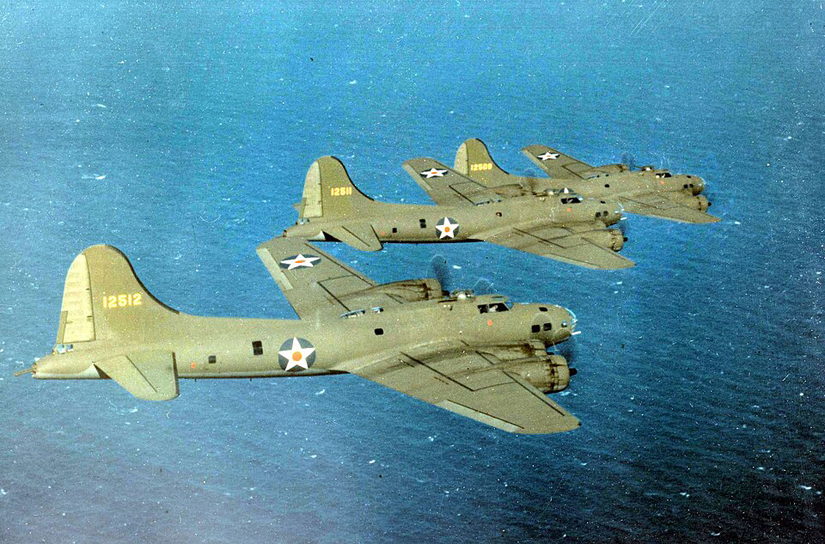
Coming soon from Helion and Company and author Dmitriy Khazanov is Air Battles over Hungary 1944-45 Volume 1: From Summer Skies to Autumn Firestorms: The Air War Over Hungary, 1944 – a “comprehensive, richly illustrated account” that surveys the escalating air war over Hungary in 1944, detailing fighter, bomber, and ground-attack operations across multiple nations and their human realities.

In the summer of 1944, Hungary found itself at the centre of a rapidly shifting front as Soviet forces surged westward and Allied bombing intensified. Air Battles over Hungary 1944–45 – Volume 1 offers a comprehensive, richly illustrated account of the escalating air war during this pivotal year, when the skies over Hungary became a deadly arena for fighters, bombers, and ground-attack aircraft from multiple nations.

This volume traces the development of the campaign from its early stages through to the final weeks of 1944. It explores in detail the operations and experiences of the Royal Hungarian Air Force, the Luftwaffe, the Red Air Force, and the United States Army Air Forces (USAAF). Drawing from a wealth of archival material, combat reports, memoirs, and previously unpublished photographs, the book reconstructs a dynamic and often chaotic picture of aerial combat as Hungary’s strategic importance grew. Continue reading WW2 Air Battles Over Hungary Detailed in New, Comprehensive, Richly illustrated Account

Please Note: This post contains an Amazon affiliate link. When you purchase through links on our site, we may earn an affiliate commission.
Posted on

Spitfire PR.XI PL983 Gets New USAAF Markings

The Aircraft Restoration Company’s Duxford-based Spitfire PR.XI PL983 (G-PRXI) has been given new, temporary markings in order to tell the wider story of reconnaissance Spitfires while giving a subtle nod to PL983’s postwar history, when it was gifted to the American Air Attaché use as his personal transport.

The new markings represent USAAF Spitfire PA892 “My Darling Dorothy” of the 14th Photographic Reconnaissance Squadron / 7th Photographic Reconnaissance Group. The markings were applied to represent the original RAF insignia being overpainted on base, “producing a subtle patchwork effect.”

From the moment we began marking out the stars and bars, it was obvious this scheme was going to have real presence. A Spitfire in American markings already catches the eye but there are plenty of details that make PA892 stand out even more. The yellow spinner gives the nose a bright flash of colour, while the hand-painted sign writing on the engine cowling adds that wonderfully human touch — the sort of detail that reminds you these aircraft were maintained, modified and personalised by real people working in real wartime conditions. Same with the red iron crosses, applied to acknowledge 30 photo sorties. Rather than looking too neat or factory-fresh, we applied with a makeshift stencil.

Click below to check out newly released images of the process and the finished product.

Continue reading Spitfire PR.XI PL983 Gets New USAAF Markings

Posted on

Airscale Details 1/32 Bristol Blenheim Progress With New Renders

Airscale has released a new set of renderings for their upcoming Bristol Blenheim Mk IV kit in 1/32 scale.

As previously reported, the Mk IV was the principal later version of the Blenheim light bomber, entering production in 1938 with a longer, redesigned glazed nose that gave the bombardier more room and visibility, plus added armor and more powerful 920-hp Bristol Mercury XV radial engines. Flown by a crew of three, it could carry roughly 1,000 lb of bombs and served widely with the RAF during WW2 in Europe, the Mediterranean, North Africa, and the Far East. Although fast by mid-1930s standards, it was increasingly vulnerable to modern fighters and anti-aircraft fire as the war progressed.

There will reportedly be an early version with the single VGO drum fed gun and no canopy blisters, and the later one with twin Brownings and blisters. Airscale’s latest update details the start on the B1 VGO turret, the tailfeathers and the Mercury engine. The developer states “lots more work ahead, but it is a wonderful aeroplane to work on.”

Check out additional renders below.

Continue reading Airscale Details 1/32 Bristol Blenheim Progress With New Renders

Posted on

SBD Dauntless: A Study of the U.S. Navy’s Vital WW2 Dive Bomber

Coming soon from author Ernest M. Snowden is SBD Dauntless: Naval History Special Edition, which builds on the expertise of the authors and historians of the Naval Institute Press to offer a study of this vital WW2 carrier-based dive bomber.

In 1942, half the aircraft spotted on an American carrier were SBD Dauntless dive bombers. From Coral Sea to Midway, they tipped over into near-vertical dives and released 1,000-pound bombs at close range against Japanese flight decks. Within minutes at Midway, three enemy carriers were burning, and by day’s end a fourth carrier was rendered a burning hulk. Across five carrier battles, SBD squadrons helped sink six Japanese flattops and more than 300,000 tons of shipping.

“The naval dive-bomber was to prove the hammerhead of the naval war,” wrote Naval Academy historian E. B. Potter. The tactic required an airplane built to dive steeply, hold steady as perforated brakes tore at the air, and survive the violent pullout. Ed Heinemann’s Douglas design did exactly that. Armor plates, self-sealing tanks, and more powerful Wright engines followed as combat exposed weaknesses and range limits.

Dauntless crews searched hundreds of miles of open ocean with little margin for error. Navy squadrons flew in every major carrier engagement of the Pacific War. Marine SBDs launched at Midway, then operated from Henderson Field during the struggle for Guadalcanal, striking ships and troop concentrations around the Solomons. The Army Air Forces’ A-24 Banshee saw combat in Java, New Guinea, and the Gilberts.

From its Gamma ancestry in the mid-1930s to its final carrier missions in 1944, the SBD stood at the center of the Navy’s early offensive―an aircraft built to dive hard, hit precisely, and change the course of an entire battle with a single attack.

The 116 page publication is offered in mook format (combination book / magazine) and is currently available for pre-order with release set for November 17.

Product Page

Please Note: This post contains an Amazon affiliate link. When you purchase through links on our site, we may earn an affiliate commission.
Posted on

ICM Releases Lockheed Hudson Mk.III Model Kit: “100% New Molds”

ICM has released a “100% new molds” Lockheed Hudson Mk.III model kit in 1/48 scale.

The Hudson Mk.III was a light bomber and maritime reconnaissance aircraft derived from the Lockheed Model 14 Super Electra airliner and built for the RAF just before World War II. This variant featured upgraded 1,200 hp Wright R-1820 Cyclone engines and a Boulton Paul dorsal turret with twin .303-inch machine guns, and was used extensively by the RAF, RAAF, and RNZAF for coastal patrol, anti-submarine work, and general reconnaissance from 1941 onward.

ICM recently released a brief, step by step instruction video detailing the assembly process for the new kit (48331). It appears to offer plastic sprues, painting masks and four livery options. Check out the video and product page below.

Continue reading ICM Releases Lockheed Hudson Mk.III Model Kit: “100% New Molds”

Please Note: This post contains an eBay affiliate link. When you purchase through links on our site, we may earn an affiliate commission.
Posted on

Flying Pianos: The Eccentric Birth of British Aviation

Coming soon from Oneworld Publications and author Charles Spicer is Flying Pianos: The Eccentric Birth of British Aviation, which surveys the transformation of flight from genteel gentleman’s hobby to terrifying military force.

In the first few decades of the twentieth century British aviators went from gliding a handful of yards to crossing the Atlantic. Journeying from perilous ‘cotton-and-hope’ prototypes to the Spitfire, Flying Pianos…

Charles Spicer meets the cast of colourful characters who helped Britain take flight. There’s Hugh ‘Boom’ Trenchard, eccentric ‘father’ of the RAF; the glamorous Harriet Quimby – journalist, screenwriter and record-breaking pilot; and Grahame Christie, passionate aviator, spy and uneasy acquaintance of Hermann Göring. Charting the soaring highs and catastrophic lows of this technological revolution, Flying Pianos tells the remarkable tale of how Britain took to the skies.

The 400 page, hardcover book is currently available for pre-order with release set for October 1.

Product Page

Please Note: This post contains an Amazon affiliate link. When you purchase through links on our site, we may earn an affiliate commission.

Posted on

Phase II of B-24 Liberator Relocation Complete – Aircraft to be Restored for Static Display

The National Museum of the Mighty Eighth Air Force in Pooler, GA has announced the completion of Phase II of their B-24 Liberator Project.

The B-24J-20-FO Liberator (S/N 44-487821) was originally built by the Ford Motor Company at Willow Run, Michigan 1944. It has been on outdoor display for decades, most recently at Barksdale Air Force Base in Louisiana. Over that time it has worn several liveries, including Laiden Maiden, Louisiana Belle II (seen above), and Rupert the Roo II.

In June 2025 plans were announced for the aircraft to relocate to The National Museum of the Mighty Eighth Air Force, a process that includes painting and restoration. The aircraft is on loan from the National Museum of the United States Air Force.

Phase I was completed in May with the ailerons, flaps, horizontal stabilizers, turrets, propeller assemblies, and all four engines being cataloged and removed for transport and restoration. The completion of Phase II saw the wing assembly, fuselage, and remaining major components leave Barksdale for restoration at offsite locations.

The aircraft will be installed within the museum’s expanded galleries for public exhibition with the projected date being sometime in the spring of 2027. Click below to check out newly released photos of the ongoing work.

Continue reading Phase II of B-24 Liberator Relocation Complete – Aircraft to be Restored for Static Display

Posted on

“Luftwaffe Night Fighter Aces” Profiles 70 WW2 Aces From Victories to Fates

Coming soon from Frontline Books and author Jeremy Dixon is Luftwaffe Night Fighter Aces: Battling the Allies’ Bombers: Night Fighter Pilots Awarded the Knight’s Cross in WW2.

This is a study of the seventy Luftwaffe night fighter aces who were awarded the Knight’s Cross and its higher grades between 1940 and 1945. Of this number, two were night fighter pilots who were awarded the Knight’s Cross with Diamonds, while another two who were awarded the Knight’s Cross with Swords, and twenty-four who were awarded the Oakleaves.

The 232 page, hardcover book also explores the ranks, commands, victories, and fates for each ace profiled. It is currently available for pre-order with release set for December 30.

Product Page

Please Note: This post contains an Amazon affiliate link. When you purchase through links on our site, we may earn an affiliate commission.
Posted on

Italeri Releases 1/48 Macchi MC. 202: “100% New Molds, Exceptional Attention to Detail”

Italeri has released their new tool Macchi MC. 202 Folgore in 1/48 scale.

The Folgore (“Thunderbolt”) was an Italian single-seat fighter developed from the MC.200 and introduced in 1941. Its streamlined all-metal airframe and license-built German Daimler-Benz DB 601 engine—produced in Italy as the Alfa Romeo RA.1000—gave it a top speed of about 600 km/h (370 mph), excellent maneuverability, and strong performance in combat over North Africa and the Mediterranean. Although widely regarded as the Regia Aeronautica’s finest wartime fighter, its relatively light armament of two 12.7 mm and two 7.7 mm machine guns was a significant weakness against heavily built Allied aircraft.

The kit (2840) is touted as delivering the highest level of realism, being made from 100% new molds produced using the most advanced design and manufacturing standards. It is also described as offering exceptional attention to detail with 3D decals (six liveries) and photo-etched parts.

Buy on eBay

Please Note: This post contains an eBay affiliate link. When you purchase through links on our site, we may earn an affiliate commission.
Posted on

How The Fairey Fulmar Became The Fleet Air Arm’s Unlikely Hero

Coming soon from The Crowood Press and author Matthew Willis is Fairey Fulmar: The Fleet Air Arm’s Unlikely Hero, billed as “the remarkable story of how a make-do fighter proved itself indispensable in the harshest theatres of war.”

Fairey Fulmar –The Fleet Air Arm’s Unlikely Hero charts, for the first time, the full history of the Fairey Fulmar naval fighter. A hastily converted light bomber, rejected by the RAF and increasingly obsolete against Messerschmitts and Zeroes, somehow the Fulmar became the top-scoring Royal Navy fighter aircraft of World War II. This first comprehensive study of the Fulmar’s design, development and operational service.

The 176 page, hardcover book is currently available for pre-order with release set for February 9, 2027.

Product Page

Please Note: This post contains an Amazon affiliate link. When you purchase through links on our site, we may earn an affiliate commission.