Posted on

How The Fairey Fulmar Became The Fleet Air Arm’s Unlikely Hero

Coming soon from The Crowood Press and author Matthew Willis is Fairey Fulmar: The Fleet Air Arm’s Unlikely Hero, billed as “the remarkable story of how a make-do fighter proved itself indispensable in the harshest theatres of war.”

Fairey Fulmar –The Fleet Air Arm’s Unlikely Hero charts, for the first time, the full history of the Fairey Fulmar naval fighter. A hastily converted light bomber, rejected by the RAF and increasingly obsolete against Messerschmitts and Zeroes, somehow the Fulmar became the top-scoring Royal Navy fighter aircraft of World War II. This first comprehensive study of the Fulmar’s design, development and operational service.

The 176 page, hardcover book is currently available for pre-order with release set for February 9, 2027.

Product Page

Please Note: This post contains an Amazon affiliate link. When you purchase through links on our site, we may earn an affiliate commission.

Posted on

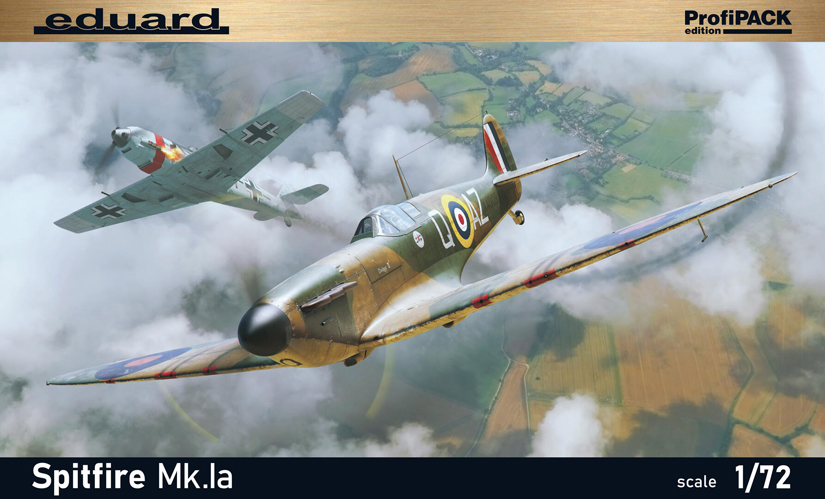
Eduard Releases New Weekend Edition Bf 109F-4 Model Kit

Included in Eduard’s new August releases is this Bf 109F-4 model kit in 1/72 scale.

The Bf 109F-4 was a refined 1941 version of Germany’s main WWII fighter, prized for its clean aerodynamics, strong climb, and responsive handling. Powered by a Daimler-Benz DB 601E engine, it carried a 20 mm cannon firing through the propeller hub and two 7.92 mm machine guns, serving widely on the Eastern Front, over the Channel, and in the Mediterranean.

Eduard’s new offering (7478) is a Weekend Edition kit featuring Eduard plastic parts and decals with marking options for four aircraft.

Buy on eBay

Please Note: This post contains an eBay affiliate link. When you purchase through links on our site, we may earn an affiliate commission.
Posted on

Eduard Releases Limited Edition, Dual Combo Fw 190A-8 and Fw 190D-9 Kit

Among Eduard’s new releases for August is a new limited edition, dual combo Fw 190A-8 and Fw 190D-9 kit in 1/48 scale.

The Fw 190A-8 was the principal late-war radial-engine “Anton,” entering production in 1944 with a BMW 801D-2 air-cooled engine, heavier protection and armament—normally two 13 mm MG 131 machine guns plus four 20 mm MG 151/20 cannon—and provisions for bombs, rockets, drop tanks, or high-altitude boost equipment; it was widely used in bomber interception, fighter, and fighter-bomber roles. The Fw 190D-9, the “long-nosed Dora,” was an aerodynamic, liquid-cooled Jumo 213-powered development intended to remedy the A-series’ declining high-altitude performance: its lengthened nose and revised rear fuselage housed a substantially more powerful engine, giving better climb and speed—about 430 mph under favorable conditions—while retaining a relatively lighter standard armament of two 13 mm MG 131s and two 20 mm MG 151/20s. In short, the A-8 was the rugged, heavily armed radial-engine workhorse, while the D-9 was the faster, higher-performing late-war interceptor and air-superiority variant.

The new kit (WILDE SAU Episode Three: Until the Fall of the Empire / 11199) includes Eduard plastic parts, pre-painted PE parts, painting mask, resin wheels and Eduard decals with marking options for 11 aircraft. The kit is focused on aircraft from JG 300, JG 301 and NJGr. 11.

Buy on eBay

Please Note: This post contains an eBay affiliate link. When you purchase through links on our site, we may earn an affiliate commission.
Posted on

Eduard Releases New P-40K Warhawk (Short Tail) With PE Details, Six Liveries

Eduard has released a new ProfiPACK Edition P-40K Warhawk (Short Tail) model kit in 1/48 scale.

The P-40K “Short Tail” was an early-production form of Curtiss’s Allison-powered P-40K fighter, distinguished by the original short rear fuselage shared with the P-40E and a prominent dorsal fin fillet ahead of the vertical tail, added to counter the stronger engine’s directional-instability and torque effects. Powered by a 1,325-hp Allison V-1710-73, it was among the fastest P-40 variants to that point—about 370 mph at 20,000 feet. It retained the type’s rugged fighter-bomber character, typically with six .50-caliber machine guns. Beginning with the P-40K-10, Curtiss adopted the longer rear fuselage used on later P-40Fs, making the earlier K-1 and K-5 series the “short-tail” machines familiar to historians and modelers; It is also known as the Kittyhawk Mk III for Commonwealth-operated examples.

Eduard’s new release (82243) includes Eduard plastic parts, pre-painted PE parts, painting masks, and Eduard decals with six marking options.

Buy on eBay

Please Note: This post contains an eBay affiliate link. When you purchase through links on our site, we may earn an affiliate commission.
Posted on

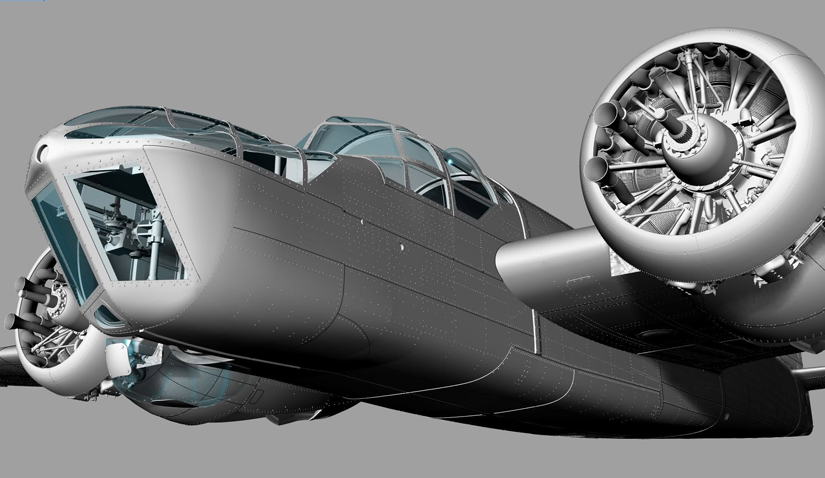
Airscale Announces Development of Bristol Blenheim Mk IV Kit

Airscale has announced the development of a Bristol Blenheim Mk IV model kit in 1/32 scale.

The Mk IV was the principal later version of the Blenheim light bomber, entering production in 1938 with a longer, redesigned glazed nose that gave the bombardier more room and visibility, plus added armor and more powerful 920-hp Bristol Mercury XV radial engines. Flown by a crew of three, it could carry roughly 1,000 lb of bombs and served widely with the RAF during WW2 in Europe, the Mediterranean, North Africa, and the Far East. Although fast by mid-1930s standards, it was increasingly vulnerable to modern fighters and anti-aircraft fire as the war progressed.

Regarding the project, Airscale states

I am still refining the options, but there will be an early one with the single VGO drum fed gun and no canopy blisters, and the later one with twin Brownings and blisters – lots of marking options to choose from too and plenty of heroic airframes I started with the nose as if I can do that, I can do the whole airframe – it was challenging and took a few weeks, but the design is done and now it is a matter of working out the best way to split the transparent parts.

Release is planned for mid 2027. Click below to check out additional renders.

Continue reading Airscale Announces Development of Bristol Blenheim Mk IV Kit

Posted on

Jagdverband 44, the Me 262 and the Luftwaffe’s Mavericks

Coming soon from Osprey and author Robert Forsyth is Jagdverband 44: The Luftwaffe’s Mavericks, the dramatic story of Jagdverband 44, the squadron of aces founded by leading Luftwaffe pilot Adolf Galland equipped with the new Messerschmitt Me 262 jet fighter.

Jagdverband (JV) 44 was formed as a result of conflict and dissent within the Luftwaffe’s high command. Following disagreement with Reichsmarschall Herman Göring, the commander of the fighter arm, Adolf Galland, was dismissed from his post and exiled. He was given permission to set up a small fighter unit with which to prove that the revolutionary Me 262 was the war-winning jet fighter he believed it to be.

Assembling a small group of disillusioned and weary Luftwaffe fighter aces and flying instructors, Galland – arguably the most famous German fighter ace of World War II – moved his unit, JV 44, to Munich, from where it operated the Me 262 against USAAF aircraft bombing targets in Austria and southern Germany.

In this reappraisal of JV 44, published 30 years after his acclaimed and bestselling first study of the unit, leading Luftwaffe historian Robert Forsyth assesses Galland’s motives for forming the unit and whether it can be regarded more accurately as a ‘Squadron of Aces’ or a ‘Squadron of Outcasts and Exiles’. The book contains numerous first-hand accounts sourced by the the author during his research in the 1990s when he met with several former pilots from the squadron.

The 448 page book is currently available for pre-order in hardcover, audiobook and Kindle editions with release set for November 3.

Product Page

Please Note: This post contains an Amazon affiliate link. When you purchase through links on our site, we may earn an affiliate commission.
Posted on

New Renders Detail Rare Birds Models’ Upcoming LeO H.246 Flying Boat

Rare Bird Models has released a series of renderings for their upcoming Lioré et Olivier LeO H.246 flying boat in 1/72 scale.

The H.246 was a French four-engine commercial flying boat developed in the late 1930s for Air France’s Mediterranean services, particularly routes linking southern France with North Africa. A high-wing parasol monoplane with a duralumin hull, it carried a crew of four and up to 26 passengers; its prototype first flew from Étang de Berre on 30 September 1937. Only six production aircraft were completed, and the war interrupted their intended civil role: examples served with Vichy French forces and, after capture, the Luftwaffe, while the surviving aircraft briefly returned to Air France service on the Marseille–Algiers route after 1945 before retirement in 1946.

The new renderings detail a “third possible option” representing F-AREN, which was captured by the Luftwaffe and used as a transport aircraft under registration 24+63. It was later deployed by KG200 in Norway. The armament includes 4 x MG15 in side positions and a MG13 in nose turret. As an additional option there will be 2 passenger salon interior versions – either with 11 x two stored stretchers or with 26 × seats for soldiers.

Click below to check out additional renders.

Continue reading New Renders Detail Rare Birds Models’ Upcoming LeO H.246 Flying Boat

Posted on

Update: Airscale’s Upcoming 1/32 Dornier Do 17Z

Airscale has provided a new update on their upcoming Dornier Do 17Z in 1/32 scale.

…the decals arrived from Cartograph…..I tried the internal ones and they are just what I envisioned and top, top quality. Also the box art is finalised and the last mould is being completed next week for all the injection moulded parts, so I should have the test shots in 2 weeks – then it is test integration time with the 3D details, followed by 3D production. I hope to open pre-orders in the next couple of months and to have kits at Telford SMW

As previously reported, the Do 17 was a German twin‑engine light bomber, nicknamed the “Flying Pencil” for its slim, streamlined fuselage, which was originally designed in the early 1930s as a fast mail and passenger aircraft before being adapted into a military bomber for the Luftwaffe. It served extensively in the early years of World War II, taking part in campaigns over Poland, the Low Countries, France, the Battle of Britain, and the invasion of the Soviet Union, where it proved fast and maneuverable but gradually became obsolete due to limited bomb load and range.

Click below to check out a series of newly released images.

Continue reading Update: Airscale’s Upcoming 1/32 Dornier Do 17Z

Posted on

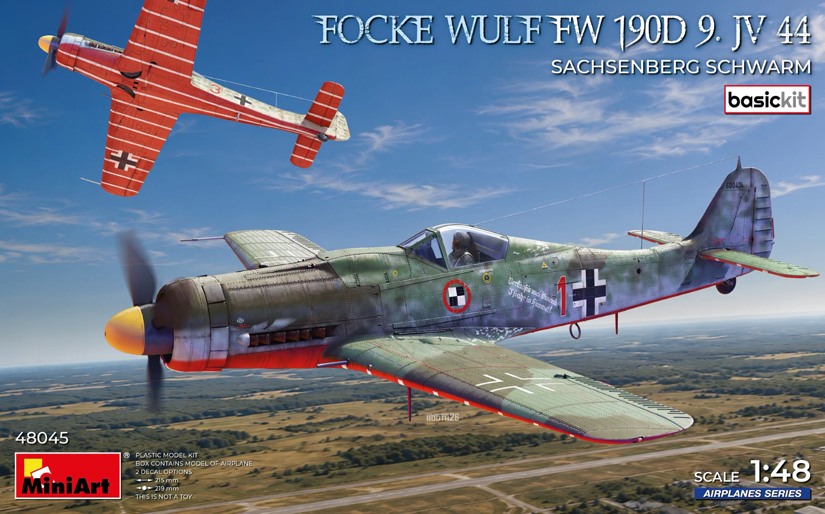
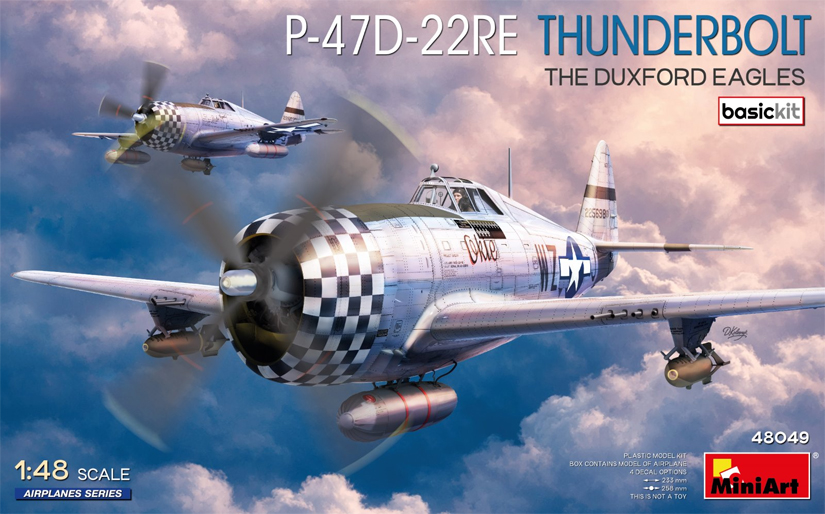
MiniArt to Release “Highly Detailed” P-47M Thunderbolt Advanced Kit

MiniArt has announced the upcoming release of a P-47M Thunderbolt Advanced Kit in 1/48 scale.

The P-47M varint was a late-war, high-speed Thunderbolt built for fast interception, using an uprated Pratt & Whitney R-2800 engine and featuring the dorsal fin on the rear fuselage to improve directional stability with the bubble canopy. It was the quickest production P-47, but engine teething troubles limited its combat use, and it saw service only briefly with the 56th Fighter Group in Europe.

The upcoming kit (48042) is described as “highly detailed” with realistic representations of the metal surfaces, rivets and panel lines. Three decal options will also be included. The company previously released a Basic version with two marking options (Buy on eBay)

As of this writing, the new advanced kit is said to be “coming soon.” Click below to check out a series of newly released renderings.

Continue reading MiniArt to Release “Highly Detailed” P-47M Thunderbolt Advanced Kit

Please Note: This post contains an eBay affiliate link. When you purchase through links on our site, we may earn an affiliate commission.
Posted on

Scanning the Skies: Radar Research and Development Flying 1935-1977

Coming soon from Crecy Publishing and author Dennis Williams is Scanning the Skies: Radar Research and Development Flying 1935-1977

This book offers a detailed overview of a complex yet fascinating aspect of British aviation history, about which comparatively little has been published. The early development of radar in Britain culminated in the successful introduction of ground-based radar, which played a crucial role during the Battle of Britain. This was followed by the considerable challenges of designing airborne systems that had to be compact, lightweight, and energy-efficient. The widespread use of radar and other electronic systems (including countermeasures) made a significant contribution to the major operations of RAF Coastal Command in the North Atlantic and Bomber Command over Europe; these aspects are covered in detail. During the Cold War, development priorities included navigation and guidance systems for the V-bombers and guided missile projects. Equally important as the scientific advances were the aircraft on which these technologies were tested. A large part of the book is devoted to the aircraft types used in British radar research and development over five decades, from the modifications required for this specialized task and the airfields used to operate them to the operational procedures. The development of aircraft, on the one hand, and the radar and other electronic systems tested on them, on the other, combine to form a coherent history of aviation in the service of scientific research. The account essentially follows a chronological sequence and illustrates how the rapid development of airframes and engines, as well as the advances in electronics and later in computer technology, went hand in hand throughout the entire period under consideration.

The hardcover book is currently available for pre-order with release set for October 31.

Product Page

Please Note: This post contains an Amazon affiliate link. When you purchase through links on our site, we may earn an affiliate commission.