
Posted on

Follow the 9th Bomb Squadron Into WW2’s Most Dangerous Flying Conditions

Coming soon from McFarland Publishing and author Charles B. Kastner is To War and Back with the 9th Bomb Squadron: In the Skies Over Burma, Thailand, and China in 1945:

Written by his son, and incorporating his father’s stories, personal papers, and original research, this work follows Lt. Walt Kastner from the start of World War Two until its end. Walt joined a new B-24 bomber crew that fought with the 9th Bomb Squadron from its base in India during the drive to liberate Burma from the Japanese Army. His air crew attacked Japanese troop concentrations that barred the advance of the British 14th Army and flew missions deep into Thailand, including attacking the Burma-Siam Railway, the crucial rail link that carried supplies that fed and equipped the Japanese Army in Burma–a railway made famous by the movie The Bridge on the River Kwai. When air combat ended in May 1945, the squadron moved to Assam in eastern India where they hauled aviation gasoline over “the Hump” to the 14th Air Force in China, exposing them to the most dangerous flying conditions in the world.

The 155 page book is currently available for pre-order with release set for August 21.

Product Page

Please Note: This post contains an Amazon affiliate link. When you purchase through links on our site, we may earn an affiliate commission.
Posted on

Defeating the Zero: How a Tactical Innovation Overcame Japan’s Deadly Fighter

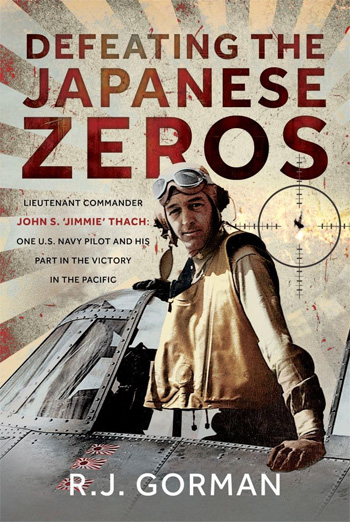
Coming soon from Air World and author R J Gorman is Defeating the Japanese Zeros: Lieutenant Commander John S. ‘Jimmie’ Thach: One U.S. Navy Pilot and his Part in the Victory in the Pacific , detailing how a brilliant U.S. aerial tactic overcame Japan’s deadly Zero fighter, turning Midway into a decisive Pacific victory.

Lieutenant Commander John S. “Jimmie” Thach of the U.S. Navy recognized the threat posed by the Zero and devised a tactic to counter it. With the Japanese preparing to attack Midway Atoll, Thach trained his pilots in the “Thach Weave,” a revolutionary formation designed to offset the Zero’s superior performance. This tactic proved highly effective in air combat and allowed Thach’s squadron to neutralize the Japanese advantage. The battle at Midway became a turning point in the Pacific War. The U.S. Navy’s victory, aided by Thach’s tactical innovation, crippled Japan’s offensive capabilities. After Midway, the Japanese would never win another major battle, while the Americans would never lose one, marking a decisive shift in the war’s outcome.

The 240 page, hardcover book is currently available for pre-order with release slated for January 30.

Product Page

Please Note: This post contains an Amazon affiliate link. When you purchase through links on our site, we may earn an affiliate commission.