
Sword Models to Release New Tool Fairey Firefly Mk.5 / FR.Mk.5 Kits
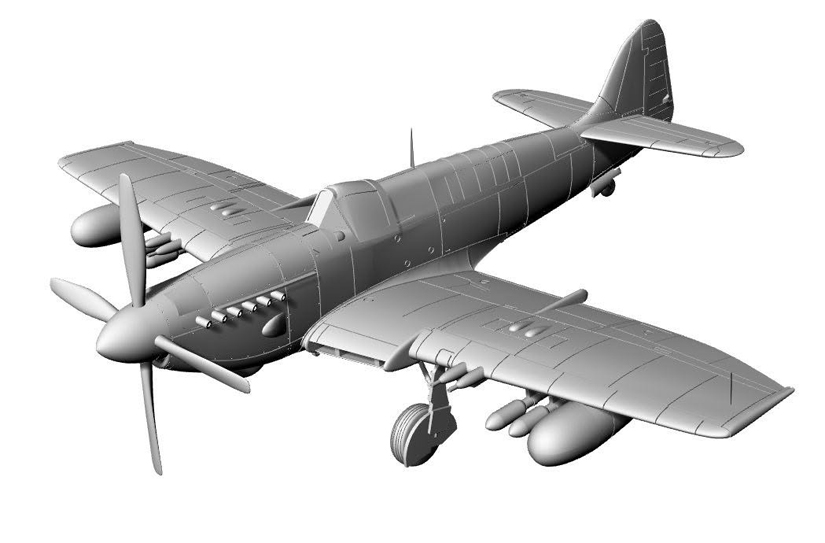
Sword Models has announced the upcoming release of a new tool, 1/72 Fairey Firefly that will be available in to boxings: Firefly FR.Mk.5 (SW72164 / FAA, RCAF, Kon. Marine) and Firefly Mk.5 over Korea (SW72165).
The Firefly Mk.5 was a postwar development of the British two-seat carrier aircraft, combining a Rolls-Royce Griffon 74 engine with power-folding wings and equipment suited to tropical operations. Introduced in 1948, it formed the basis of fighter-reconnaissance (FR), night-fighter (NF), and anti-submarine (AS) versions; the FR.Mk.5 was a specific variant of the Mk.5 armed with four 20 mm cannon and able to carry bombs or rockets. The FR.Mk.5 undertook reconnaissance and strike missions, notably flying ground-attack sorties from Royal Navy carriers during the Korean War.
Both boxings will be available some time in November. Additional details are scarce, although Sword did release box art, livery profiles and a few sprue photos which can be seen below.
Continue reading Sword Models to Release New Tool Fairey Firefly Mk.5 / FR.Mk.5 Kits
1976 Bellanca Super Viking For Sale: “Great Condition, Fully IFR Equipped”
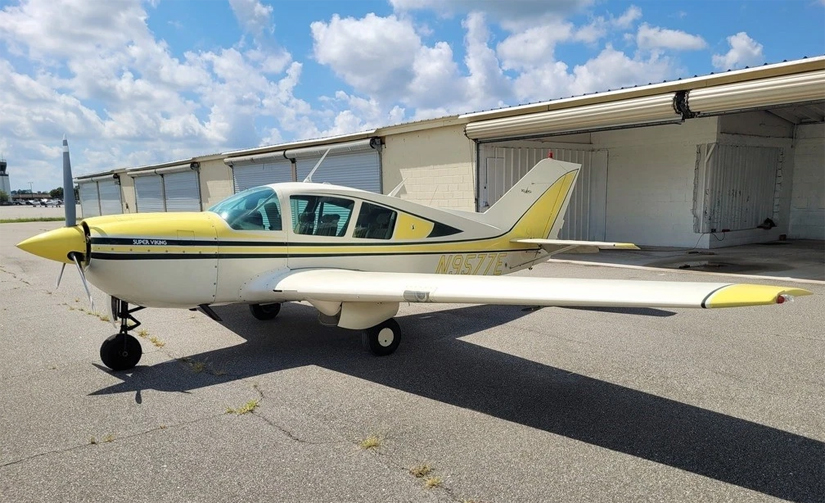
A 1976 Bellanca Super Viking has been spotted for sale. The listing states (in part):
This 1976 Bellanca Super Viking is a distinctive single-engine aircraft known for its sleek lines and performance-oriented touring design. The Super Viking family has long appealed to pilots seeking an individual alternative to more common four-seat personal aircraft. The aircraft is described as fully IFR equipped and in great condition, with a figure of 1,500 supplied in the notes.
The aircraft is located in Saint Augustine, Florida with offers currently being accepted. Click here to check out the eBay listing, which includes additional photos and details.
Please Note: This post contains an eBay affiliate link. When you purchase through links on our site, we may earn an affiliate commission.
USAF Museum to Restore CASA 2.111H / Heinkel He 111 [Video]
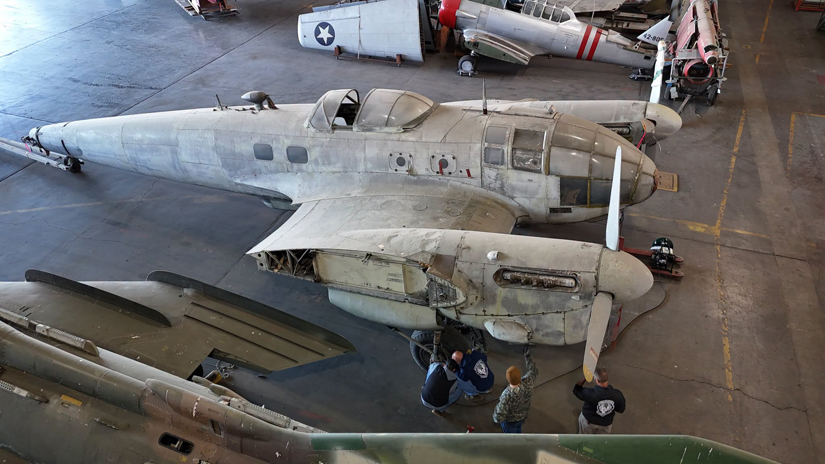
The National Museum of the U.S. Air Force in Dayton, Ohio has announced the upcoming restoration of their CASA 2.111H (Spanish HE-111H).
The CASA 2.111H was a Spanish-built development of the German Heinkel He 111H-16 twin-engine medium bomber, manufactured under license by Construcciones Aeronáuticas S.A. First flown in May 1945, the CASA 2.111 retained the Heinkel’s distinctive glazed nose and broad wings. Early aircraft used German Junkers Jumo engines, while later examples received British Rolls-Royce Merlins because of engine-supply difficulties. The type served with the Spanish Air Force into the early 1970s and became familiar to cinema audiences portraying Luftwaffe bombers in the 1969 film Battle of Britain.
The museum’s example was donated by the Spanish Air Force and has been in the museum’s storage facility for some time. The newly released photos / video, which can be seen below, appears to show the aircraft being relocated to the restoration hangar. As of this writing, additional details, such as a timeframe for completion, have not been announced.
Continue reading USAF Museum to Restore CASA 2.111H / Heinkel He 111 [Video]
LukGraph Shares First Test Prints For Ambitious, Entirely New DH.89 Dragon Rapide Kit
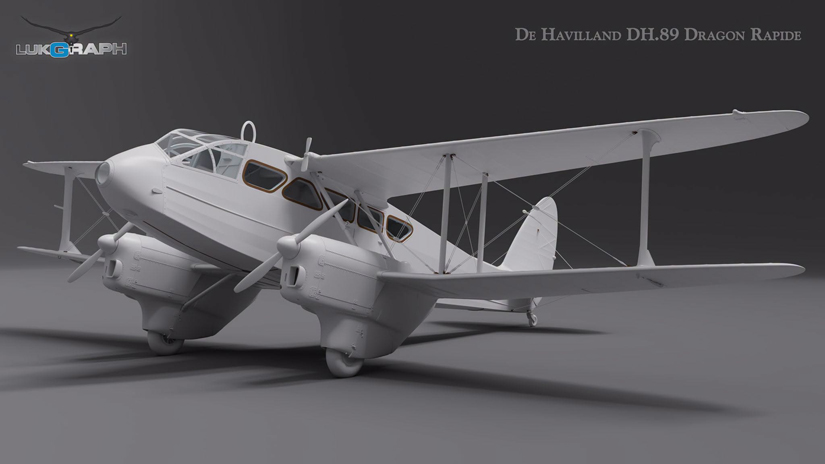
LukGraph has shared the first test print photo for their “entirely new,” fully printed de Havilland DH.89 Dragon Rapide project.
The DH.89 was a British twin-engine biplane airliner that first flew on 17 April 1934. Designed to carry six to eight passengers, it combined lightweight wooden construction with two 200 hp Gipsy Six engines, becoming one of the most successful British short-haul transports of the 1930s. During the Second World War, military versions served as the Dominie, principally in navigation training and communications roles. A total of 728 Rapides and Dominies were built, and many continued flying commercially after the war, notably on regional and island routes.
This is a complete redesign from the 1/32 Dragon Rapide LukGraph developed back in 2020, with “every curve, panel, surface and rivet carefully reconsidered.” Plans are to release the new kit in 1:72, 1:48, 1:32, and 1:24 scales. The 1/32 offering is especially ambitious, and will include four different boxings featuring around 15 different paint schemes in total. They note that the project is progressing very well with ongoing testing, printing and refining underway.
Click below to check out test print photo, as well as renderings.
Kitfox II For Sale: “Fresh Annual, Always Hangared”
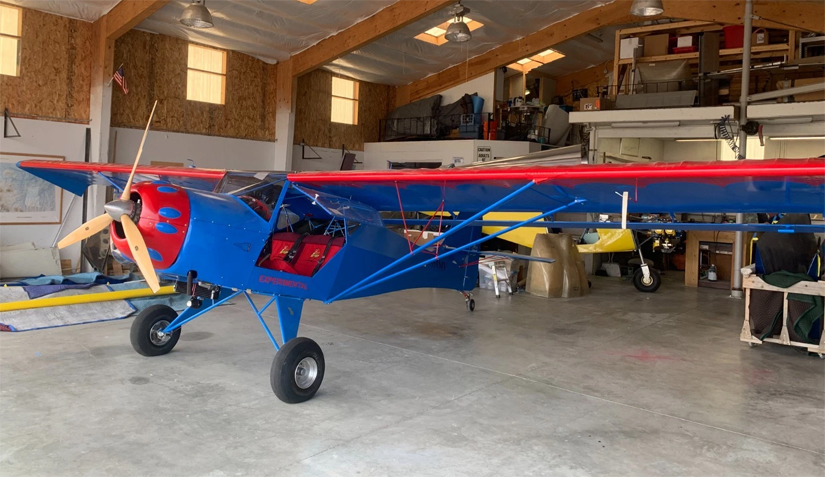
A Kitfox II has been spotted for sale. The listing states (in part):
Kitfox 2 LSA Aircraft. (Kitfox II). Built in Canada and certificated in 1999. Engine: Rotax 582 Liquid Cooled. Total engine Hours:73 Hrs. Total Airframe Hours: 73 Hrs. Fresh annual been completed. New Tires, Fuel pump overhauled, Carburetor Cleaned and balanced. Always hangared. Aircraft based in GTF (Great Falls, Montana. Purchased in August of 2017 and Imported to the USA. FAA Experimental Certificate issued in November of 2021.
The aircraft is located in Great Falls, Montana and is currently available for US $33,000 although bids are also being accepted. Click here to check out the eBay listing, which includes additional photos and details.
Please Note: This post contains an eBay affiliate link. When you purchase through links on our site, we may earn an affiliate commission.
Coming Soon: Four-Volume History of Lend-Lease and Soviet Aviation in WW2
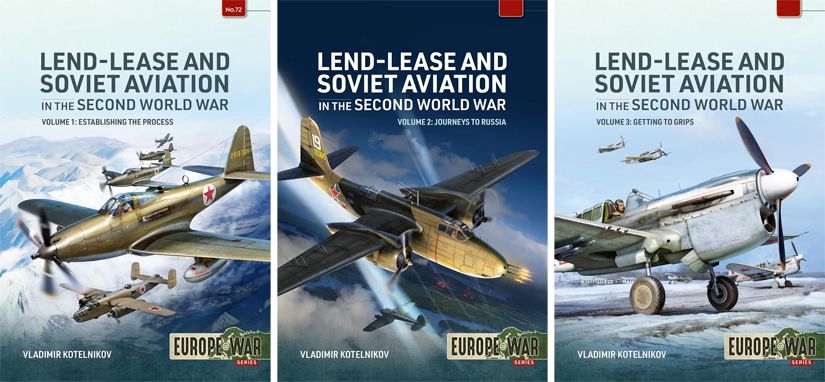
Coming soon from Helion and Company and author Vladimir Kotelnikov’s new series Lend-Lease and Soviet Aviation 1941–1945 which examines how Allied Lend-Lease aircraft supported Soviet aviation during the Second World War and influenced its postwar development.
Volume 1 traces the programme’s diplomatic origins, delivery routes, and early operational use in 1941–42, highlighting the challenges of introducing Hurricanes, Kittyhawks, and other Western aircraft into Soviet service. Volume 2 focuses on British and American fighters—including the Hurricane, Spitfire, P-40, Airacobra, and Kingcobra—examining their delivery, deployment, technical characteristics, and influence on Soviet tactics. Volume 3 covers bombers, transports, and maritime aircraft, including the A-20 Boston, B-25 Mitchell, C-47, and PBY Catalina, assessing their contributions to combat operations, frontline supply, and naval warfare. Volume 4 evaluates the programme’s overall impact from 1941 to 1945, weighing operational successes and shortcomings, examining maintenance and supply challenges, and exploring how Allied deliveries relieved pressure on Soviet industry and shaped postwar aircraft development and doctrine. Drawing on Soviet and Western archives, operational records, and first-hand accounts, the series combines rare photographs, colour profiles, maps, and technical and statistical tables to document Lend-Lease aviation’s contribution to Soviet victory and its lasting legacy.
The books will be available in paperback format. Vol 1 has 72 pages, while vol 2 has 104 pages. Both will be available on January 15, 2027. Vol 3 has 104 pages and will be released on November 30, 2026. Vol 4 has 104 pages and will be released on December 31. All four volumes are currently available for pre-order.
Product Page (Vol 1)
Product Page (Vol 2)
Product Page (Vol 3)
Product Page (Vol 4)
Please Note: This post contains an Amazon affiliate link. When you purchase through links on our site, we may earn an affiliate commission.
MiniArt to Release 1/48 Junkers F13 (Mid) in Italian, Czechoslovakian, Austrian and Bolivian Service
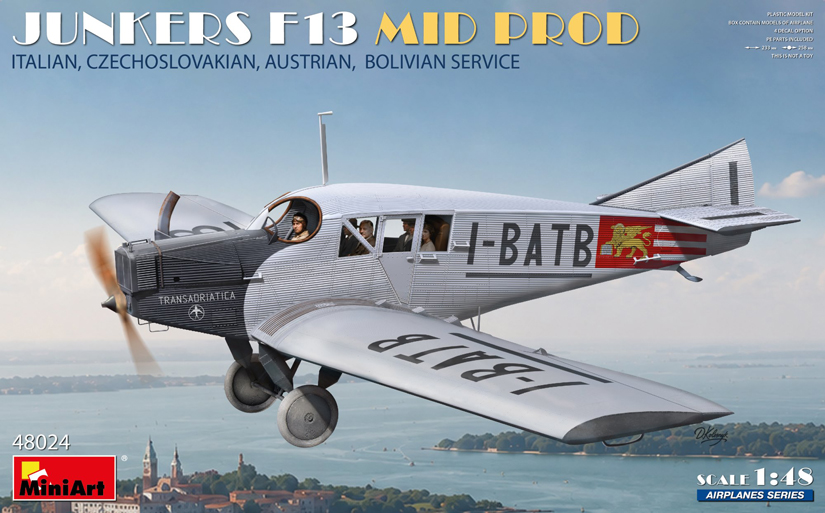
MiniArt has announced the upcoming release of a 1/48 Junkers F13 (Mid Production) in Italian, Czechoslovakian, Austrian and Bolivian Service.
The F13 was a pioneering all-metal airliner, with the mid-production versions helping to expand aviation during the 1920s and 1930s. Its corrugated duralumin construction, cantilever wing and enclosed four-passenger cabin offered a practical design for early commercial operations. In Italy, Transadriatica used the F13 on international routes, inaugurating its Venice–Klagenfurt–Vienna service in August 1926; in Austria, Österreichische Luftverkehrs AG (ÖLAG) operated the type on its developing airline network. Czechoslovak examples served both airline and military aviation organizations, while Bolivia’s Lloyd Aéreo Boliviano employed F13s to establish vital air links across difficult terrain. Together, these operators demonstrated the design’s adaptability to European transport networks and the demanding conditions of South American aviation.
The kit (48024) is described as highly detailed with fine exterior surface detail, photo-etched parts and four marking options. The kit is labeled as “coming soon,” although a final release date has not been announced. Check out box contents and livery profiles below.
Aero Commander 500 For Sale: “Excellent Condition, Airworthy and Flown Regularly”
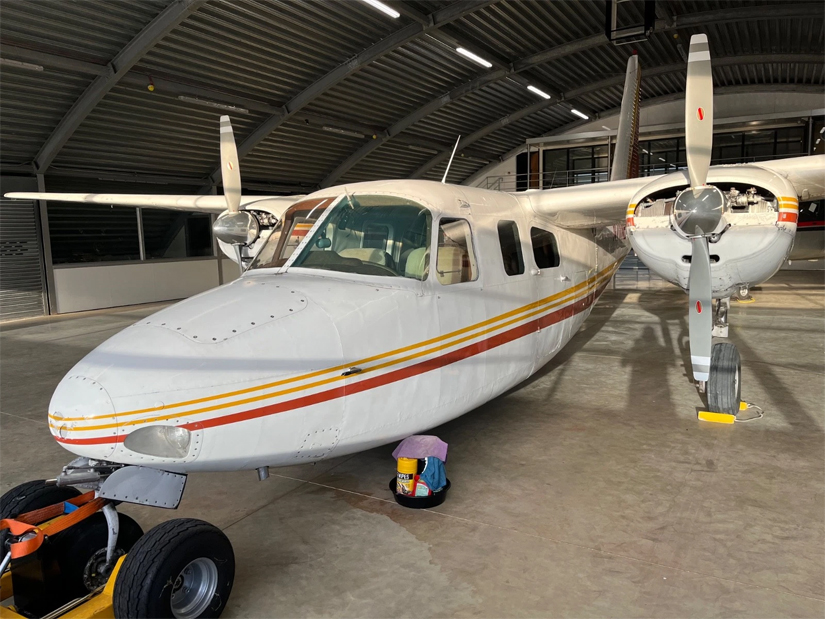
An Aero Commander 500 has been spotted for sale. The listing states (in part):
Excellent condition, airworthy and flown regularly… Hangared. Current CofA. N711NE takes that solid foundation and adds a current annual inspection plus a modernised cockpit featuring a Garmin 430 and dual Garmin G5 electronic flight displays. Whether you’re flying family, clients, or cargo, you’ll enjoy a spacious cabin, excellent visibility, and the reassurance that comes from a twin-engine platform with a reputation for getting the job done. If you’re looking for a classic piston twin that blends heritage charm with modern avionics – and is ready to work or play from day one – N711NE should be at the top of your list.
The aircraft is located in East Midlands, UK and is currently available for £80,000 although offers are also being accepted. Click here to check out the eBay listing, which includes additional photos.
Please Note: This post contains an eBay affiliate link. When you purchase through links on our site, we may earn an affiliate commission.
Allison-Powered P-51 Mustang Development, Design, Service and Tech Details Detailed in New Book
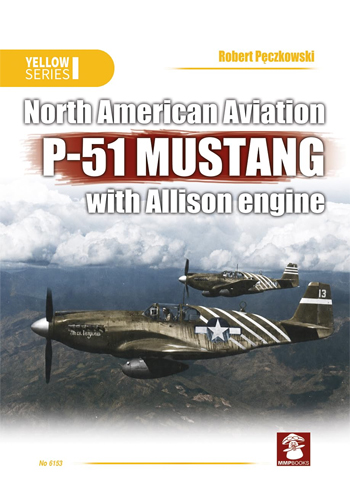
Coming soon from MMP Books and author Robert Pęczkowski is NAA P-51 Mustang with Allison engine (Yellow Series), which traces the development, wartime service, design evolution, and technical features of the Early Allison-engined P-51 Mustang through detailed illustrations.
This book presents the history, development and operational service of the early Allison-engined versions of the North American P-51 Mustang. It covers the aircraft’s design evolution, wartime use and technical features. Illustrated with wartime and detailed photographs, colour profiles, scale plans and technical drawings, it is a valuable reference for aviation historians and modellers.
The paperback book is currently available for pre-order with release set for January 15. The date will also see the release of the second edition publication on the NAA A-36A Mustang dive-bomber variant.
Please Note: This post contains an Amazon affiliate link. When you purchase through links on our site, we may earn an affiliate commission.
First Look: Liveries for IBG’s Upcoming Fieseler Fi 156D-1 Storch Ambulance
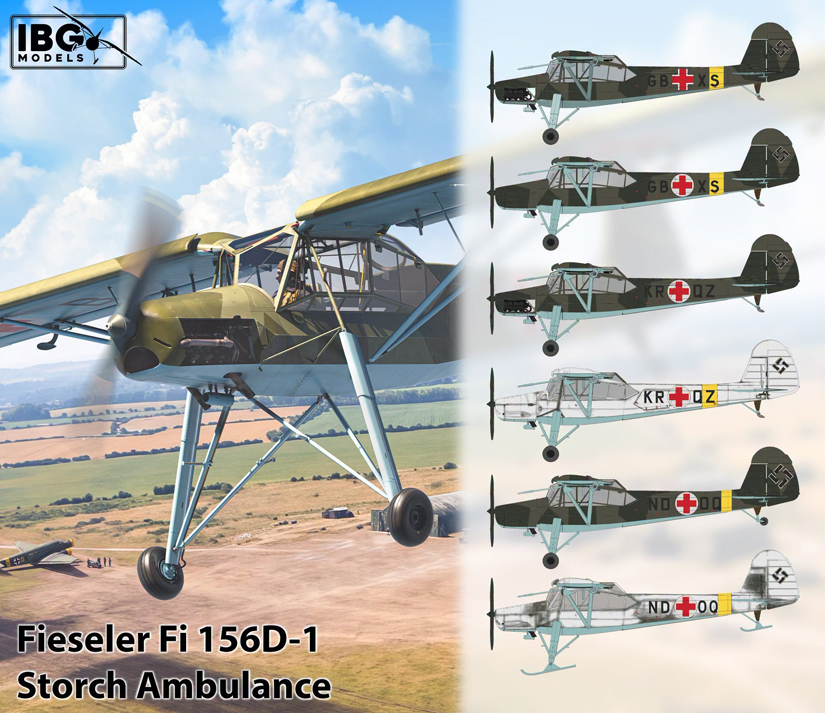
IBG has released livery profiles for their upcoming Fieseler Fi 156D-1 Storch Ambulance in 1/72 scale.
The Fi 156D-1 was a purpose-built ambulance version of Germany’s famous short-takeoff-and-landing liaison aircraft, produced during World War II. It featured an enlarged loading hatch on the starboard side of the rear fuselage and accommodation for a single stretcher patient and a medical attendant, allowing wounded personnel to be evacuated from forward areas. Its high-lift wing, fixed leading-edge slats, large flaps, and long-legged landing gear enabled operations from small, rough landing grounds, making the D-1 particularly useful where conventional aircraft or ground ambulances could not readily reach.
As previously reported, IBG released teaser images in September and stated that all production variants would eventually be represented. To date, renderings have been released for the 156C-2 “Storch At War” which is slated for release at the end of the month. The Fi 156D-1 Storch Ambulance will reportedly be available “very soon.”
Check out full livery three-views below.
Continue reading First Look: Liveries for IBG’s Upcoming Fieseler Fi 156D-1 Storch Ambulance