
Posted on

Trace the Harrier’s Transformation From Prototype to Revolutionary Combat Aircraft

Coming soon from Fonthill Media and author Tim Brandt is The Royal Air Force Germany Harrier Force: Volume 1: Development and Deployment 1970-1973. This new account traces the Harrier aircraft’s transformation from prototype to complex war machine through the RAF Germany Harrier Force’s early years, detailing field operations, development, and the people who mastered vertical flight.

Royal Air Force Germany was the chief operator of the RAF’s Harriers during the Cold War. Its Harrier Force remains the only unit to have routinely taken large numbers of fast-jet aircraft into unprepared fields and woods, operating them in constant readiness for combat.

This book, the first of three volumes on the RAF Germany Harrier Force, describes how the aircraft was developed from a simple proof-of-concept prototype into a much more complex war machine, overcoming the extraordinary demands of vertical flight. It tells of the forming of the Harrier Wing at RAF Wildenrath in 1970, and how its people learned the hard way to fly and operate the ‘jump jet’ on base and in the field during those accident-laden early years. Volume I concludes at the end of 1973 when, having proven its capabilities, the Harrier Wing became the Harrier Force.

The 256 page, hardcover book is currently available for pre-order with release set for November 30.

Product Page

Please Note: This post contains an Amazon affiliate link. When you purchase through links on our site, we may earn an affiliate commission.
Posted on

Mastering The Cold War Jets: In-Depth Insights into Flying the Harrier, Jaguar, Phantom and Tornado

Coming soon from Grub Street Publishing and authors George Robertson and Alan Munnro is Mastering The Cold War Jets: In-Depth Insights into Flying the Harrier, Jaguar, Phantom and Tornado, which contains thought-provoking first-hand accounts that come from two friends who joined the RAF together on the same day in 1963, went through basic and advanced flying training together and then followed two parallel but different careers.

…As the book is written jointly, you get two different perspectives on the main RAF front-line roles in the Cold War. They describe going through the RAF pilot training system in the 1960s, the aircraft they flew, and the bases they operated from. After completing advanced flying training on the Folland Gnat at RAF Valley in Anglesey they followed different paths from then on. George went to the Canberra Conversion Unit (OCU) at RAF BAssingbounre and then to RAF Luqa in Malta to fly the Canberra PR9 in the reconnaissance role. Alan went to RAF Leuchars to convert on to the Gloster Javelin. Continue reading Mastering The Cold War Jets: In-Depth Insights into Flying the Harrier, Jaguar, Phantom and Tornado

Please Note: This post contains an Amazon affiliate link. When you purchase through links on our site, we may earn an affiliate commission.
Posted on

New Book Offers Comprehensive History of BAC Lightning With Many Previously Unpublished Photos

Coming soon from Fonthill Media and author Philip Birtles is English Electric Lightning: The RAF’s First Mach 2 Fighter, a comprehensive history and analysis covering the Lightning’s design, development and service with extensive illustrations, (many previously unpublished) as well as appendices detailing production, service, performance data, and information on preserved aircraft.

The English Electric Lightning was the first Mach 2 fighter to enter service with the RAF. It began life as a purely experimental design, and despite inadequate funding from the government, was developed by the manufacturer into a highly effective combat aircraft. It was also an export success, particularly with the Royal Saudi Air Force, paving the way for major export contracts of future aircraft with Saudi Arabia and other nations.

Lightnings were challenging to fly and maintain—one pilot famously likened it to ‘being saddled to a skyrocket’—but the aircraft was nonetheless revered by pilots and ground crew alike, who valued its astonishing rate of climb among other performance advantages. Among enthusiasts, it quickly became iconic.

The 240 page, hardcover book is currently available for pre-order with release set for October 30.

Product Page

Please Note: This post contains an Amazon affiliate link. When you purchase through links on our site, we may earn an affiliate commission.
Posted on

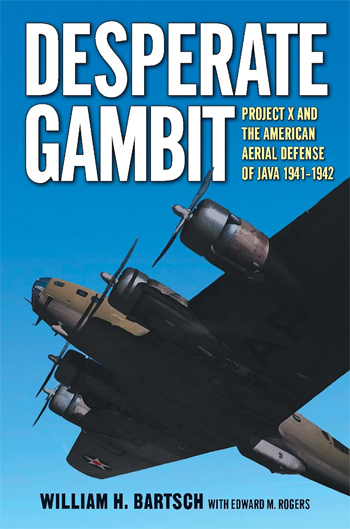
The Lightweight Mustangs: The Best Fighters of WW2

Coming soon from Pen & Sword and author James William Marshall is The Lightweight Mustangs: The Best Fighters of WW2.

Following America’s entry into the Second World War, the USAAF immediately began preparing itself for the battles ahead. One of its new requirements was for a fighter that could fly deep into Europe or over the vast distances of the Pacific. While this included extending the range of all of the USAAF’s tactical aircraft, particularly fighters, in what was called the Fighter Aircraft Range Extension Program, particular attention was given to the North American P-51 Mustang. The ground-breaking American program resulted in the design of the Lockheed P-38J and the North American P-51B, which were both intended to escort USAAF long-range bombers to any target they were tasked to attack. The pair was still in development when the USAAF undertook the infamous raids on the Bavarian city of Schweinfurt in August and October 1943. The only escort fighters available at that time were the shorter-range Republic P-47s Thunderbolts. Continue reading The Lightweight Mustangs: The Best Fighters of WW2

Please Note: This post contains an Amazon affiliate link. When you purchase through links on our site, we may earn an affiliate commission.
Posted on

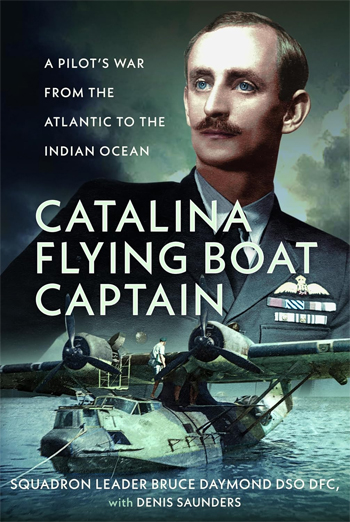
New Official History Details RAF Decoys and Visual Deception of German Bombers in WW2

Coming soon from Air World is Deceiving Hitler’s Bombers: RAF Decoys and Visual Deception in WWII, which is an official history of clever visual deception―dummy sites, fake lights, and camouflage―to mislead German bombers and protect key locations during WW2.

The first, and most essential element in aerial bombardment is that of locating the target. All the inherent costs and risks in undertaking a bombing raid are of no avail unless the objective of the mission is correctly identified. If, through means of decoys or visual deception, the attacking aircraft can be tricked into dropping their deadly payloads in areas of little importance to the general war effort, the enemy bombers will have failed in their mission.

It was accepted at the start of the war that enemy bombers would always get through the UK’s defences and that the German bomber crews could be expected to have a reasonable understanding of Britain’s geography and of its main industrial and military facilities. That being the case, how could the most important sites be protected? Continue reading New Official History Details RAF Decoys and Visual Deception of German Bombers in WW2

Please Note: This post contains an Amazon affiliate link. When you purchase through links on our site, we may earn an affiliate commission.
Posted on

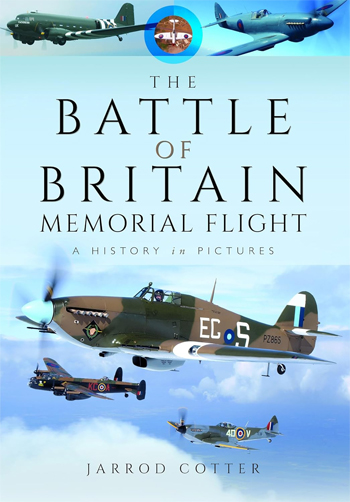
F-14 Tomcat’s Engineering and History Revealed in New “Visual Feast”

Coming soon from Pen & Sword and author Salvador Mafé Huertas is Grumman F-14 Tomcat: A Navy Jet in Service, a study of the aircraft that defined US naval air power through decades of combat, versatility, and enduring cultural iconography.

The Grumman F-14 Tomcat was a cornerstone of US Navy air power from the 1970s through to its retirement in 2006. Designed as a twin-engine, two-seat, supersonic interceptor, the F-14 was engineered to dominate the skies, primarily to counter Soviet aircraft during the Cold War.

The Tomcat’s sleek, angular design and distinctive variable-sweep wings gave it a menacing yet elegant silhouette, embodying both agility and raw power. Capable of adjusting its wing angle mid-flight – sweeping back for high-speed dashes or forward for enhanced manoeuvrability – the Tomcat adapted seamlessly to diverse combat scenarios, achieving speeds exceeding Mach 2.3 and a range of approximately 1,600 nautical miles.

As would be expected with an aircraft that remained in service for a number of decades, the F-14 had an impressive operational career. The type saw combat during the end of the Vietnam War, and was involved in the Lebanon Crisis in the early 1980s, Operation Desert Storm in the Gulf War, the Balkans Conflicts of the 1990s, flew strike missions during Operation Desert Fox (1998) and Operation Iraqi Freedom (2003). and even flew over Afghanistan during Operation Enduring Freedom in the early 2000s. It was in these conflicts that the Tomcat proved its mettle in reconnaissance, air superiority, and later, precision strike roles with the addition of the LANTIRN targeting system.

Beyond its technical prowess, the F-14 gained cultural fame through its starring role in the 1986 movie blockbuster Top Gun, and its subsequent sequel, cementing its image as a symbol of American military might and pilot bravado.

Though retired by the US Navy in favour of the F/A-18 Hornet, the F-14 remains operational in limited numbers with Iran’s air force – a fact which is given due attention in this study. The Tomcat’s legacy endures as a marvel of engineering and a cultural touchstone of aviation history all of which is revealed in this visual feast.

The page book is currently available for pre-order with release set for November 30.

Product Page

Please Note: This post contains an Amazon affiliate link. When you purchase through links on our site, we may earn an affiliate commission.

Posted on

British Commercial Aviation Development Told Through Detailed Accounts, Previously Unseen Photos

Coming soon from Key Publishing and author Roger Staker is Piston, Passengers and Payload, which follows the development of British piston-engine passenger and commercial transport aircraft between the end of the Great War and the early 1950s, when piston engines were superseded by jets and turboprops.

This period saw rapid change at a technological level, in response to an emerging market for transport of all types. It also witnessed the birth, failures and mergers of numerous air transport companies.

Flying was not without risks, Alongside the acknowledged successes that helped to make the world a smaller place, there were tragedies, Lessons learned from these contributed to the safer travel environment that we enjoy today. The pace of commercial aircraft development was given added urgency by World War Two, with many civilian aircraft pressed into military service: not all survived.

Featuring many previously unseen photos, this book is the story of a previously closed chapter in British aviation and offers detailed accounts of 17 manufacturers whose advanced designs paved the way.

The page book is currently available for pre-order with release set for September 30.

Product Page

Please Note: This post contains an Amazon affiliate link. When you purchase through links on our site, we may earn an affiliate commission.

Posted on

The RAF’s Post-WW1 Operations, Fight For Survival Documented in New Book

Coming soon from Fonthill Media and author Vic Flintham is Royal Air Force Operations 1919 to 1929: How the RAF Secured Its Independence.

The Royal Air Force was just eight months old when the First World War ended. It then had to fight for survival against huge pressure from the Admiralty and War Office. The number of squadrons was swiftly reduced to a handful, but salvation came with the application of air control in India and mandated Iraq. In addition, Chief of the Air Staff Lord Trenchard laid strong foundations with the establishment of the Cadet College, Staff College and apprentice scheme, institutions not easily dismantled.

Throughout the first decade of its existence, the RAF, which then also controlled the Fleet Air Arm, performed operations in Somalia, Germany, Iraq, Palestine, Ireland, Russia, India, Turkey and China, while bringing into service new types of aircraft, albeit in small numbers. In the Middle East and Africa, it conducted and supported trailblazing flights, continually pushing the boundaries of what was achievable.

Royal Air Force Operations 1919 to 1920: How the RAF Secured Its Independence is the comprehensive story of the RAF in the 1920s, covering the service’s development at both home and abroad, including all its operations across the globe. Controversies, such as the RAF’s alleged use of chemical weapons in Iraq, are examined in detail, and some 350 photographs, many previously unpublished, bring the story to life like never before.

The 432 page, hardcover book is currently available for pre-order with release set for September 30.

Product Page

Please Note: This post contains an Amazon affiliate link. When you purchase through links on our site, we may earn an affiliate commission.
Posted on

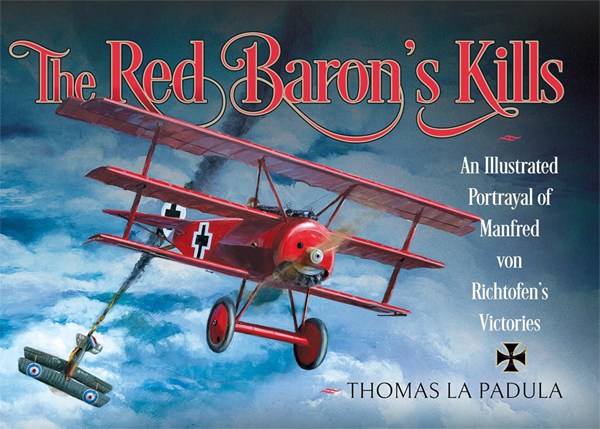
“The Spitfire with Nine Lives” Chronicles the Enthralling History of Mk IX TE566

Coming soon from Grub Street Publishing and author Air Marshal G.A. ‘Black’ Robertson is The Spitfire with Nine Lives: The Enthralling Tale of TE566, Wrecked, Rescued and Rebuilt to Fly Again

Shortly after TE566 was delivered to the RAF, it was one of several Spitfires gifted to Czechoslovakia at the end of the Second World War. Sold to Israel in 1948 and later left to rot in a kibbutz as a children’s plaything, it was rescued, recovered to England and lovingly restored. A new life on the display circuit and on film began in 1992, first in the UK and later in South Africa, where it was all but destroyed in 2002 in a fatal accident. The wreckage was bought, returned to England, then sold to an Australian aviation training institute which eventually sold it back to the previous owner. After passing through several pairs of hands, the aircraft was rebuilt once again by Colin Wills and Tom Gilbert and converted to a two-seater to fly once more. Continue reading “The Spitfire with Nine Lives” Chronicles the Enthralling History of Mk IX TE566

Please Note: This post contains an Amazon affiliate link. When you purchase through links on our site, we may earn an affiliate commission.
Posted on

Fieseler Fi 156 Storch Detailed in Revised and Enhanced Second Edition Book

Coming soon from MMPBooks and author Dariusz Karnas is Fieseler Fi 156 Storch (Yellow Series), a second edition that reportedly includes new color profiles, enhanced content and a thoroughly revised and improved text.

The Fieseler Fi 156 Storch (stork) was a German liaison aircraft built before and during World War II, and even post war in France. It remains famous to this day for its excellent STOL performance and remarkable wartime exploits. This book describes in detail the technical aspects of the aircraft, its design and development. All wartime versions are described in detail.

It contains: scale plans in 1/72 nd scale; photos and drawings from Technical Manuals; superb color illustrations of camouflage and markings; rare b+w archive photographs; color photos of preserved aircraft.

The 256 page book is currently available for pre-order with release set for August 10.

Product Page (Additional Information via AeroScale)

Please Note: This post contains an Amazon affiliate link. When you purchase through links on our site, we may earn an affiliate commission.