Posted on

The RAF’s Post-WW1 Operations, Fight For Survival Documented in New Book

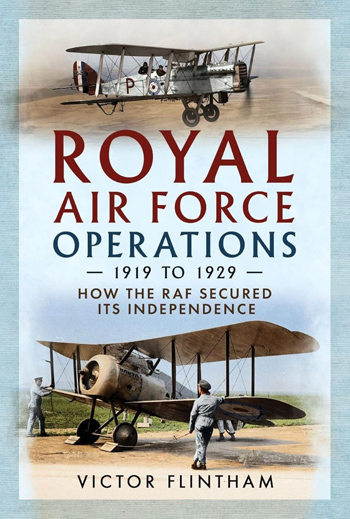
Coming soon from Fonthill Media and author Vic Flintham is Royal Air Force Operations 1919 to 1929: How the RAF Secured Its Independence.

The Royal Air Force was just eight months old when the First World War ended. It then had to fight for survival against huge pressure from the Admiralty and War Office. The number of squadrons was swiftly reduced to a handful, but salvation came with the application of air control in India and mandated Iraq. In addition, Chief of the Air Staff Lord Trenchard laid strong foundations with the establishment of the Cadet College, Staff College and apprentice scheme, institutions not easily dismantled.

Throughout the first decade of its existence, the RAF, which then also controlled the Fleet Air Arm, performed operations in Somalia, Germany, Iraq, Palestine, Ireland, Russia, India, Turkey and China, while bringing into service new types of aircraft, albeit in small numbers. In the Middle East and Africa, it conducted and supported trailblazing flights, continually pushing the boundaries of what was achievable.

Royal Air Force Operations 1919 to 1920: How the RAF Secured Its Independence is the comprehensive story of the RAF in the 1920s, covering the service’s development at both home and abroad, including all its operations across the globe. Controversies, such as the RAF’s alleged use of chemical weapons in Iraq, are examined in detail, and some 350 photographs, many previously unpublished, bring the story to life like never before.

The 432 page, hardcover book is currently available for pre-order with release set for September 30.

Product Page

Please Note: This post contains an Amazon affiliate link. When you purchase through links on our site, we may earn an affiliate commission.
Posted on

From Biplanes to Jets: The RAF’s Long Watch in the Far East

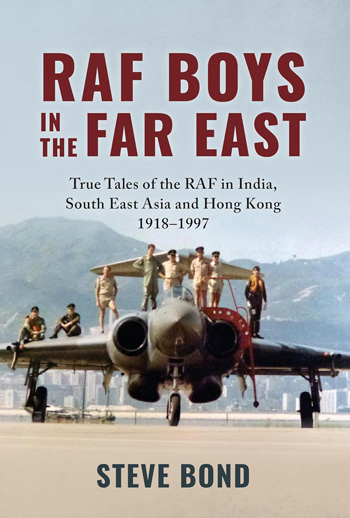
Newly released from author Steve Bond and Grub Street Publishing is RAF Boys in the Far East: True Tales of the RAF in India, South East Asia and Hong Kong.

For 82 years the Royal Flying Corps (RFC), which in 1918 became the Royal Air Force (RAF), maintained a permanent military aviation presence in the Far East. Throughout that time a huge variety of squadrons, flying many different aircraft types, together with all the necessary operational, technical and administrative support, took on all that was asked of them. The first RFC units arrived in India in 1915. RAF India grew substantially in the interwar period and throughout World War Two. Various changes in the command structure finally saw the creation of the Far East Air Force (FEAF) in June 1949, covering South East Asia and Hong Kong. In the 1960s the UK government decided to withdraw all forces East of Suez and on 31 October 1971 the FEAF disbanded and most UK forces withdrew from Singapore at this time. The last RAF unit to leave the region was 28 Squadron flying. They had been operating Whirlwind and Wessex helicopters in Hong Kong until the territory was handed back to China in 1997. RAF Boys in the Far East illustrates what it was like for those air and ground crew who were there by telling their stories in their own words, supported by explanation of the situations at the time and photographs primarily drawn from veterans’ own collections. The stories are as varied as the locations, the units and the personnel; everyday operations, exercises, triumph and tragedy, off duty time, and of course, the humour for which the RAF is renowned. Chapters focus on differing aircraft roles and their operations, including emphasis on the war years in India and Burma, and the Singapore era with actions such as Operation Firedog and the Indonesian Confrontation. Today those veterans who look back on their time served in the FEAF do so with a great deal of pride, and rightly so. This is their story.

The 256 page book is available in hardcover, Kindle and audiobook editions.

Product Page

Please Note: This post contains an Amazon affiliate link. When you purchase through links on our site, we may earn an affiliate commission.
Posted on

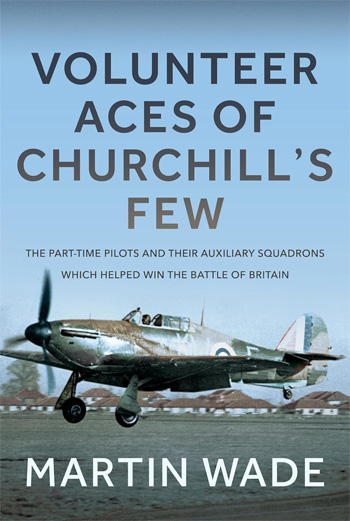
Volunteer Aces: Examining the Part-Time Pilots Who Helped Win the Battle of Britain

In his new book Volunteer Aces of Churchill’s Few: The Part-Time Pilots and their Auxiliary Squadrons which Helped win the Battle of Britain author Martin Wade tells the story of those pilots, both Auxiliary and Volunteer Reserve, who flew with the squadrons of the AAF – a most remarkable band within “The Few.”

It has been many decades since the Battle of Britain raged over southern England, where part‑time pilots who had joined before the war played a vital role in victory. Formed in October 1924, the Auxiliary Air Force (AAF) contributed fourteen of the sixty‑two RAF fighter squadrons in the battle, and together with RAF Volunteer Reserve pilots, produced some of the highest‑scoring aces of the summer of 1940.

The book conveys the sense of adventure shown by these “weekend flyers,” exemplified by the 1933 first flight over Mount Everest by the CO of No. 602 (City of Glasgow) Squadron and by Flight Lieutenant Findlay Boy, who joined in 1935 while working as a mining engineer and went on to score the fastest victory of the battle by shooting down a Ju 87 Stuka less than a minute after take‑off. Their efforts led Air Vice Marshal Keith Park to declare that without the Auxiliaries the Luftwaffe would not have been defeated in 1940 and at the height of the battle Air Chief Marshal Sir Hugh Dowding exclaimed, “Thank God for the RAFVR!”

The 248 page hardcover book is currently available for pre-order with release slated for January 30.

Product Page

Please Note: This post contains an Amazon affiliate link. When you purchase through links on our site, we may earn an affiliate commission.