
Posted on

New Book Studies How Pubs and Clubs Sustained WW2 Pilots During Britain’s Darkest Hour

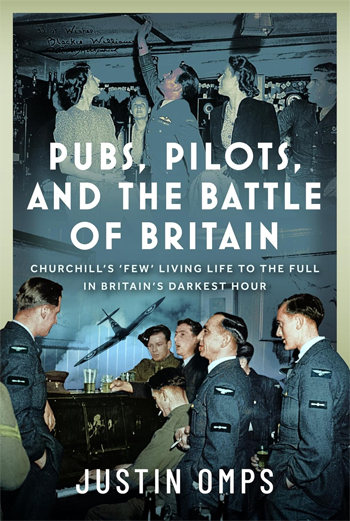
Coming soon from Air World and author Justin Omps is Pubs, Pilots, and the Battle of Britain: Churchill’s ‘Few’ Living Life to the Full in Britain’s Darkest Hour. As the title suggests, the book deals with fighter pilots’ reliance on pubs and clubs as lifelines, from blackout boards to night revelry.

In August 1940, Spitfire pilot Tim Vigors was shot down by a Messerschmitt Bf 109 over Kent. After crash-landing in a field, he realized he would have to pass through London to get back to his squadron’s airfield. He decided there was no rush, called his girlfriend Jill, and hours after nearly dying, he was dancing the night away at London’s fashionable 400 Club.

This juxtaposition of mortal combat and carefree revelry was not unusual – it was daily life for the young men of Fighter Command. Pubs, Pilots, and The Battle of Britain reveals how Britain’s pubs and clubs became crucial lifelines during the Battle of Britain. These weren’t just places to drink – they were unofficial messes, refuges where fear and grief could be drowned in camaraderie, becoming even the centres of squadron identity. At the White Hart in Brasted, Biggin Hill, pilots signed the now-famous blackout board that became a roll call of Britain’s aerial defenders. At the Cat & Custard Pot near RAF Hawkinge, pilots who flew cover during the Dunkirk evacuation found momentary peace in its ancient rooms. Continue reading New Book Studies How Pubs and Clubs Sustained WW2 Pilots During Britain’s Darkest Hour

Please Note: This post contains an Amazon affiliate link. When you purchase through links on our site, we may earn an affiliate commission.

Posted on

Volunteer Aces: Examining the Part-Time Pilots Who Helped Win the Battle of Britain

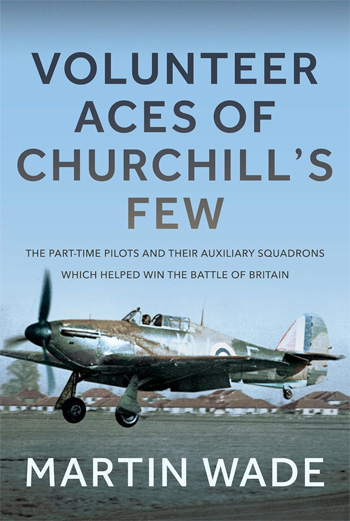
In his new book Volunteer Aces of Churchill’s Few: The Part-Time Pilots and their Auxiliary Squadrons which Helped win the Battle of Britain author Martin Wade tells the story of those pilots, both Auxiliary and Volunteer Reserve, who flew with the squadrons of the AAF – a most remarkable band within “The Few.”

It has been many decades since the Battle of Britain raged over southern England, where part‑time pilots who had joined before the war played a vital role in victory. Formed in October 1924, the Auxiliary Air Force (AAF) contributed fourteen of the sixty‑two RAF fighter squadrons in the battle, and together with RAF Volunteer Reserve pilots, produced some of the highest‑scoring aces of the summer of 1940.

The book conveys the sense of adventure shown by these “weekend flyers,” exemplified by the 1933 first flight over Mount Everest by the CO of No. 602 (City of Glasgow) Squadron and by Flight Lieutenant Findlay Boy, who joined in 1935 while working as a mining engineer and went on to score the fastest victory of the battle by shooting down a Ju 87 Stuka less than a minute after take‑off. Their efforts led Air Vice Marshal Keith Park to declare that without the Auxiliaries the Luftwaffe would not have been defeated in 1940 and at the height of the battle Air Chief Marshal Sir Hugh Dowding exclaimed, “Thank God for the RAFVR!”

The 248 page hardcover book is currently available for pre-order with release slated for January 30.

Product Page

Please Note: This post contains an Amazon affiliate link. When you purchase through links on our site, we may earn an affiliate commission.