
Posted on

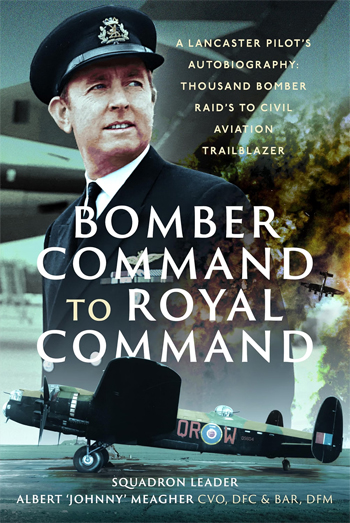
Bomber Command to Royal Command: A Lancaster Pilot’s Journey from Bomber Raids to Civil Aviation Pioneer

Coming soon from Air World is From Bomber Command to Royal Command: A Lancaster Pilot’s Autobiography: Thousand Bomber Raid’s to Civil Aviation Trailblazer, which tells the story of Albert “Johnny” Meagher from his service flying dozens of missions over Germany through introducing the Bristol Britannia airliner into BOAC service and flying royalty.

Though he was in a reserved occupation, Albert Meagher, known to everyone as ‘Johnny’, volunteered for training as a pilot and was called up in July 1941. He duly completed his training as an RAF bomber pilot and joined the Avro Lancaster-equipped 61 Squadron in June 1942.

Johnny’s first operational sortie – an attack on Bremen – came on the 25th of the month. During the next six weeks Meahger’s crew attacked eleven more cities including Frankfurt, Munich, Kiel and the industrial targets in the Ruhr. On 16 January 1943, Bomber Command attacked Berlin, and for the raid the prominent American NBC reporter, Stan Richardson, was assigned to Meagher’s crew. After 34 sorties over Germany, it might be thought that Squadron Leader Meagher would have sought a less precarious posting. But nothing was further from his mind. Instead, he flew another 20 missions before finally leaving the frontline to become an instructor. Continue reading Bomber Command to Royal Command: A Lancaster Pilot’s Journey from Bomber Raids to Civil Aviation Pioneer

Please Note: This post contains an Amazon affiliate link. When you purchase through links on our site, we may earn an affiliate commission.
Posted on

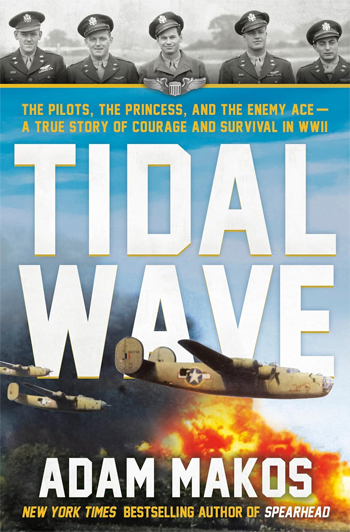
Tidal Wave: Highly Anticipated Saga of Courage and Survival in WW2 Now Available

Now available from NYT Bestselling author Adam Makos and Ballantine Books is Tidal Wave: The Pilots, the Princess, and the Enemy Ace – A True Story of Courage and Survival in WWII.

It’s summer 1943, and the world is on fire. Lieutenant Ernie Poulson, a twenty-two-year-old outdoorsman from Utah, finds himself at the controls of America’s most advanced bomber, the B-24, brought to North Africa for a top-secret mission. On the far side of Europe, Lieutenant Constantin Cantacuzino, Romania’s most daring ace, duels Soviet fighters on the Eastern Front while searching for purpose in an unwinnable war.

In Nazi-aligned Romania, Princess Catherine Caradja walks a perilous line between loyalty to her country and quiet defiance, as German forces dig in around the oil refineries in her backyard. And in the royal palace, twenty-one-year-old King Michael of Romania—mocked and sidelined by a Nazi-backed dictator—quietly plots to seize his nation’s destiny before it is lost forever. Continue reading Tidal Wave: Highly Anticipated Saga of Courage and Survival in WW2 Now Available

Please Note: This post contains an Amazon affiliate link. When you purchase through links on our site, we may earn an affiliate commission.
Posted on

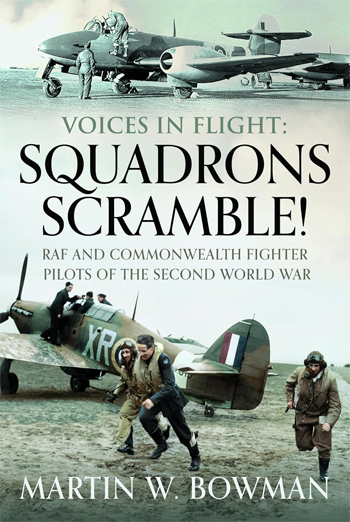
New Book Compiles Air Combat Recollections From Pilots in Every Theater of WW2

Coming soon from Air World and author Martin Bowman is Voices in Flight: Squadrons Scramble!: RAF and Commonwealth Fighter Pilots of the Second World War, which offers air combat stories and follows fighter pilots scrambling under alarms, from southern England and Malta to the Blitz.

Feel your pulse race and your heart pound as you follow the pilots of The Few running for their aircraft as the alarms sound and the enemy attack for a second time on a day of glory and death over the sunny skies of southern England. Then, beyond the Spitfire Summer of 1940, how the RAF’s pilots scrambled to defy the enemy over the battered ruins of Malta, the George Cross Island, or to defend Britain at night during the blacked out months of the Blitz.

The prelude to D-Day, the disastrous raid on Dieppe was the scene of the RAF’s biggest air battle up to that point in the war, and Operation Overlord was shielded by the overwhelming aerial might of the 2nd Tactical Air Force. All these momentous events are told through the words of those pilots who fought in the unforgiving arena of the dogfight where a single moment can turn victory into defeat, life into certain death. Continue reading New Book Compiles Air Combat Recollections From Pilots in Every Theater of WW2

Please Note: This post contains an Amazon affiliate link. When you purchase through links on our site, we may earn an affiliate commission.
Posted on

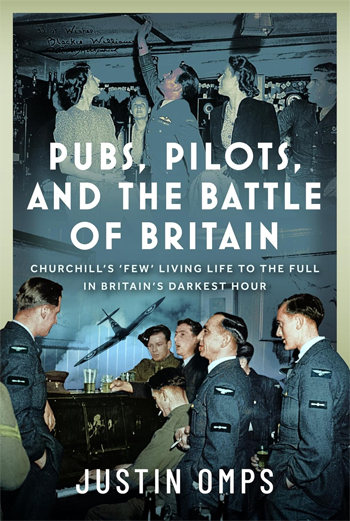
New Book Studies How Pubs and Clubs Sustained WW2 Pilots During Britain’s Darkest Hour

Coming soon from Air World and author Justin Omps is Pubs, Pilots, and the Battle of Britain: Churchill’s ‘Few’ Living Life to the Full in Britain’s Darkest Hour. As the title suggests, the book deals with fighter pilots’ reliance on pubs and clubs as lifelines, from blackout boards to night revelry.

In August 1940, Spitfire pilot Tim Vigors was shot down by a Messerschmitt Bf 109 over Kent. After crash-landing in a field, he realized he would have to pass through London to get back to his squadron’s airfield. He decided there was no rush, called his girlfriend Jill, and hours after nearly dying, he was dancing the night away at London’s fashionable 400 Club.

This juxtaposition of mortal combat and carefree revelry was not unusual – it was daily life for the young men of Fighter Command. Pubs, Pilots, and The Battle of Britain reveals how Britain’s pubs and clubs became crucial lifelines during the Battle of Britain. These weren’t just places to drink – they were unofficial messes, refuges where fear and grief could be drowned in camaraderie, becoming even the centres of squadron identity. At the White Hart in Brasted, Biggin Hill, pilots signed the now-famous blackout board that became a roll call of Britain’s aerial defenders. At the Cat & Custard Pot near RAF Hawkinge, pilots who flew cover during the Dunkirk evacuation found momentary peace in its ancient rooms. Continue reading New Book Studies How Pubs and Clubs Sustained WW2 Pilots During Britain’s Darkest Hour

Please Note: This post contains an Amazon affiliate link. When you purchase through links on our site, we may earn an affiliate commission.
Posted on

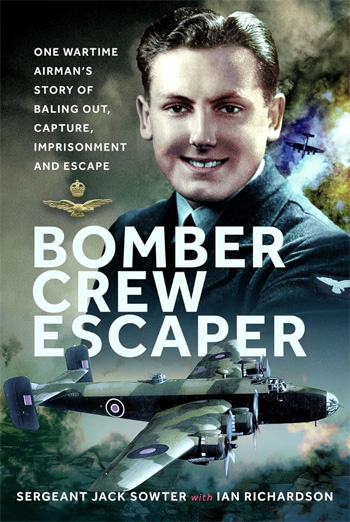
New Guinea Eagles: The Japanese Air Army Campaign in New Guinea 1942-43

Coming soon from Avonmore Books and author Michael Claringbould is New Guinea Eagles Volume 1: The Japanese Air Army from Rabaul to Wewak October 1942 to September 1943, which chronicles the Japanese Air Army campaign in New Guinea from when its first units arrived in October 1942 until the late September 1943 raids against Nadzab and Port Moresby.

Never before have the rationale, activities and losses of JAAF air power in New Guinea been chronicled in such detail and accuracy. The force operated an impressive range of aircraft types but found it much easier to commit than withdraw from the challenging theatre.

This volume covers Rabaul’s and Wewak’s beginnings as major JAAF bases. The period involved guarding supply convoys, attacking Wau and two major forays into the Solomons. Then by mid-1943 the Allied air war had gravitated towards the burgeoning JAAF airfield complexes spreading out along New Guinea’s northern coast. Two air divisions were combined to create the 4th Air Army in August 1943, and its aircraft soon ventured into the New Guinea Highlands before defending Nassau Bay, Lae and Salamaua. Continue reading New Guinea Eagles: The Japanese Air Army Campaign in New Guinea 1942-43

Please Note: This post contains an Amazon affiliate link. When you purchase through links on our site, we may earn an affiliate commission.

Posted on

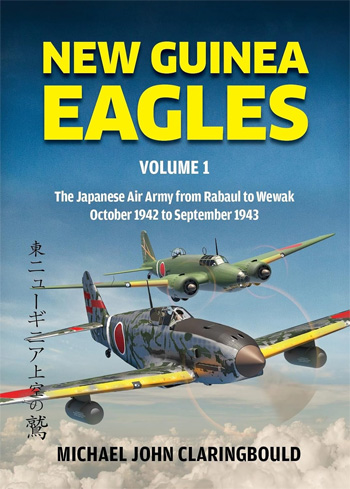
Bomber Crew Escaper: A Wartime Airman’s Fight for Survival and Freedom

Coming soon from Air World and authors Jack Sowter and Ian Richardson is Bomber Crew Escaper: One Wartime Airman’s Story of Baling Out, Capture, Imprisonment and Escape

Sergeant Jack Sowter had joined the RAF in October 1941, originally as a trainee wireless operator. He later re-mustered as a navigator and joined the crew of a Handley Page Halifax of 78 Squadron.

On the night of 27/28 July 1943, Jack’s aircraft, JD 148, was one of 787 bombers tasked with attacking the port of Hamburg as part of Operation Gomorrah. Having successfully unleashed its deadly load on the German city, Jack’s captain, Sergeant Les Maidment, turned for home. However, Maidment could not escape the penetrating beams of the German searchlights, nor the enemy flak. With his aircraft repeatedly hit, Maidment gave his crew the order to bale out. Continue reading Bomber Crew Escaper: A Wartime Airman’s Fight for Survival and Freedom

Please Note: This post contains an Amazon affiliate link. When you purchase through links on our site, we may earn an affiliate commission.
Posted on

Follow the 9th Bomb Squadron Into WW2’s Most Dangerous Flying Conditions

Coming soon from McFarland Publishing and author Charles B. Kastner is To War and Back with the 9th Bomb Squadron: In the Skies Over Burma, Thailand, and China in 1945:

Written by his son, and incorporating his father’s stories, personal papers, and original research, this work follows Lt. Walt Kastner from the start of World War Two until its end. Walt joined a new B-24 bomber crew that fought with the 9th Bomb Squadron from its base in India during the drive to liberate Burma from the Japanese Army. His air crew attacked Japanese troop concentrations that barred the advance of the British 14th Army and flew missions deep into Thailand, including attacking the Burma-Siam Railway, the crucial rail link that carried supplies that fed and equipped the Japanese Army in Burma–a railway made famous by the movie The Bridge on the River Kwai. When air combat ended in May 1945, the squadron moved to Assam in eastern India where they hauled aviation gasoline over “the Hump” to the 14th Air Force in China, exposing them to the most dangerous flying conditions in the world.

The 155 page book is currently available for pre-order with release set for August 21.

Product Page

Please Note: This post contains an Amazon affiliate link. When you purchase through links on our site, we may earn an affiliate commission.

Posted on

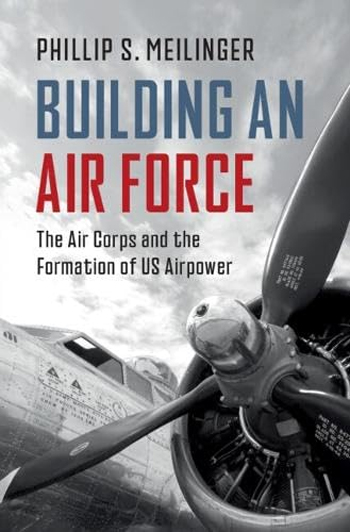
Building an Air Force: Trace the Rise of US Airpower During the Air Corps Era

Coming soon from Cambridge University Press and author Phillip S. Meilinger is Building an Air Force: The Air Corps and the Formation of US Airpower.

Until the Japanese attack on Pearl Harbor, America did not want war, with the 1930s marked by strong isolationism and an emphasis on defense. However, in December 1941, it wasn’t defensive aircraft the Army Air Corps had been steadily procuring, but offensive long-range heavy bombers, whilst US pursuit planes were decidedly inferior to their European counterparts. In this new history of the development of American air power, Phillip Meilinger dispels the notion that young air zealots pushed for a bomber-heavy force, revealing instead the technological, economic and bureaucratic forces which shaped the air force. He examines the role of scientists and engineers, developments in commercial aviation, and conflicting priorities of the Army and Air Corps, as well as how these were in turn influenced by America’s political leaders. Building an Air Force is essential for understanding a conflict in which whoever controlled the skies controlled the land and seas beneath.

The 330 page, hardcover book is currently available for pre-order with release set for May 7.

Product Page

Please Note: This post contains an Amazon affiliate link. When you purchase through links on our site, we may earn an affiliate commission.
Posted on

Beaufighter vs German Flak Ships: An Illustrated History

On the way from Osprey Publishing and author Matthew Willis is Beaufighter vs German Flak Ships: North Sea and Mediterranean 1941–45 (Duel, 151), an illustrated study of RAF Coastal Command’s deployment of the Beaufighter against German supply lines in 1941 and the long-running ‘arms race’ with Kriegsmarine Flak ships that followed.

Crucial German shipping lines faced a new threat in 1941 when RAF Coastal Command debuted the iconic long-range Beaufighter. The aircraft and its subsequent Mk VIC and Mk X versions gave the Allies a tough, relatively fast and very hard-hitting platform for air attack on German convoys, and so it became essential for the Kriegsmarine to fit ever-heavier anti-aircraft batteries to its escort vessels, and even to develop specialist Flak vessels.

In this compelling study, naval aviation historian Matthew Willis chronicles the little-explored arms race that saw RAF Coastal Command and the Kriegsmarine engaged in a fierce battle of one-upmanship until war’s end. New artwork, rare archive photography and contemporary records of Beaufighter operations add depth to fascinating historical accounts, including the actions of the famous North Coates Strike Wing against shipping in the North Sea and the exploits of Beaufighter units tasked with severing Rommel’s all-important supply lines.

The 80 page, publication is currently available for pre-order in paperback and Kindle editions with release set for March 30.

Product Page

Please Note: This post contains an Amazon affiliate link. When you purchase through links on our site, we may earn an affiliate commission.

Posted on

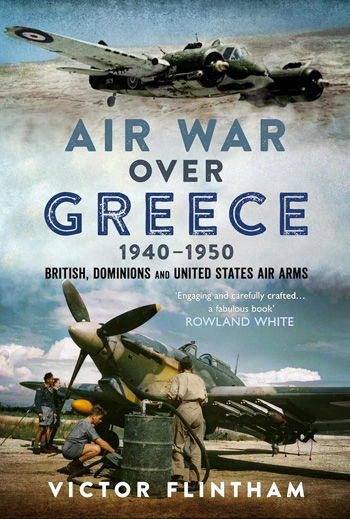
British, Dominions and US Wings: Air War Over Greece 1940–1950 Out Soon

Soon to be released by Fonthill Media is Air War Over Greece 1940–1950: British, Dominions and United States Air Arms, author Victor Flintham’s examination of a neglected corner of military aviation history.

Following the Italian invasion of Greece in October 1940, the RAF reluctantly deployed three squadrons of Bristol Blenheim light bombers and one squadron of Gloster Gladiators, an obsolescent biplane fighter, to assist the Greek defenders. The fear among the Allies was that with Greece in Axis hands, enemy supply lines to North Africa would be significantly shortened, threatening the Allied position there and in the Middle East.

By the time Germany joined the invasion in April 1941, both the RAF and FAA had committed more squadrons and been joined by army units, but they were soon overwhelmed, retreating to Crete, from where they were evicted in May 1941 after a massive German paratroop operation. For the next three years the RAF and FAA attacked Axis forces on Crete, mainland Greece and in the Aegean with mixed success. In addition, Allied air arms, including USAAF units, dropped weapons and supplies to the Greek partisan groups. In late 1944, as the Germans were forced to withdraw from Greece, RAF units once again flew into Greek airfields, yet they were soon drawn into the bitter civil war, fighting alongside Greek government forces against Communist insurgents. After the final withdrawal of operational units in 1946, the RAF retained an air delegation in Athens until 1952, when Greece joined NATO.

The upcoming, 272 page hardcover release is currently available for pre-order with release slated for March 30.

Product Page

Please Note: This post contains an Amazon affiliate link. When you purchase through links on our site, we may earn an affiliate commission.