
Posted on

The RAF’s Post-WW1 Operations, Fight For Survival Documented in New Book

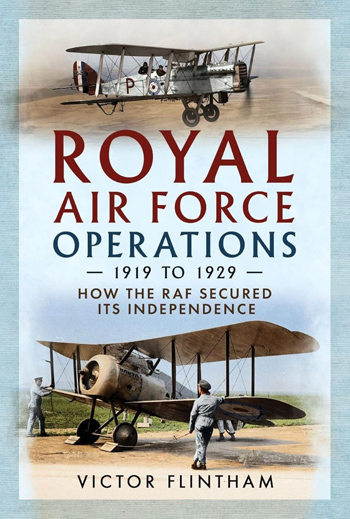
Coming soon from Fonthill Media and author Vic Flintham is Royal Air Force Operations 1919 to 1929: How the RAF Secured Its Independence.

The Royal Air Force was just eight months old when the First World War ended. It then had to fight for survival against huge pressure from the Admiralty and War Office. The number of squadrons was swiftly reduced to a handful, but salvation came with the application of air control in India and mandated Iraq. In addition, Chief of the Air Staff Lord Trenchard laid strong foundations with the establishment of the Cadet College, Staff College and apprentice scheme, institutions not easily dismantled.

Throughout the first decade of its existence, the RAF, which then also controlled the Fleet Air Arm, performed operations in Somalia, Germany, Iraq, Palestine, Ireland, Russia, India, Turkey and China, while bringing into service new types of aircraft, albeit in small numbers. In the Middle East and Africa, it conducted and supported trailblazing flights, continually pushing the boundaries of what was achievable.

Royal Air Force Operations 1919 to 1920: How the RAF Secured Its Independence is the comprehensive story of the RAF in the 1920s, covering the service’s development at both home and abroad, including all its operations across the globe. Controversies, such as the RAF’s alleged use of chemical weapons in Iraq, are examined in detail, and some 350 photographs, many previously unpublished, bring the story to life like never before.

The 432 page, hardcover book is currently available for pre-order with release set for September 30.

Product Page

Please Note: This post contains an Amazon affiliate link. When you purchase through links on our site, we may earn an affiliate commission.
Posted on

Bomber Crew Escaper: A Wartime Airman’s Fight for Survival and Freedom

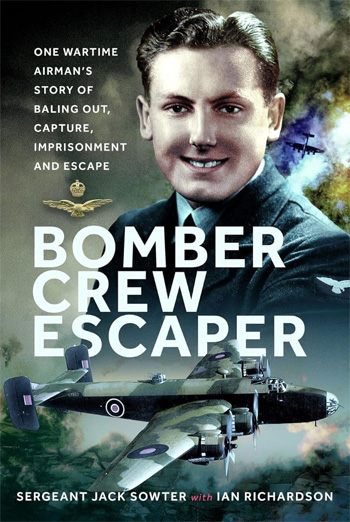
Coming soon from Air World and authors Jack Sowter and Ian Richardson is Bomber Crew Escaper: One Wartime Airman’s Story of Baling Out, Capture, Imprisonment and Escape

Sergeant Jack Sowter had joined the RAF in October 1941, originally as a trainee wireless operator. He later re-mustered as a navigator and joined the crew of a Handley Page Halifax of 78 Squadron.

On the night of 27/28 July 1943, Jack’s aircraft, JD 148, was one of 787 bombers tasked with attacking the port of Hamburg as part of Operation Gomorrah. Having successfully unleashed its deadly load on the German city, Jack’s captain, Sergeant Les Maidment, turned for home. However, Maidment could not escape the penetrating beams of the German searchlights, nor the enemy flak. With his aircraft repeatedly hit, Maidment gave his crew the order to bale out. Continue reading Bomber Crew Escaper: A Wartime Airman’s Fight for Survival and Freedom

Please Note: This post contains an Amazon affiliate link. When you purchase through links on our site, we may earn an affiliate commission.
Posted on

The Observer Corps: The Hidden Defenders Tracking Enemy Aircraft in Britain’s Skies

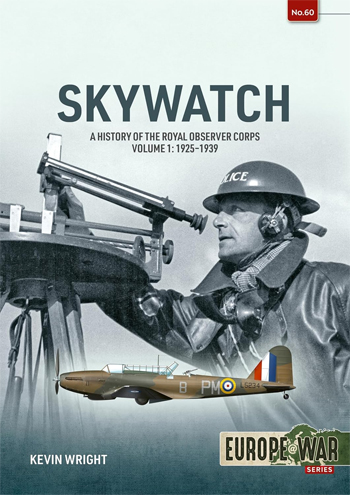
Soon to be released by Helion and Company and author Kevin Wright is Skywatch Volume 1: A History of the Royal Observer Corps, 1925 to 1939.

During World War One, London was vulnerable to air attacks by Zeppelins and later German bombers. To defend the capital, the London Air Defence Area was created to coordinate the efforts to protect it. However, after 1918, the system was quickly abandoned.

In the early 1920s, the Committee for Imperial Defence began to reconsider the problem. In 1924, the first experiment was conducted to monitor and report the movement of aircraft overland by using small groups of aircraft observers reporting to a central point. This successful experiment led to the creation of the Observer Corps in 1925 under the control of Police Chief Constables.

Originally intended to cover just the South East of England to protect London, as the threat from resurgent Nazi Germany grew, the Corps was gradually expanded to cover nearly the whole of Gt Britain by the start of the War. Now transferred to the control of the Air Ministry, Observer Corps Groups became a key part of Fighter Commands integrated air defence system, unique in that it was the only means to track the movement of aircraft once they crossed the coast and headed inland.

Using a combination of new research and access to official files, Volume One of Skywatch charts the development of the Observer Corps from its origins, the very beginnings, formation and growth through the 1920s. It critically examines how, in the rush to prepare for War in the late 1930s, the Observer Corps began to ready itself for War and its unique role, monitoring the skies of Britain.

The 76 page publication is currently available for pre-order in paperback format. Release is slated for April 30.

Product Page

Please Note: This post contains an Amazon affiliate link. When you purchase through links on our site, we may earn an affiliate commission.

Posted on

RAF’s Interwar Activities Chronicled With Hundreds of Rare Photos

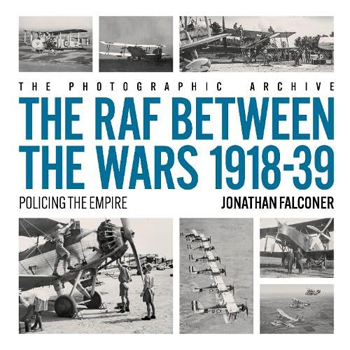
Coming soon from Jonathan Falconer and JJN Publishing is The RAF Between The Wars 1918-39 (The Photographic Archive): Policing The Empire

The book is a visual history chronicling the Royal Air Force’s imperial policing operations from 1918 to 1939 across British territories like Iraq, Palestine, Aden, and India. Featuring hundreds of rare archival photographs of aircraft such as the Vickers Vernon and Airco DH.9A, personnel, and campaigns against tribal unrest, it highlights the RAF’s evolution into a key imperial tool through tactics like air control for low-intensity policing amid post-WWI budget constraints.

The 144 page, hardcover book is currently available for pre-order with release scheduled for March 6.

Product Page

Please Note: This post contains an Amazon affiliate link. When you purchase through links on our site, we may earn an affiliate commission.

Posted on

Bomber Crew Morale in WW2: New Book Reveals How RAF Airmen Faced Impossible Odds

Soon to be released by Air World and author Peter Croft is Bomber Crew Morale in WW2: How Bomber Command’s Airmen Faced Terrible Odds in the Second World War.

During World War II, 125,000 aircrew served in RAF Bomber Command, and 55,573—about 44%—were killed. Despite these grim odds, crews continued flying nightly missions, showing extraordinary courage and determination. RAF leadership tried to sustain morale through discipline, good equipment, and effective leadership, but much depended on the airmen themselves. Their patriotism, stoicism, and strong camaraderie helped them endure constant danger, from enemy fire to mechanical failures and accidents. Even without combat, simply flying remained a perilous task.

This new release “honors the bravery of Bomber Command’s men—those who survived and those whose lives were cut short—and reflects on their extraordinary courage in the face of seemingly insurmountable odds.”

The 280 page, hardcover book is currently available for pre-order with release slated for January 30.

Product Page

Please Note: This post contains an Amazon affiliate link. When you purchase through links on our site, we may earn an affiliate commission.