Posted on

Shuttleworth to Restore DH.88 Comet After Incident, Project Page Launched

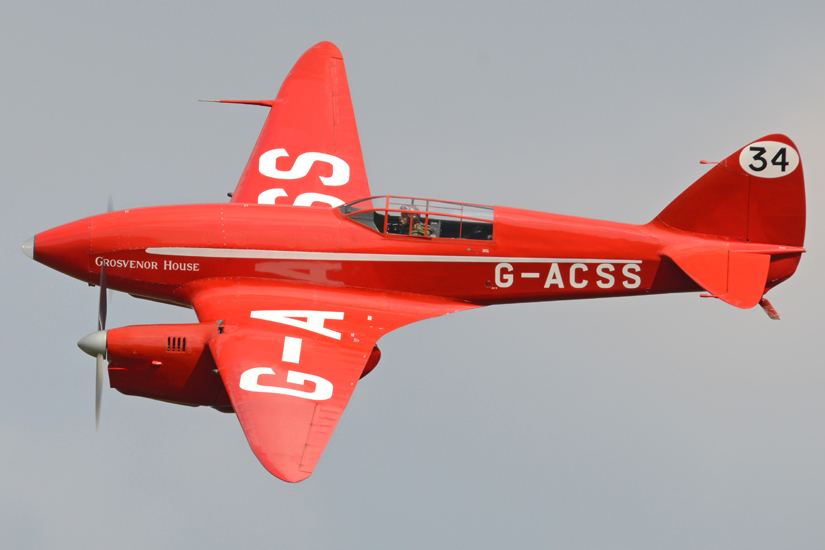
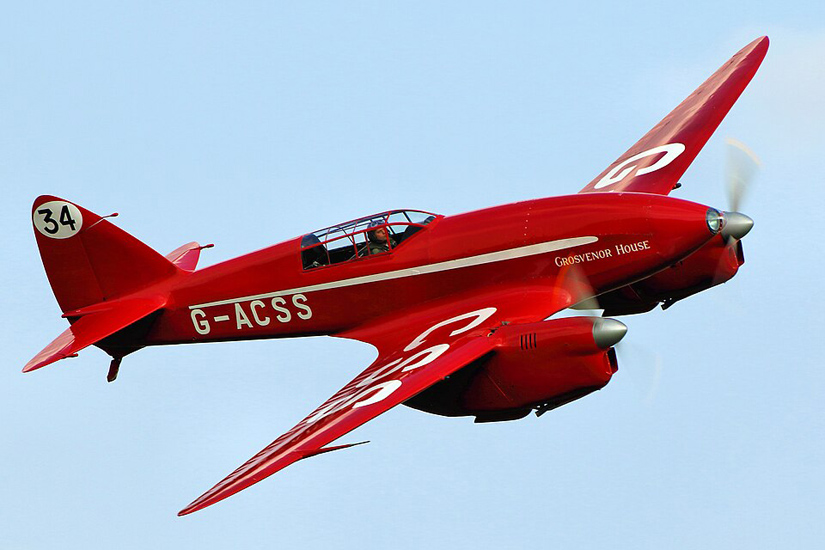
Following an incident at Shuttlworth’s Flying Proms Air Show on August 15 that resulted in significant damage, The Shuttleworth Trust has announced their intention to restore their de Havilland DH.88 Comet back to airworthy condition.

The DH.88 was a remarkably sleek British two-seat, twin-engine racing aircraft designed by A. E. Hagg specifically for the 1934 MacRobertson Air Race from England to Australia. Built largely of wood with retractable landing gear, enclosed tandem cockpits, variable-pitch propellers, and two 230 hp Gipsy Six R engines, it represented an unusually advanced high-speed design for its day. Shuttleworth’s example, “Grosvenor House (G-ACSS),” is the very aircraft that won the roughly 11,300-mile race in 70 hours 54 minutes, helping make the DH.88 an enduring icon of 1930s aviation and an important influence on later de Havilland designs.

The aircraft rolled over on landing at the event and the pilot was extracted and sent to the hospital, being discharged soon after. Shuttleworth has launched a new, dedicated project page where you can stay up to date on the Comet’s progression.

(via Shuttleworth Photo: Airwolfhound from Hertfordshire, UK, CC BY-SA 2.0, via Wikimedia Commons)
Posted on

New Renders Detail Rare Birds Models’ Upcoming LeO H.246 Flying Boat

Rare Bird Models has released a series of renderings for their upcoming Lioré et Olivier LeO H.246 flying boat in 1/72 scale.

The H.246 was a French four-engine commercial flying boat developed in the late 1930s for Air France’s Mediterranean services, particularly routes linking southern France with North Africa. A high-wing parasol monoplane with a duralumin hull, it carried a crew of four and up to 26 passengers; its prototype first flew from Étang de Berre on 30 September 1937. Only six production aircraft were completed, and the war interrupted their intended civil role: examples served with Vichy French forces and, after capture, the Luftwaffe, while the surviving aircraft briefly returned to Air France service on the Marseille–Algiers route after 1945 before retirement in 1946.

The new renderings detail a “third possible option” representing F-AREN, which was captured by the Luftwaffe and used as a transport aircraft under registration 24+63. It was later deployed by KG200 in Norway. The armament includes 4 x MG15 in side positions and a MG13 in nose turret. As an additional option there will be 2 passenger salon interior versions – either with 11 x two stored stretchers or with 26 × seats for soldiers.

Click below to check out additional renders.

Continue reading New Renders Detail Rare Birds Models’ Upcoming LeO H.246 Flying Boat

Posted on

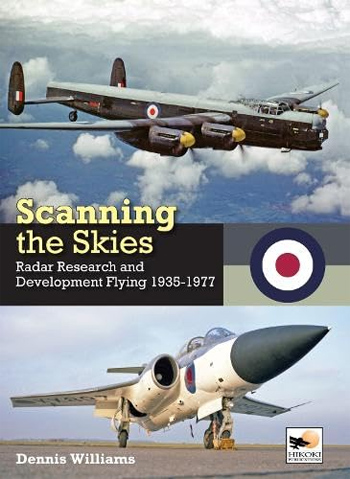
Scanning the Skies: Radar Research and Development Flying 1935-1977

Coming soon from Crecy Publishing and author Dennis Williams is Scanning the Skies: Radar Research and Development Flying 1935-1977

This book offers a detailed overview of a complex yet fascinating aspect of British aviation history, about which comparatively little has been published. The early development of radar in Britain culminated in the successful introduction of ground-based radar, which played a crucial role during the Battle of Britain. This was followed by the considerable challenges of designing airborne systems that had to be compact, lightweight, and energy-efficient. The widespread use of radar and other electronic systems (including countermeasures) made a significant contribution to the major operations of RAF Coastal Command in the North Atlantic and Bomber Command over Europe; these aspects are covered in detail. During the Cold War, development priorities included navigation and guidance systems for the V-bombers and guided missile projects. Equally important as the scientific advances were the aircraft on which these technologies were tested. A large part of the book is devoted to the aircraft types used in British radar research and development over five decades, from the modifications required for this specialized task and the airfields used to operate them to the operational procedures. The development of aircraft, on the one hand, and the radar and other electronic systems tested on them, on the other, combine to form a coherent history of aviation in the service of scientific research. The account essentially follows a chronological sequence and illustrates how the rapid development of airframes and engines, as well as the advances in electronics and later in computer technology, went hand in hand throughout the entire period under consideration.

The hardcover book is currently available for pre-order with release set for October 31.

Product Page

Please Note: This post contains an Amazon affiliate link. When you purchase through links on our site, we may earn an affiliate commission.

Posted on

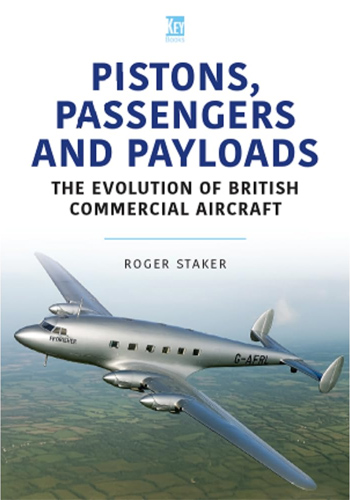
British Commercial Aviation Development Told Through Detailed Accounts, Previously Unseen Photos

Coming soon from Key Publishing and author Roger Staker is Piston, Passengers and Payload, which follows the development of British piston-engine passenger and commercial transport aircraft between the end of the Great War and the early 1950s, when piston engines were superseded by jets and turboprops.

This period saw rapid change at a technological level, in response to an emerging market for transport of all types. It also witnessed the birth, failures and mergers of numerous air transport companies.

Flying was not without risks, Alongside the acknowledged successes that helped to make the world a smaller place, there were tragedies, Lessons learned from these contributed to the safer travel environment that we enjoy today. The pace of commercial aircraft development was given added urgency by World War Two, with many civilian aircraft pressed into military service: not all survived.

Featuring many previously unseen photos, this book is the story of a previously closed chapter in British aviation and offers detailed accounts of 17 manufacturers whose advanced designs paved the way.

The page book is currently available for pre-order with release set for September 30.

Product Page

Please Note: This post contains an Amazon affiliate link. When you purchase through links on our site, we may earn an affiliate commission.

Posted on

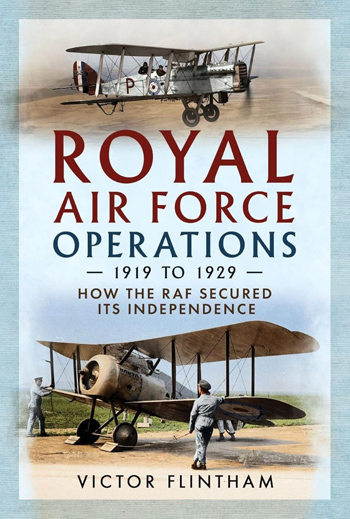
The RAF’s Post-WW1 Operations, Fight For Survival Documented in New Book

Coming soon from Fonthill Media and author Vic Flintham is Royal Air Force Operations 1919 to 1929: How the RAF Secured Its Independence.

The Royal Air Force was just eight months old when the First World War ended. It then had to fight for survival against huge pressure from the Admiralty and War Office. The number of squadrons was swiftly reduced to a handful, but salvation came with the application of air control in India and mandated Iraq. In addition, Chief of the Air Staff Lord Trenchard laid strong foundations with the establishment of the Cadet College, Staff College and apprentice scheme, institutions not easily dismantled.

Throughout the first decade of its existence, the RAF, which then also controlled the Fleet Air Arm, performed operations in Somalia, Germany, Iraq, Palestine, Ireland, Russia, India, Turkey and China, while bringing into service new types of aircraft, albeit in small numbers. In the Middle East and Africa, it conducted and supported trailblazing flights, continually pushing the boundaries of what was achievable.

Royal Air Force Operations 1919 to 1920: How the RAF Secured Its Independence is the comprehensive story of the RAF in the 1920s, covering the service’s development at both home and abroad, including all its operations across the globe. Controversies, such as the RAF’s alleged use of chemical weapons in Iraq, are examined in detail, and some 350 photographs, many previously unpublished, bring the story to life like never before.

The 432 page, hardcover book is currently available for pre-order with release set for September 30.

Product Page

Please Note: This post contains an Amazon affiliate link. When you purchase through links on our site, we may earn an affiliate commission.

Posted on

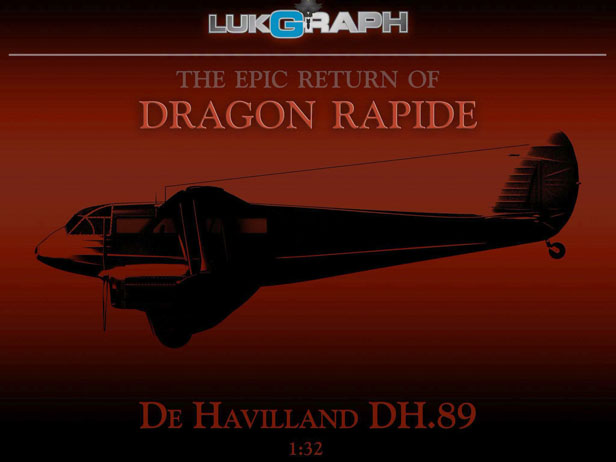
LukGraph Developing Heavily Detailed, Fully Printed 1/32 DH.89 Dragon Rapide

LukGraph has announced that they will be reintroducing their 1/32 de Havilland DH.89 Dragon Rapide model kit in a completely redesigned form.

This isn’t just a reissue. It’s a brand-new project: refined, corrected, and heavily detailed to push the level of realism and build experience even further. Every surface, every line, every detail has been rethought to do justice to this iconic aircraft.

The kit will be fully printed (no casting) and will be offered in a variety of boxings with British military, Foreign military and civilian markings. As of this writing, a final release date has not yet been announced.

(via LukGraph)

Posted on

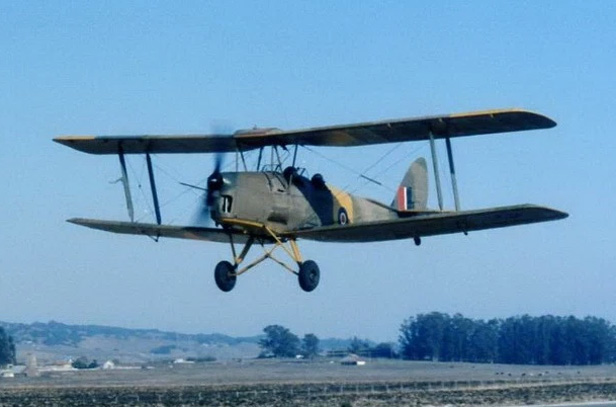
Tiger Moth Project For Sale: “Complete Aircraft, Parts Meticulously Restored”

A 1938 Tiger Moth project has been spotted for sale. The listing states (in part):

1938 Tiger Moth for re-construction. Complete aircraft, dis-assembled and all parts meticulously restored. (engine still needs a rebuild). Fabulous history researched in detail by the previous owner/restorer, too much to list here. Ready for reconstruction, currently in secure storage in Worcestershire (UK)

The aircraft is currently available for £30,000. Click here to check out the eBay listing.

Please Note: This post contains an eBay affiliate link. When you purchase through links on our site, we may earn an affiliate commission.

Posted on

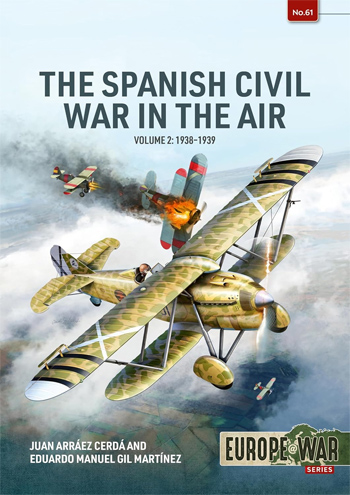
Spanish Civil War in the Air Examined in “Profusely Illustrated” Two Volume Series

Coming soon from and Helion and Company author Eduardo Manuel Gil Martínez is Spanish Civil War in the Air Volume 2: 1938-1939, which details the evolution of air combat in Spain while examining the roles of fighters, ground attack aircraft and strategic bombing.

This volume examines the importance of the air forces of both sides in supporting their comrades on the ground and at sea, the sinking of the rebel cruiser Baleares by fast SB-2s, the expansion of strategic bombing with ever greater numbers of aircraft over cities, industrial centres, ports and Republican communication hubs, and the massive fighter battles in Spanish skies. This volume also details the early post-civil war air force of Spain and the fate of many of the aircraft and personnel who had fought in the war.

Profusely illustrated throughout, The Spanish Civil War in the Air Volume 2: 1938–1939 features a wealth of rare and original photographs, detailed maps, and specially commissioned full colour artworks by Jean-Marie Guillou depicting the aircraft, insignia and emblems of all participants. Together, they bring to life the formative years of one of the most significant and transformative aerial conflicts of the twentieth century – where the lessons of modern air warfare were written in the skies over Spain.

The 84 page book follows volume 1 (1936-37) which was released in January. It is currently available for pre-order with release set for May 15.

Product Page

Please Note: This post contains an Amazon affiliate link. When you purchase through links on our site, we may earn an affiliate commission.

Posted on

Hungary’s Bomber Development Through WW2: A Comprehensive Study

Coming soon from MMPBooks and authors Dénes Bernád and György Punka is Hungarian Bomber Colours 1927-1945 vol. 1, a comprehensive study of the development and operations of Hungary’s bomber aviation from its early beginnings through the end of World War II.

The book covers aircraft types, unit structure, and missions, focusing on both domestic developments and foreign influences shaping the Royal Hungarian Air Force. It includes rare archival photographs, detailed colour profiles, and thoroughly researched historical context that sheds light on this often-overlooked aspect of Central European military aviation. A valuable resource for aviation historians, researchers, and modellers interested in lesser-known air forces of the Second World War.

The 140 page, paperback book is currently available for pre-order with release set for June 30.

Product Page

Please Note: This post contains an Amazon affiliate link. When you purchase through links on our site, we may earn an affiliate commission.

Posted on

Arma Hobby Releases New Curtiss P-36C With 3D Printed Parts, Masks, 3 Liveries

Arma Hobby recently released their new Curtiss P-36C Hawk model kit in 1/72 scale.

The P-36C was an improved 1938–39 American fighter that refined the earlier P-36 with a stronger airframe, a 1,200 hp Pratt & Whitney R-1830-17 engine, and better armament, though it was still quickly overshadowed by more advanced wartime fighters. It was a sleek, all-metal monoplane with retractable landing gear and good handling, and only about 30 were built.

As previously reported, the offering (70082) includes 3D-printed spent-cartridge containers for the wing-mounted machine guns, painting masks for the cockpit and wheels, a 3D file for self-printing additional details (pilot’s seat with harness, fuselage bulkhead, instrument panel, exhaust pipes), and three marking options (27th Pursuit Squadron, 1st Pursuit Group, National Air Races, Cleveland, Ohio, September 1939; 27th Pursuit Squadron, USAAC, Selfridge Field, Michigan, 1939; 27th Pursuit Squadron, USAAC, Selfridge Field, Michigan, 1939).

Buy on eBay

Please Note: This post contains an eBay affiliate link. When you purchase through links on our site, we may earn an affiliate commission.