Posted on

New Book Explores Unorthodox Cold War Fighter Escort Experiments

Coming later this year from Air World and author William Wolf is Cold War Long-Range Jet Fighter Program: USAF Experiments for Bombers to Take Fighters into Battle.

After the Second World War, the introduction of the six-engine Consolidated-Vultee B-36 Peacemaker bomber, capable of intercontinental ranges of 5,000 miles or more, reignited the long-standing problem of fighter escort. Early-generation US jet fighters consumed enormous amounts of fuel and lacked the endurance to accompany the B-36 over extended distances. Designing a jet fighter with enough fuel capacity for such missions would result in an aircraft far too large and unwieldy to engage smaller, more agile enemy interceptors effectively.

In response, during the early Cold War, the United States Air Force explored two experimental methods to extend fighter range. The first was wingtip-to-wingtip towing, in which a fighter would attach itself to the bomber’s wing for fuel support. The second involved carrying a fighter inside the bomber’s bomb bay on a trapeze mechanism, allowing it to be launched and later recovered in flight. Continue reading New Book Explores Unorthodox Cold War Fighter Escort Experiments

Please Note: This post contains an Amazon affiliate link. When you purchase through links on our site, we may earn an affiliate commission.

Posted on

Cold War Air Thieves: Inside the Race to Steal Enemy Aircraft Secrets

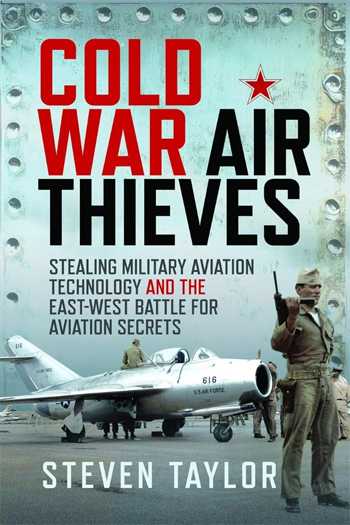
Coming soon from Pen & Sword and author Steven Taylor is Cold War Air Thieves: Stealing Military Aviation Technology and the East-West Battle for Aviation Secrets. The book provides the first in-depth exploration of the hidden Cold War battle fought by the intelligence services of both sides to obtain, by any means necessary, the secrets of some of the most potent warplanes ever to take to the skies.

The Cold War was a conflict defined by the battle for intelligence. And nowhere was this intelligence war more keenly fought than in the sphere of military aviation. Gaining information on the enemy’s latest warplanes and aviation-related hardware was a prime intelligence objective for both sides throughout the titanic ideological struggle that dominated the second half of the 20th century. Had the Cold War turned hot, the side possessing the greatest knowledge of its opponents’ combat aircraft would enjoy a crucial tactical advantage. Lagging behind the US and its NATO allies in many areas of aviation technology, the USSR also relied heavily on industrial espionage as a means of bridging the technological gap between East and West, shaving years and many millions of roubles off the development process in such key areas as the gas-turbine engine, long-range strategic bombers, air-to-air guided missiles, electronic countermeasures and stealth technology. Recruiting senior engineers and designers working in the opposing side’s aviation industries to spy for them, orchestrating the defection of pilots in their state-of-the-art aircraft, recovering shot-down aircraft wreckage from warzones like Korea, Vietnam and Afghanistan, even stealing components from under the noses of their enemies – nothing was off limits for the CIA, KGB, MI6 and Mossad in their relentless pursuit of aviation technology.

The 256 page hardcover book is currently available for pre-order with release set for August 30.

Product Page

Please Note: This post contains an Amazon affiliate link. When you purchase through links on our site, we may earn an affiliate commission.

Posted on

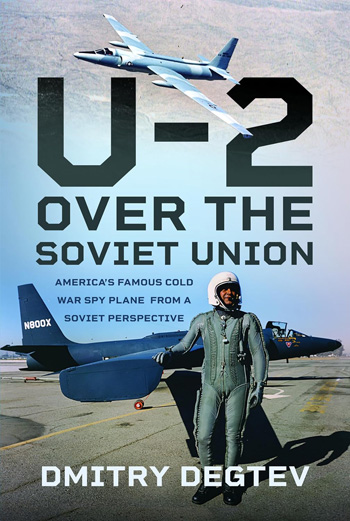
New Release: See the U‑2 Spy Plane Through Soviet Eyes

In the upcoming book The U-2 Over the Soviet Union: America’s Famous Cold War Spy Plane from a Soviet Perspective, Air World and author Dmitry Degtev provide a dramatic account of the U-2 shootdown revealing Soviet missile dominance and the era’s secret intelligence struggles.

Based on documents held in the CIA’s archives, declassified documents released by the Russian Ministry of Defence, and the memoirs of participants in the events in question, this book explores the true story of the preparation, implementation, and consequences of the U-2 reconnaissance flights over the Soviet Union, Eastern Europe and Cuba between 1956 and 1962. For the first time, the author reveals the military plans that were activated in the Eastern Bloc to combat the U-2 missions, and how the Soviets tried unsuccessfully to create a fighter-interceptor to operate in the stratosphere. This book also reveals which secret locations and objects were photographed by the U-2, including those which remained unidentified, and investigates where the secret centre of the Russian atomic project was actually located and whether the U-2 was able to find it. What was the true reliability and value of the information received from America’s U-2 operations?

The reader will discover which objects were confiscated from Francis Gary Powers, the pilot of the U-2 brought down, following his capture, and why was he had been issued with women’s jewelry and watches before his fateful flight? The Soviet view of the incursions by Powers and his fellow U-2 pilots is laid bare – revealing just why the Powers’ name is as widely known in Russia as that of the cosmonaut Yuri Gagarin.

The 256 page book is currently available for pre-order in hardcover and Kindle editions, with release slated for January 10.

Product Page

Please Note: This post contains an Amazon affiliate link. When you purchase through links on our site, we may earn an affiliate commission.

Posted on

“Profusely Illustrated” New Book Documents 42 of Japan’s Advanced WW2 Fighters

Fonthill Media and bestselling author Justo Miranda have released the new title Fighters of the Dying Sun which is described as “a previously unpublished compilation of forty-two advanced fighters developed in Japan during the Second World War.”

The first B-29 flew over Tokyo on 1 November 1944. It was a photographic reconnaissance aircraft ironically named ‘Tokyo Rose.’ The Ki.44 fighters of the 47th Sentai took off to intercept it but as it turned out the Superfortress flew at such an altitude and speed that they could not reach it. The Ki-44-II-Otsu had been specifically designed for this type of interception and could reach the astonishing rate of climb of 5,000 m in four minutes; however it was not good enough. During the following ten months, a devastating bombing campaign of thousands of Superfortresses destroyed 67 Japanese cities and half of Tokyo. Continue reading “Profusely Illustrated” New Book Documents 42 of Japan’s Advanced WW2 Fighters

Please Note: This post contains an Amazon affiliate link. When you purchase through links on our site, we may earn an affiliate commission.

Posted on

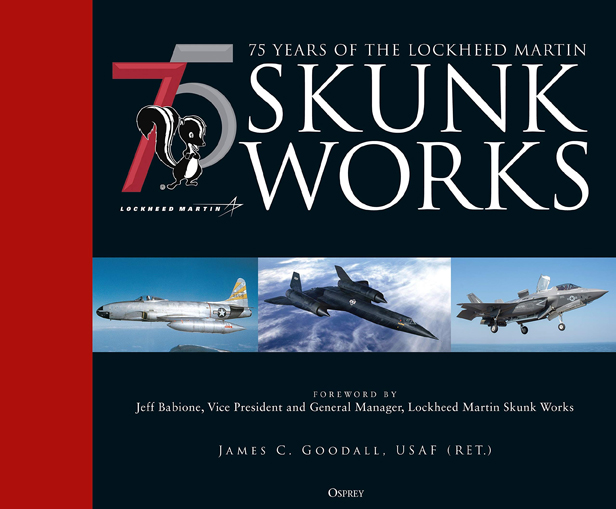
New Book Details All 46 Unclassified Skunk Works Projects From WW2 On

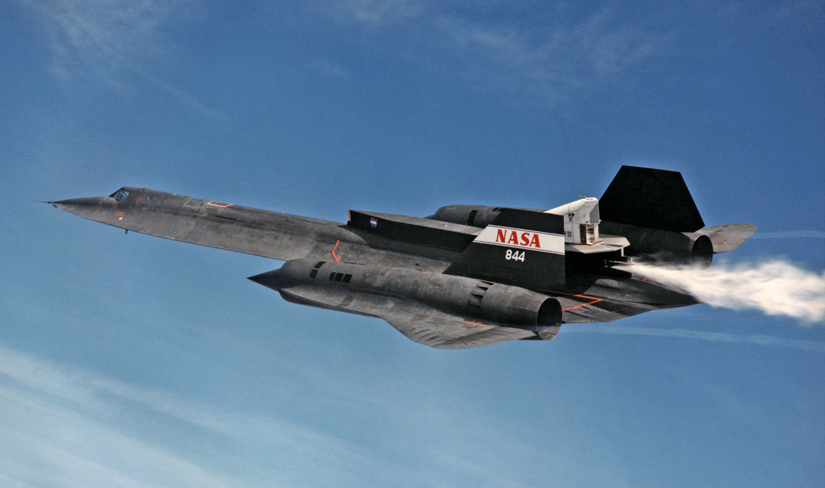
In his new book 75 years of the Lockheed Martin Skunk Works, author James C. Goodall details the 46 unclassified programs developed by the Lockheed’s legendary Skunk Works, forming a pictorial history that takes the reader from the middle part of World War II, through the Korean War, the shoot down of Francis Gary Powers on May 1, 1960, the Vietnam War, Desert Shield/Storm and beyond.

This pictorial journey will take the reader from the very beginning of the Skunk Works’ very first project (XP-80 Shooting Star) and follow the program through prototype build-up, first flight and, if they reached the frontline, operational service. This treatment will be repeated for each of the 30 unclassified program designed and built by the Skunk Works. Each program will form a chapter of at least two pages in length, with a maximum of 14 pages being allocated for programs that went into production and merit more detailed coverage, such as the P-80/F-94/T-33 family, C-130 family and, of course, the A-12 and SR-71

The title is illustrated with over a thousand photographs and drawings and spans 384 pages.

Product Page

Please Note: This post contains an Amazon affiliate link. When you purchase through links on our site, we may earn an affiliate commission.

Posted on

Museum’s New Full-Scale Cockpit Simulator to Help Visitors Experience Flight in a Spitfire

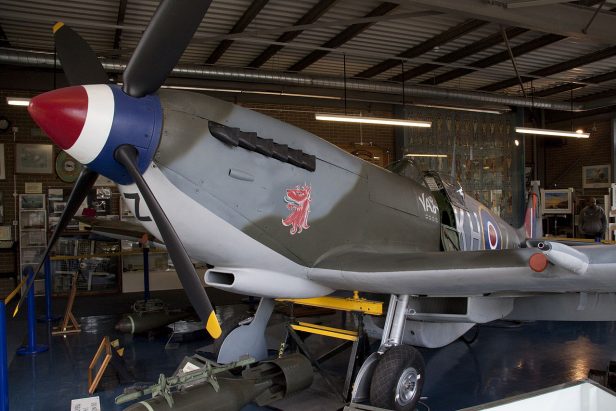
The Spitfire and Hurricane Memorial Museum in Kent has confirmed the installation of a functioning, full-scale Spitfire cockpit simulator that is slated to begin operation this year.

The simulator, which is situated directly beside the collection’s Spitfire Mk XVI(LF) TB752 (pictured above), will reportedly allow visitors to to try their hand at conducting a complete flight while also getting an idea of what it was like for pilots who flew the iconic warbird during WW2. Utilizing authentic controls and a large format display screen, the simulator is said to recreate engine torque effects as well as landing challenges presented by the Spitfire’s narrow undercarriage. The red-out and grey-out effects of excess G-forces are also said to be represented.

The £15,000 fundraising goal for the simulator was met with assistance from local charities, businesses and visitors and it is hoped that it will help continue the museum’s mission to engage, educate and inspire the local community while also securing funds that can be reinvested in the museum.

It is not yet known how much it will cost visitors to use the simulator, although bookings will reportedly begin on launch day, April 1, which coincides with the centenary of the RAF.

Click below to check out additional photos.

Continue reading Museum’s New Full-Scale Cockpit Simulator to Help Visitors Experience Flight in a Spitfire