Posted on

Cavanaugh Flight Museum Shares Progress Report on CASA 2.111E Restoration

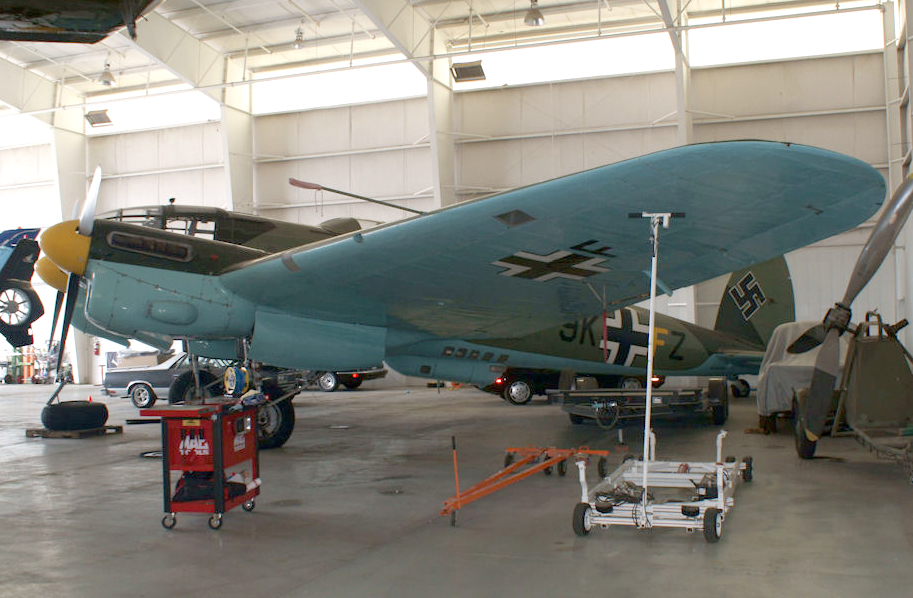
Cavanaugh Flight Museum has provided an update on their 1950 CASA 2.111E one year after the aircraft was transported to Ezell Aviation of Breckenridge, Texas for restoration.

For those that may not know, the Construcciones Aeronáuticas SA CASA 2.111E is a Spanish license built German Heinkel HE-111. More than 200 2.111s were built. The museum’s CASA served in the Spanish Air Force and was featured in the 1969 movie ‘Battle of Britain’ and the 1970 movie ‘Patton.’ The museum acquired this CASA in 1995.

Work done so far is described as “impressive” with the aircraft being completely disassembled and the fuselage separated into three sections for inspection, repair and priming. All cockpit components have been removed for inspection, repair or rebuilding. A new instrument panel is in the process of being crafted which will house gauges for the Packard built Merlin engines that will replace the machine’s previous Roll-Royce 500-45 engines.

An 18′ tall jig has been made to mount the wings so they can be stripped and inspected. A smaller jig was also made for the stabilizers. As of this writing the right stabilizer has been completed and the left one is underway. In addition, the center section has also been stripped and repaired. New wing spars have also been fabricated. Work on the main landing gear struts and tail gear have been completed.

Currently the aircraft is expected to return to flight around 2029-30. Click below to check out the complete update along with photos of the progress.

Continue reading Cavanaugh Flight Museum Shares Progress Report on CASA 2.111E Restoration
Posted on

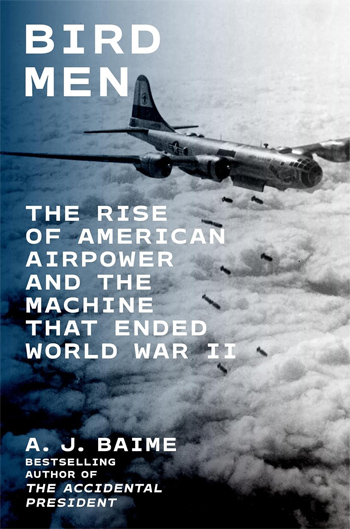
Bird Men: The B-29 Superfortress and WW2 American Airpower

Coming soon from Mariner Books and bestselling author A.J. Baime is Bird Men: The Rise of American Airpower and the Machine That Ended World War II – A WWII History of American Airpower and the Superfortress That Changed the Course of the War.

Of all the feats of American ingenuity in World War II, perhaps none was as impressive in scale or vital to the Allied victory as the creation of American airpower. Just a few years before the start of World War II, the American military was stuck in the dark ages of aviation, with the U.S. Army’s Air Corps mainly focused, not on combat, but on mail delivery. Fast forward to end of the war, and America had launched the most impressive flying machine the world had ever seen: the B-29 Superfortress, a weapon so essential to ending the war that its research and development process cost more than the Manhattan Project. Continue reading Bird Men: The B-29 Superfortress and WW2 American Airpower

Please Note: This post contains an Amazon affiliate link. When you purchase through links on our site, we may earn an affiliate commission.

Posted on

Hungary’s Bomber Development Through WW2: A Comprehensive Study

Coming soon from MMPBooks and authors Dénes Bernád and György Punka is Hungarian Bomber Colours 1927-1945 vol. 1, a comprehensive study of the development and operations of Hungary’s bomber aviation from its early beginnings through the end of World War II.

The book covers aircraft types, unit structure, and missions, focusing on both domestic developments and foreign influences shaping the Royal Hungarian Air Force. It includes rare archival photographs, detailed colour profiles, and thoroughly researched historical context that sheds light on this often-overlooked aspect of Central European military aviation. A valuable resource for aviation historians, researchers, and modellers interested in lesser-known air forces of the Second World War.

The 140 page, paperback book is currently available for pre-order with release set for June 30.

Product Page

Please Note: This post contains an Amazon affiliate link. When you purchase through links on our site, we may earn an affiliate commission.

Posted on

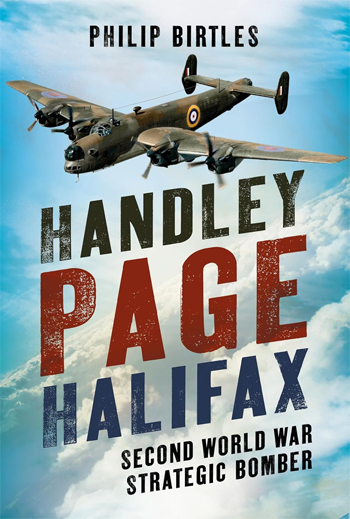
Handley Page Halifax: A Comprehensive Assessment

Coming soon from Fonthill Media and author Philip Birtles is Handley Page Halifax: Second World War Strategic Bomber, a comprehensive assessment of the aircraft, covering its design, production, testing and RAF service, both as a bomber and in its other roles.

While not as famous as the Avro Lancaster, the Handley Page Halifax was developed to the same specification as the Lancaster’s predecessor, the Avro Manchester, and suffered similar engine-related issues. However, once the early Rolls-Royce Merlins had been replaced with Bristol Hercules air-cooled radial engines, the bomber’s performance and reliability were transformed. The Halifax accounted for around 40 per cent of the RAF’s total heavy bomber fleet throughout the war, with production coming out of Handley Page at Cricklewood and Radlett, as well as English Electric at Samlesbury and Rootes Securities at Speke among other manufacturers located across Britain. After the engine change in 1943, the Halifax became a valued and reliable stablemate of the Lancaster, equipping two major Bomber Command Groups, including Canadian squadrons, and specialising in glider towing and maritime reconnaissance.

The 352 page, hardcover book is currently available for pre-order with release scheduled for May 30.

Product Page

Please Note: This post contains an Amazon affiliate link. When you purchase through links on our site, we may earn an affiliate commission.