Posted on

USAF Museum Releases New Photos Detailing Bleriot XI Restoration

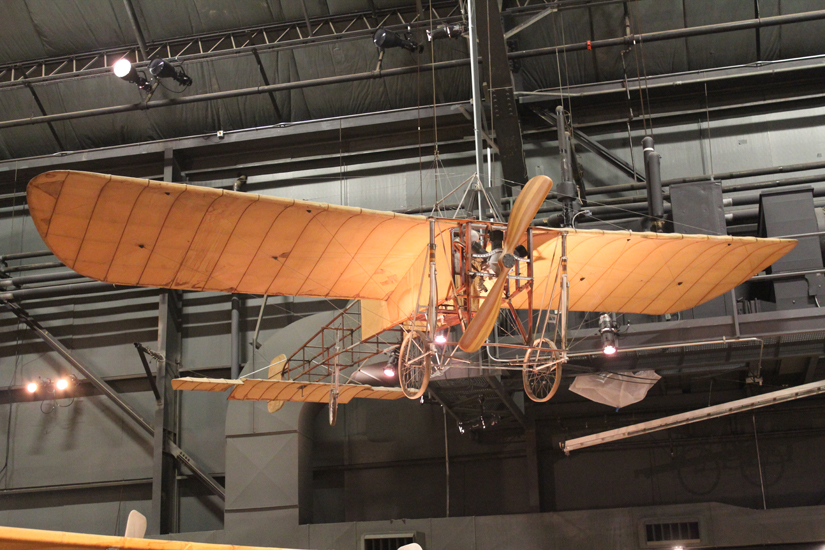
The National Museum of the U.S. Air Force in Dayton, Ohio has provided the best glimpse so far of their ongoing Bleriot XI restoration in a newly posted update.

The type is famous for being the first aircraft to cross the English Channel in July 1909, and it was used by several famous early aviators from Louis Bleriot himself, to Adolphe Pégoud to Harriet Quimby. It even saw service in the early months of WW1. The museum’s specific example was built from factory drawings by Ernest C. Hall of Warren, Ohio in 1911. He donated it to the museum in 1939. It was removed from public display in 2023 for restoration, with work beginning earlier this year.

The new update shows progress on the aircraft’s engine, controls and fuselage. Check it out below.

Continue reading USAF Museum Releases New Photos Detailing Bleriot XI Restoration

Posted on

USAF Museum Completes Restoration of Only Remaining Kellett XR-8 [Video]

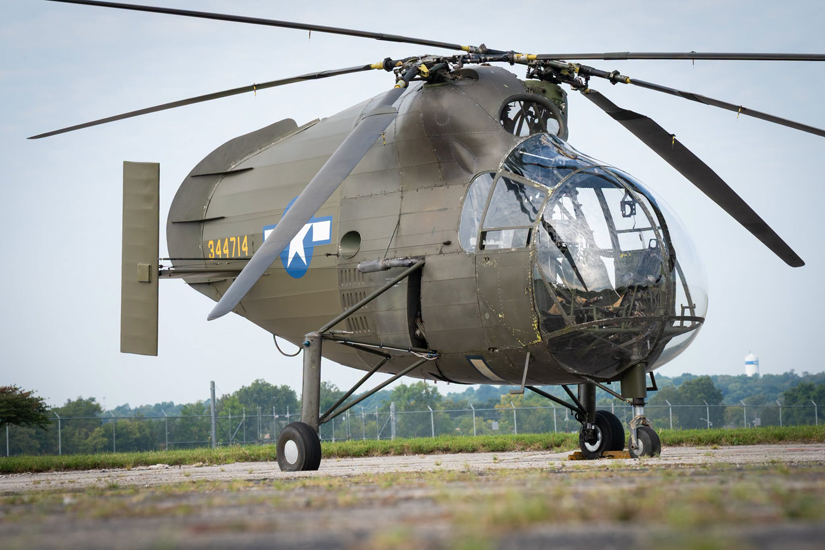
The National Museum of the U.S. Air Force in Dayton, Ohio has completed restoration of the world’s only surviving Kellett XR-8 experimental helicopter after countless hours of work by talented volunteers.

Developed as a prototype for the USAAF in 1940s, the Kellett XR-8 tested the idea of stabilizing a helicopter by using dual offset horizontal rotors to eliminate the need to power a tail rotor. Nicknamed “Eggbeater,” the design used two intermeshing wooden propellers above the two person cabin. The XR-8 first flew on August 7, 1944. Though the XR-8 was a revolutionary design, the Kellett Aircraft Corporation encountered significant problems with stability control and timing the rotors. The company modified the vertical stabilizers in an attempt to resolve some of these issues. Because of these and other complications, Kellett only produced two XR-8s before cancelling the program.

An official photo shoot was carried out on Monday. Plans call for the machine to be placed by the Vertijet in the museum’s R&D Gallery this October. The fabric covering on the left side of the fuselage has been removed to showcase interior views.

Check out a video showing the restoration process and final product below.

Continue reading USAF Museum Completes Restoration of Only Remaining Kellett XR-8 [Video]

Posted on

Cavanaugh Flight Museum Shares Progress Report on CASA 2.111E Restoration

Cavanaugh Flight Museum has provided an update on their 1950 CASA 2.111E one year after the aircraft was transported to Ezell Aviation of Breckenridge, Texas for restoration.

For those that may not know, the Construcciones Aeronáuticas SA CASA 2.111E is a Spanish license built German Heinkel HE-111. More than 200 2.111s were built. The museum’s CASA served in the Spanish Air Force and was featured in the 1969 movie ‘Battle of Britain’ and the 1970 movie ‘Patton.’ The museum acquired this CASA in 1995.

Work done so far is described as “impressive” with the aircraft being completely disassembled and the fuselage separated into three sections for inspection, repair and priming. All cockpit components have been removed for inspection, repair or rebuilding. A new instrument panel is in the process of being crafted which will house gauges for the Packard built Merlin engines that will replace the machine’s previous Roll-Royce 500-45 engines.

An 18′ tall jig has been made to mount the wings so they can be stripped and inspected. A smaller jig was also made for the stabilizers. As of this writing the right stabilizer has been completed and the left one is underway. In addition, the center section has also been stripped and repaired. New wing spars have also been fabricated. Work on the main landing gear struts and tail gear have been completed.

Currently the aircraft is expected to return to flight around 2029-30. Click below to check out the complete update along with photos of the progress.

Continue reading Cavanaugh Flight Museum Shares Progress Report on CASA 2.111E Restoration

Posted on

Shuttleworth Provides Update on DH.88 Comet Restoration Plan, Fundraising Appeal Launched

Shuttleworth has provided an update on plans for their original de Havilland DH.88 Comet following an incident at their Flying Proms Air Show on August 15 that resulted in significant damage.

The organization states that they have reached an agreement in principle with their insurers that will allow detailed assessment and repairs to begin. A fundraising appeal has also been launched to help facilitate repairs, restoration and preservation. The goal is not only to return the historic aircraft to the air, but to do so in time for the time for the 100th Anniversary of 1934 MacRobertson Air Race from England to Australia, which was won by “Grosvenor House” (G-ACSS) in 70 hours 54 minutes. This is the very aircraft Shuttleworth is now working to restore.

Our aim is to raise £250,000 over the next 18 months to ensure that G-ACSS not only flies again but emerges from this restoration with a more extensive spares holding to support its long-term operation for future generations to experience and enjoy.

As previously reported, the aircraft rolled over on landing at the event and the pilot was extracted and sent to the hospital, being discharged soon after. Full details on the restoration plan (and a donation link) can be found on Shuttleworth’s dedicated project page.

(via Shuttleworth Photo: Alan Wilson from Stilton, Peterborough, Cambs, UK, CC BY-SA 2.0, via Wikimedia Commons)

Posted on

Spitfire PR.XI PL983 Gets New USAAF Markings

The Aircraft Restoration Company’s Duxford-based Spitfire PR.XI PL983 (G-PRXI) has been given new, temporary markings in order to tell the wider story of reconnaissance Spitfires while giving a subtle nod to PL983’s postwar history, when it was gifted to the American Air Attaché use as his personal transport.

The new markings represent USAAF Spitfire PA892 “My Darling Dorothy” of the 14th Photographic Reconnaissance Squadron / 7th Photographic Reconnaissance Group. The markings were applied to represent the original RAF insignia being overpainted on base, “producing a subtle patchwork effect.”

From the moment we began marking out the stars and bars, it was obvious this scheme was going to have real presence. A Spitfire in American markings already catches the eye but there are plenty of details that make PA892 stand out even more. The yellow spinner gives the nose a bright flash of colour, while the hand-painted sign writing on the engine cowling adds that wonderfully human touch — the sort of detail that reminds you these aircraft were maintained, modified and personalised by real people working in real wartime conditions. Same with the red iron crosses, applied to acknowledge 30 photo sorties. Rather than looking too neat or factory-fresh, we applied with a makeshift stencil.

Click below to check out newly released images of the process and the finished product.

Continue reading Spitfire PR.XI PL983 Gets New USAAF Markings

Posted on

Cavanaugh Flight Museum’s A-1H Skyraider Returns to Flight, Air Show Visits Planned

Cavanaugh Flight Museum has announced that their A-1H Skyraider 39606 has returned to the air after six years of work, which saw the installation of a newly rebuilt Anderson Aeromotive engine.

This particularly historical Skyraider was originally built in 1955 and flown in the U.S. Navy off of the USS Ranger, Oriskany, and Intrepid. It was delivered to the South Vietnam Air Force in 1970 and then transferred to Thailand. It was one of the last Skyraiders to be flown out of Vietnam by Roger Youngblood in 1975 with the fall of Saigon. Our Skyraider was returned to the USA in 1980 and restored to flight by Fighter Rebuilders in Chino, CA in 1989. It’s also one a few A-1Hs left in existence and now painted in its original scheme as Wiley Coyote, flown by Dan Wiley. Lots of hard work and long hours by our staff mechanics Duane Oester and Jonathan Christof got this Skyraider in top shape for test flights.

The museum states that the plan is to take both of their Skyraiders (the second being AD-5W B/N 135152) to airshows across the country for display on the ground and in the air. The museum’s Addison, Texas facility closed in 2024 after 31 years. All aircraft, educational displays and memorabilia were moved to the North Texas Regional Airport. This location is currently not open to the public.

Click below to check out recently released photos and video of the Skyraider in action.

Continue reading Cavanaugh Flight Museum’s A-1H Skyraider Returns to Flight, Air Show Visits Planned

Posted on

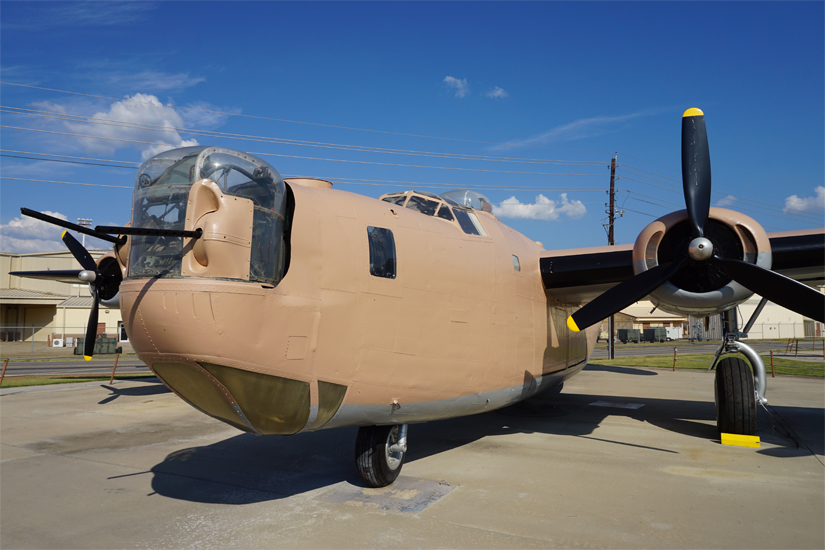
Phase II of B-24 Liberator Relocation Complete – Aircraft to be Restored for Static Display

The National Museum of the Mighty Eighth Air Force in Pooler, GA has announced the completion of Phase II of their B-24 Liberator Project.

The B-24J-20-FO Liberator (S/N 44-487821) was originally built by the Ford Motor Company at Willow Run, Michigan 1944. It has been on outdoor display for decades, most recently at Barksdale Air Force Base in Louisiana. Over that time it has worn several liveries, including Laiden Maiden, Louisiana Belle II (seen above), and Rupert the Roo II.

In June 2025 plans were announced for the aircraft to relocate to The National Museum of the Mighty Eighth Air Force, a process that includes painting and restoration. The aircraft is on loan from the National Museum of the United States Air Force.

Phase I was completed in May with the ailerons, flaps, horizontal stabilizers, turrets, propeller assemblies, and all four engines being cataloged and removed for transport and restoration. The completion of Phase II saw the wing assembly, fuselage, and remaining major components leave Barksdale for restoration at offsite locations.

The aircraft will be installed within the museum’s expanded galleries for public exhibition with the projected date being sometime in the spring of 2027. Click below to check out newly released photos of the ongoing work.

Continue reading Phase II of B-24 Liberator Relocation Complete – Aircraft to be Restored for Static Display

Posted on

Vintage Aviation Museum to Acquire Tillamook Air Museum

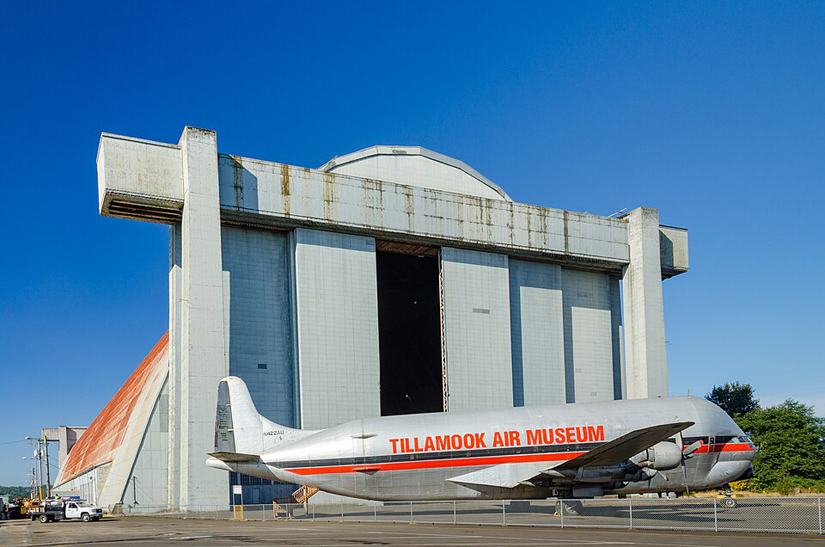
Tillamook Air Museum in Tillamook, Oregon has announced that the Port of Tillamook Bay Commissioners have approved a term sheet for the land lease and future sale of Tillamook’s historic World War II-era hangar to Vintage Aviation Museum, a 501(c)(3) of Spanish Fork, Utah.

The move will see Vintage Aviation Museum assume operation of the Tillamook Air Museum and become its future owner / operator. They plan to relocate most of their aircraft collection to Tillamook while bringing additional historic aircraft to the museum’s historic 1943 airship hangar known as “Hangar B.” The goal is to eventually utilize the entire hangar for aviation-related exhibits, aircraft displays, preservation, education, and visitor experiences. The “Tillamook Air Museum” name will reportedly remain.

An obvious priority will be the repair, restoration, and long-term preservation of Hangar B, which was damaged during a windstorm in December 2025 when an approx. 200 ft section of the roof peeled back.

Additional information, including a reopening date, will be forthcoming. Click below to check out the full announcement from Tillamook as well as the recent announcement by the Vintage Aviation Museum.

Continue reading Vintage Aviation Museum to Acquire Tillamook Air Museum

Posted on

Shuttleworth to Restore DH.88 Comet After Incident, Project Page Launched

Following an incident at Shuttlworth’s Flying Proms Air Show on August 15 that resulted in significant damage, The Shuttleworth Trust has announced their intention to restore their de Havilland DH.88 Comet back to airworthy condition.

The DH.88 was a remarkably sleek British two-seat, twin-engine racing aircraft designed by A. E. Hagg specifically for the 1934 MacRobertson Air Race from England to Australia. Built largely of wood with retractable landing gear, enclosed tandem cockpits, variable-pitch propellers, and two 230 hp Gipsy Six R engines, it represented an unusually advanced high-speed design for its day. Shuttleworth’s example, “Grosvenor House (G-ACSS),” is the very aircraft that won the roughly 11,300-mile race in 70 hours 54 minutes, helping make the DH.88 an enduring icon of 1930s aviation and an important influence on later de Havilland designs.

The aircraft rolled over on landing at the event and the pilot was extracted and sent to the hospital, being discharged soon after. Shuttleworth has launched a new, dedicated project page where you can stay up to date on the Comet’s progression.

(via Shuttleworth Photo: Airwolfhound from Hertfordshire, UK, CC BY-SA 2.0, via Wikimedia Commons)

Posted on

Sopwith Camel Goes on Display at Pima Air & Space Museum

This week Pima Air and Space Museum in Tucson, Arizona placed their new Sopwith Camel on display.

The reproduction was originally constructed in Europe by John Shaw utilizing original drawings. A flight test was conducted in September 2017 which saw the machine reach roughly 150 ft before its original Clerget rotary engine “coughed and stopped,” resulting in a “heavy landing.” Thankfully Shaw escaped the incident, but the Camel suffered significant damage.

It was acquired by Pima in 2018 and restored for static display wearing the colors of a
Camel flown by Lt. Alfred John Haines of 45 Squadron in late 1918. It is again fitted with an original Clerget from the Pima collection.

For additional details on this aircraft, check out issues 1, 5 and 28 of The Flying Machine journal. For details on John Shaw’s second Sopwith Camel, check out issues 14 and 23.

Click below to view additional images.

Continue reading Sopwith Camel Goes on Display at Pima Air & Space Museum