Posted on

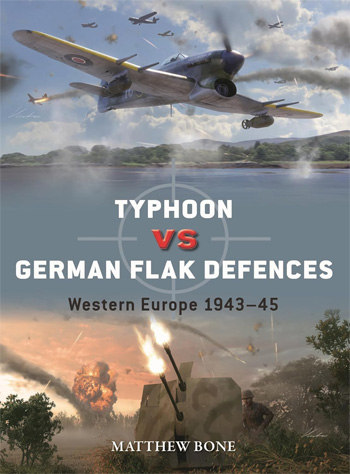
Hawker Typhoon vs German Flak Defenses: An Illustrated Study

Coming soon from Osprey Publishing and author Matthew Bone is Typhoon vs German Flak Defences: Western Europe 1943–45, an illustrated study of the evolving tactics that powered the deadly clashes between the RAF’s Typhoon Mk IB fighter-bomber and the Flakwaffesdefendinganti-aircraftarsenal.

The Flakwaffe’s role was to protect the Wehrmacht’s men, machines and material from aerial attack. Opposing them was the RAF’s 2nd Tactical Air Force (TAF), whose fighter-bomber spear was tipped with the Typhoon Mk IB, a fighter modified beyond its original intent. The tactics and weaponry of both adversaries evolved as each sought to outdraw the other, with ‘Bombphoon’ and rocket Typhoon squadrons combining their efforts whilst the Flakwaffe laid deadly traps in fields and on trucks and railway wagons.

In this engrossing study, Typhoon expert Matthew Bone chronicles the exploits of the 2nd TAF’s fighter-bombers and the Flakwaffe arsenal into whose crosshairs they ventured. Drawing on contemporary records of Typhoon operations and historical details of Flak crews, this detailed account utilises newly commissioned artwork, maps and diagrams to shed fresh light on the tactical development of both sides, and the price the RAF ultimately paid for victory.

The 80 page, paperback book is currently available for pre-order with release set for April 29.

Product Page

Please Note: This post contains an Amazon affiliate link. When you purchase through links on our site, we may earn an affiliate commission.
Posted on

Helmut Lent’s Logbook: The Combat Service of One of the Top-Scoring Night Fighter Aces of All Time

Coming soon from Air World and author Chris Goss is Helmut Lent’s Logbook: The Combat Service of One of the Top-Scoring Night Fighter Aces of All Time, which chronicles his rise from day fighter to radar-guided interception while detailing pivotal battles over Europe and his leadership in nocturnal air combat.

Credited with 110 aerial victories, Helmut Lent was one of the most successful German night-fighter aces of the Second World War. Born on 13 June 1918, he initially served as a day fighter pilot in the Luftwaffe, flying Messerschmitt Bf 110s during the early campaigns of the war.

Lent’s combat career began over the North Sea, Norway and the early stages of the Battle of Britain but in September 1940 his unit transitioned to night fighting. As part of Nachtjagdgeschwader 1, after initial self-doubts as to his ability, he established himself as a formidable night-fighter pilot, adapting to the emerging technology of radar-guided interception. His aircraft of choice was the Messerschmitt Bf 110 but in 1944 he flew the Junkers Ju 88, both of which he used to devastating effect against Allied bombers conducting night attacks over German territory; of his 110 victories, 102 had taken place at night.

By 1943, Lent had risen through the ranks, eventually taking command of Nachtjagdgeschwader 3, and would receive numerous decorations, including the Knight’s Cross of the Iron Cross with Oak Leaves, Swords, and Diamonds, Germany’s highest military honour. He was the first night fighter pilot to receive this award, defining his status as a leading figure in aerial combat at night.

Lent’s career was cut short on 5 October 1944, when his Ju 88 crashed on landing in an accident. He succumbed to his injuries two days later at the age of 26. Such was his standing in the eyes of the Luftwaffe, that Reichsmarschall Hermann Göring spoke at his funeral. Continue reading Helmut Lent’s Logbook: The Combat Service of One of the Top-Scoring Night Fighter Aces of All Time

Please Note: This post contains an Amazon affiliate link. When you purchase through links on our site, we may earn an affiliate commission.
Posted on

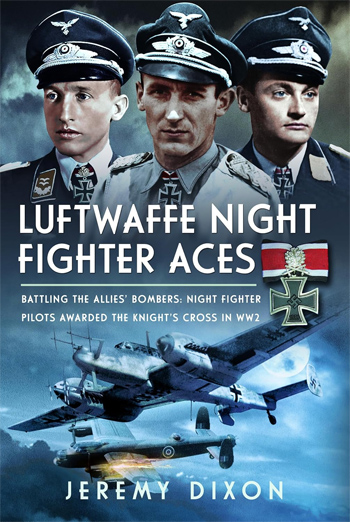
“Luftwaffe Night Fighter Aces” Profiles 70 WW2 Aces From Victories to Fates

Coming soon from Frontline Books and author Jeremy Dixon is Luftwaffe Night Fighter Aces: Battling the Allies’ Bombers: Night Fighter Pilots Awarded the Knight’s Cross in WW2.

This is a study of the seventy Luftwaffe night fighter aces who were awarded the Knight’s Cross and its higher grades between 1940 and 1945. Of this number, two were night fighter pilots who were awarded the Knight’s Cross with Diamonds, while another two who were awarded the Knight’s Cross with Swords, and twenty-four who were awarded the Oakleaves.

The 232 page, hardcover book also explores the ranks, commands, victories, and fates for each ace profiled. It is currently available for pre-order with release set for December 30.

Product Page

Please Note: This post contains an Amazon affiliate link. When you purchase through links on our site, we may earn an affiliate commission.
Posted on

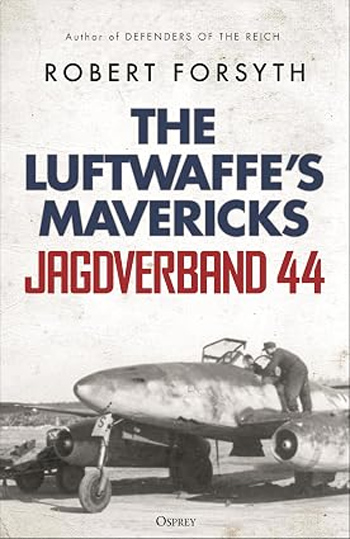
Jagdverband 44, the Me 262 and the Luftwaffe’s Mavericks

Coming soon from Osprey and author Robert Forsyth is Jagdverband 44: The Luftwaffe’s Mavericks, the dramatic story of Jagdverband 44, the squadron of aces founded by leading Luftwaffe pilot Adolf Galland equipped with the new Messerschmitt Me 262 jet fighter.

Jagdverband (JV) 44 was formed as a result of conflict and dissent within the Luftwaffe’s high command. Following disagreement with Reichsmarschall Herman Göring, the commander of the fighter arm, Adolf Galland, was dismissed from his post and exiled. He was given permission to set up a small fighter unit with which to prove that the revolutionary Me 262 was the war-winning jet fighter he believed it to be.

Assembling a small group of disillusioned and weary Luftwaffe fighter aces and flying instructors, Galland – arguably the most famous German fighter ace of World War II – moved his unit, JV 44, to Munich, from where it operated the Me 262 against USAAF aircraft bombing targets in Austria and southern Germany.

In this reappraisal of JV 44, published 30 years after his acclaimed and bestselling first study of the unit, leading Luftwaffe historian Robert Forsyth assesses Galland’s motives for forming the unit and whether it can be regarded more accurately as a ‘Squadron of Aces’ or a ‘Squadron of Outcasts and Exiles’. The book contains numerous first-hand accounts sourced by the the author during his research in the 1990s when he met with several former pilots from the squadron.

The 448 page book is currently available for pre-order in hardcover, audiobook and Kindle editions with release set for November 3.

Product Page

Please Note: This post contains an Amazon affiliate link. When you purchase through links on our site, we may earn an affiliate commission.
Posted on

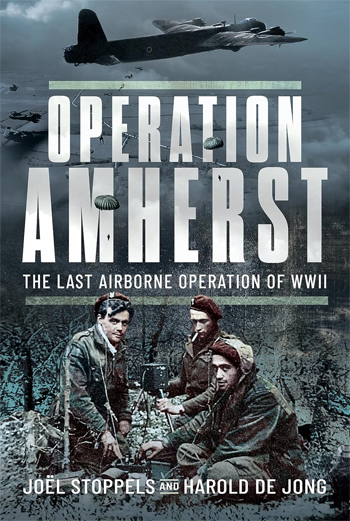
Operation Amherst: The Last Airborne Operation of WWII

Coming soon from Pen and Sword Military and authors Joël Stoppels and Harold de Jong is Operation Amherst: The Last Airborne Operation of WWII, which covers the final airborne operation of WWII, detailing French paratroopers’ landings, rapid combat in Drenthe and Friesland, and subsequent liberation efforts in Groningen and beyond.

In preparation for the liberation of the northern part of the Netherlands, Operation Amherst was launched on the night of 7 to 8 April 1945. This last airborne operation of the Second World War was carried out by 702 French (SAS) paratroopers. The fighting developed quickly after the landings in the province of Drenthe and a part of southeast Friesland. Canadian and British forces would then engage in the liberation of Groningen and the Westerbork concentration camp, and the elimination of the Delfzijl Pocket.

The 224 page hardcover book is currently available for pre-order with release set for October 30.

Product Page

Please Note: This post contains an Amazon affiliate link. When you purchase through links on our site, we may earn an affiliate commission.
Posted on

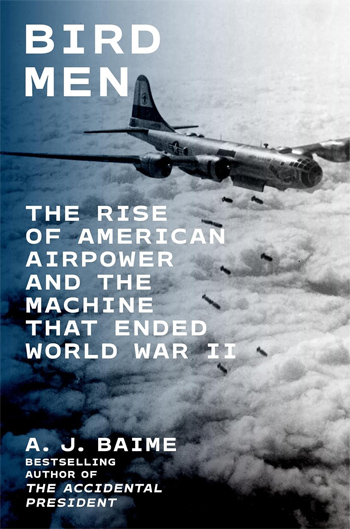
Bird Men: The B-29 Superfortress and WW2 American Airpower

Coming soon from Mariner Books and bestselling author A.J. Baime is Bird Men: The Rise of American Airpower and the Machine That Ended World War II – A WWII History of American Airpower and the Superfortress That Changed the Course of the War.

Of all the feats of American ingenuity in World War II, perhaps none was as impressive in scale or vital to the Allied victory as the creation of American airpower. Just a few years before the start of World War II, the American military was stuck in the dark ages of aviation, with the U.S. Army’s Air Corps mainly focused, not on combat, but on mail delivery. Fast forward to end of the war, and America had launched the most impressive flying machine the world had ever seen: the B-29 Superfortress, a weapon so essential to ending the war that its research and development process cost more than the Manhattan Project. Continue reading Bird Men: The B-29 Superfortress and WW2 American Airpower

Please Note: This post contains an Amazon affiliate link. When you purchase through links on our site, we may earn an affiliate commission.
Posted on

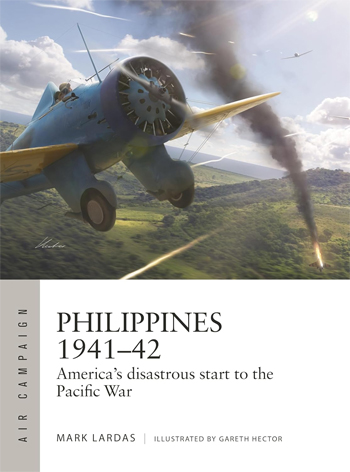
Coming Soon: Illustrated Study of America’s Failed First Pacific Air Campaign

Coming soon from Osprey Publishing and author Mark Lardas is Philippines 1941–42: America’s disastrous start to the Pacific War, a fully illustrated study of the Pacific War’s little-known first major air campaign.

On December 7, 1941, the Japanese not only attacked Pearl Harbor, but also struck at US and allied bases throughout the Pacific, including the USA’s biggest overseas territory, the Philippines. However, that was an air battle the US was expecting. The USAAF had beefed up its assets in the Philippines, sending nearly a quarter of its available B-17s to the Far Eastern Air Force (FEAF).It could also call on the Philippine Army Air Corps (PAAC).

Aviation historian Mark Lardas explains how despite that, in a campaign that lasted barely a month, Japan’s air forces routed both the FEAF and the PAAC, gaining air superiority and permitting Imperial Army troops undisturbed access to the Philippine coast. Within a week Japan ruled the skies over Luzon. Two weeks later it had air superiority over all the Philippines. After a month, its control was so complete the Imperial Army felt confident to move its 5th Air Group back out of the Philippines. While desultory air combat would continue off and on for the next three months, the issue was decided by 5 January 1942.

Packed with original artwork, 3D diagrams, maps and photos, this is the history of how the first air campaign of the Pacific War turned into a humiliating defeat for the United States.

The 96 page publication is currently available for pre-order in paperback and Kindle editions with release scheduled for July 28.

Product Page

Please Note: This post contains an Amazon affiliate link. When you purchase through links on our site, we may earn an affiliate commission.