Posted on

Cold War Air Thieves: Inside the Race to Steal Enemy Aircraft Secrets

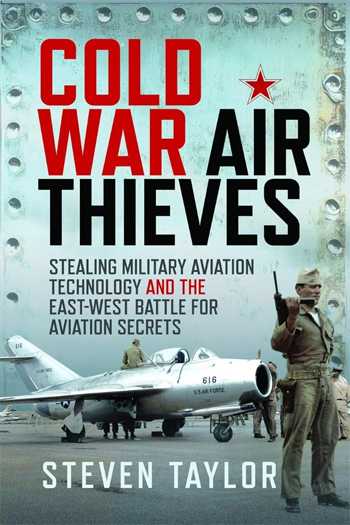
Coming soon from Pen & Sword and author Steven Taylor is Cold War Air Thieves: Stealing Military Aviation Technology and the East-West Battle for Aviation Secrets. The book provides the first in-depth exploration of the hidden Cold War battle fought by the intelligence services of both sides to obtain, by any means necessary, the secrets of some of the most potent warplanes ever to take to the skies.

The Cold War was a conflict defined by the battle for intelligence. And nowhere was this intelligence war more keenly fought than in the sphere of military aviation. Gaining information on the enemy’s latest warplanes and aviation-related hardware was a prime intelligence objective for both sides throughout the titanic ideological struggle that dominated the second half of the 20th century. Had the Cold War turned hot, the side possessing the greatest knowledge of its opponents’ combat aircraft would enjoy a crucial tactical advantage. Lagging behind the US and its NATO allies in many areas of aviation technology, the USSR also relied heavily on industrial espionage as a means of bridging the technological gap between East and West, shaving years and many millions of roubles off the development process in such key areas as the gas-turbine engine, long-range strategic bombers, air-to-air guided missiles, electronic countermeasures and stealth technology. Recruiting senior engineers and designers working in the opposing side’s aviation industries to spy for them, orchestrating the defection of pilots in their state-of-the-art aircraft, recovering shot-down aircraft wreckage from warzones like Korea, Vietnam and Afghanistan, even stealing components from under the noses of their enemies – nothing was off limits for the CIA, KGB, MI6 and Mossad in their relentless pursuit of aviation technology.

The 256 page hardcover book is currently available for pre-order with release set for August 30.

Product Page

Please Note: This post contains an Amazon affiliate link. When you purchase through links on our site, we may earn an affiliate commission.

Posted on

Avro Vulcan AEO Sets Out to Answer Common Cold War Question in New Book

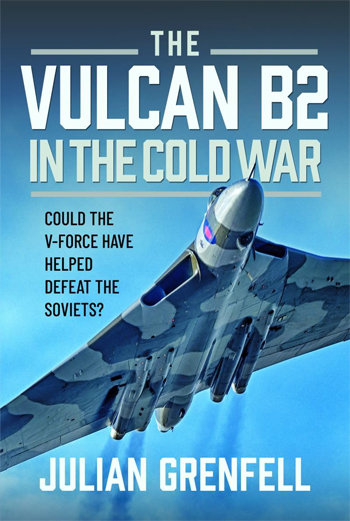
Coming soon from Air World and author Julian Grenfell is The Vulcan B2 in the Cold War: Could the V-Force Have Helped Defeat the Soviets. Written by an Air Electronics Officer with some 4,500 flying hours in Avro Vulcans, the new title sets out to answer the commonly asked question about Cold War V-force nuclear deterrent: “If the balloon had gone up, would it have got through?”

The Vulcan B2 in the Cold War analyses the state of air power in the early years of the Cold War, examining the hot wars of Korea and Vietnam, as well as the early versions of Soviet and Chinese air defence systems and how effective they might be at countering the RAF’s nuclear bomber fleet. The UK’s deterrent had to be survivable of a Soviet pre-emptive ballistic missile strike, or had to be airborne before such a strike took place. The early warning system provided Bomber Command’s headquarters with some 3½ minutes to 4½ minutes warning to get the V-force airborne. The average time to get these aircraft airborne was an astonishing 1 minute 53 seconds.

The author explains the ‘combat environment’ the Vulcan would have to fly into to be able to release its weapon. It would have to be capable of outpacing enemy fighters and avoid detection from the radars of surface-to-air missiles. Such factors were considered in what was called the ‘Probability of Kill’. The effectiveness of the Vulcan in evading Soviet defences was put to the test during several critical moments of the Cold War. One such instance was the Cuban Missile Crisis of 1962.

Another supremely important element of the Vulcan’s role was the nature of the weapon the Vulcan carried and its method of delivery. All of this is discussed in this intriguing investigation into how the Vulcan, and more specifically the B2 variant, would have fared should the Cold War have turned ‘hot’.

The 256 page, hardcover book is currently available for pre-order with release set for May 31.

Product Page

Please Note: This post contains an Amazon affiliate link. When you purchase through links on our site, we may earn an affiliate commission.
Posted on

Vulcan to Spitfire and Back: Flying in an RAF Squadron During the Cold War

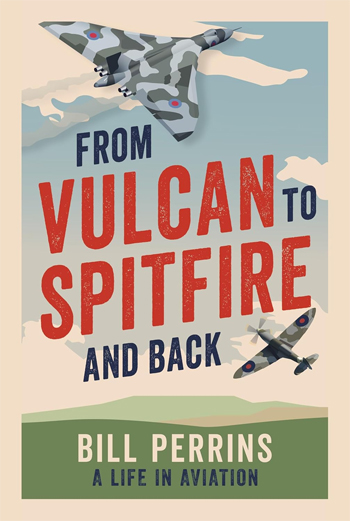
Coming soon from Fonthill Media and author Bill Perrins is From Vulcan to Spitfire and Back: A Life in Aviation, described as “a humorous, unguarded, and often self-deprecating account of what it was like to be part of an RAF squadron during the Cold War.”

Growing up in Belfast during the Troubles, Bill Perrins was a young man hell-bent on a career as a pilot. He made it through RAF pilot training—thanks more, perhaps, to sheer determination than aptitude—and finally graduated to the role of Vulcan pilot in time to take part in the 1982 Falklands War. After the RAF, Bill entered the world of commercial aviation, flying Boeing 747s and Dreamliners on long-haul, though he still found time to pilot the world’s only privately owned nuclear bomber, the mighty Vulcan XH558, at air shows, along with P51 Mustangs, Yaks and the legendary Spitfire. Way back in his boyhood, the fantasy of one day flying the Spitfire was where it had all begun—and it did not disappoint.

From Vulcan to Spitfire and Back: A Life in Aviation is… about the simple joys of flying, whether in the cockpit of the enormous delta-winged Vulcan or behind the sprightly controls of the inimitable Spitfire, and the camaraderie that comes with it, both in military and civil aviation.

The 224 page hardcover book is currently available for pre-order with release set for June 30.

Product Page

Please Note: This post contains an Amazon affiliate link. When you purchase through links on our site, we may earn an affiliate commission.
Posted on

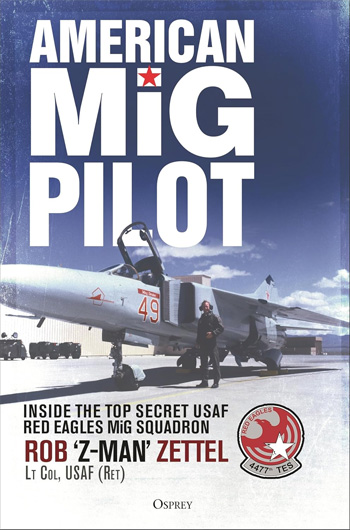
New Book Takes You Inside The Top Secret USAF MiG Squadron

Coming soon from Osprey and author Rob Zettel is American MiG Pilot: Inside the Top Secret USAF “Red Eagles” MiG Squadron, which puts readers inside the head of one of America’s most experienced MiG pilots as he tells the thrilling tale of the top-secret US operation that wouldn’t feel out of place in Top Gun.

After finding themselves outflown over Vietnam, the American military launched top-secret Operation Constant Peg, using illicitly obtained Russian Fighters pitted against star US fighter pilots in simulated combat exercises. With controls labelled in Russian and the only spare parts being the ones they could salvage, the pilots who climbed into the MiGs – the Red Eagles – accepted all of the risks associated with operating these aircraft.

This book describes what it was like to be there day in and day out at one of the most access-restricted airfields in the entire USAF, flying MiGs alongside some of the very best fighter pilots hand-picked from the ranks of the USAF, US Navy and US Marine Corps. Rob “Z-Man” Zettel tells the Red Eagles story for the first time through the experiences of a pilot who flew these aircraft to their maximum performance in simulated combat engagements, often several times a day, against frontline fighter pilots of the three US sister services.

Vivid accounts of training engagements put the reader right in the cockpit, while historical photographs help paint the picture of an operation that took the US Air Force from its disappointing performance in the Vietnam War to unprecedented success in Operation Desert Storm.

The 368 page hardcover book is currently available for pre-order with release slated for February 12.

Product Page

Please Note: This post contains an Amazon affiliate link. When you purchase through links on our site, we may earn an affiliate commission.
Posted on

Into the Nuclear Cloud: A Cold War Pilot’s Story

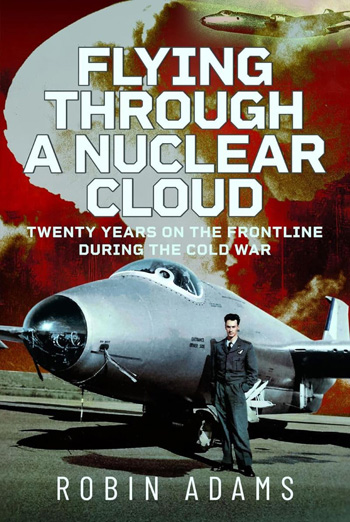
Coming soon from Air World and author Robin Adams is Flying Through a Nuclear Cloud: Twenty Years on the Frontline During the Cold War, which tells the unusual story of a frontline navigator who flew on Canberra, Shackleton and F4 Phantom squadrons between 1954 and 1974 as well as his involvement with nuclear weapon testing in 1956 and 1958.

It was during his time on Canberras that, in 1955, volunteers were called for ‘An Interesting Overseas Tour’. Robin Adams put his hand up. The task was to collect samples resulting from nuclear explosions. This, however, was only revealed to the volunteers after they had arrived in Australia.

On 19 June 1956 that Robin, then the navigator of Canberra WH976, took off from the RAAF Perth. Along with his pilot, Robin was about to be involved in the second and final nuclear test under Operation Mosaic – both explosions taking place at the Montebello Islands.

In 1957 Robin joined Coastal Command flying the Avro Shackleton. After this interlude, a year later he was back nuclear testing. This time it was at Christmas Island in the Pacific, with the awesome megaton H bombs of Operation Grapple Z. His task was to collect weather data and clear shipping from the potential danger areas. From 1963-1966 Robin was on 31 Squadron which, equipped with Canberra PR.7s, was stationed in Germany and tasked with day and night low-level photo reconnaissance. It was during this time that he was involved in a serious aircraft accident following a single engine approach at night.

By 1969 the front-line days were over for the Canberra, and Robin was posted onto the F4 Phantom as a Flight Commander on 14 Squadron. The squadron’s primary role was all-weather tactical nuclear weapon delivery to targets in East Germany, secondary roles being ground attack and air defence. Crews stood Quick Reaction Alert for twenty-four hour stretches, twice a month, in a hut, with a nuclear weapon loaded on the aircraft parked outside. Robin’s nuclear journey had gone full circle.

The 256 page hardcover book is currently available for pre-order with release slated for March 30.

Product Page

Please Note: This post contains an Amazon affiliate link. When you purchase through links on our site, we may earn an affiliate commission.
Posted on

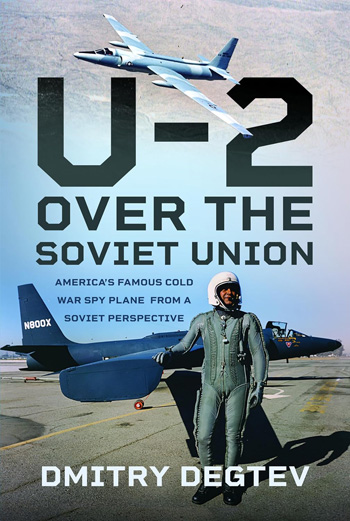
New Release: See the U‑2 Spy Plane Through Soviet Eyes

In the upcoming book The U-2 Over the Soviet Union: America’s Famous Cold War Spy Plane from a Soviet Perspective, Air World and author Dmitry Degtev provide a dramatic account of the U-2 shootdown revealing Soviet missile dominance and the era’s secret intelligence struggles.

Based on documents held in the CIA’s archives, declassified documents released by the Russian Ministry of Defence, and the memoirs of participants in the events in question, this book explores the true story of the preparation, implementation, and consequences of the U-2 reconnaissance flights over the Soviet Union, Eastern Europe and Cuba between 1956 and 1962. For the first time, the author reveals the military plans that were activated in the Eastern Bloc to combat the U-2 missions, and how the Soviets tried unsuccessfully to create a fighter-interceptor to operate in the stratosphere. This book also reveals which secret locations and objects were photographed by the U-2, including those which remained unidentified, and investigates where the secret centre of the Russian atomic project was actually located and whether the U-2 was able to find it. What was the true reliability and value of the information received from America’s U-2 operations?

The reader will discover which objects were confiscated from Francis Gary Powers, the pilot of the U-2 brought down, following his capture, and why was he had been issued with women’s jewelry and watches before his fateful flight? The Soviet view of the incursions by Powers and his fellow U-2 pilots is laid bare – revealing just why the Powers’ name is as widely known in Russia as that of the cosmonaut Yuri Gagarin.

The 256 page book is currently available for pre-order in hardcover and Kindle editions, with release slated for January 10.

Product Page

Please Note: This post contains an Amazon affiliate link. When you purchase through links on our site, we may earn an affiliate commission.