
Posted on

The Observer Corps: The Hidden Defenders Tracking Enemy Aircraft in Britain’s Skies

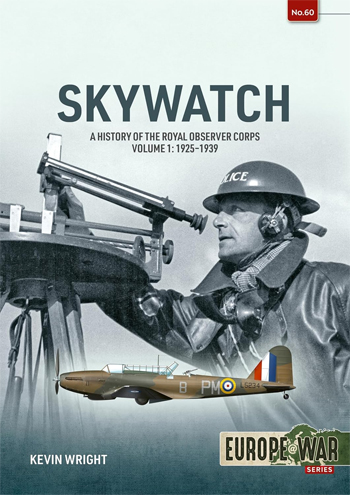
Soon to be released by Helion and Company and author Kevin Wright is Skywatch Volume 1: A History of the Royal Observer Corps, 1925 to 1939.

During World War One, London was vulnerable to air attacks by Zeppelins and later German bombers. To defend the capital, the London Air Defence Area was created to coordinate the efforts to protect it. However, after 1918, the system was quickly abandoned.

In the early 1920s, the Committee for Imperial Defence began to reconsider the problem. In 1924, the first experiment was conducted to monitor and report the movement of aircraft overland by using small groups of aircraft observers reporting to a central point. This successful experiment led to the creation of the Observer Corps in 1925 under the control of Police Chief Constables.

Originally intended to cover just the South East of England to protect London, as the threat from resurgent Nazi Germany grew, the Corps was gradually expanded to cover nearly the whole of Gt Britain by the start of the War. Now transferred to the control of the Air Ministry, Observer Corps Groups became a key part of Fighter Commands integrated air defence system, unique in that it was the only means to track the movement of aircraft once they crossed the coast and headed inland.

Using a combination of new research and access to official files, Volume One of Skywatch charts the development of the Observer Corps from its origins, the very beginnings, formation and growth through the 1920s. It critically examines how, in the rush to prepare for War in the late 1930s, the Observer Corps began to ready itself for War and its unique role, monitoring the skies of Britain.

The 76 page publication is currently available for pre-order in paperback format. Release is slated for April 30.

Product Page

Please Note: This post contains an Amazon affiliate link. When you purchase through links on our site, we may earn an affiliate commission.
Posted on

WW2 Rocket Interceptors Detailed With Immaculate Tech Drawings, Full Performance Specs

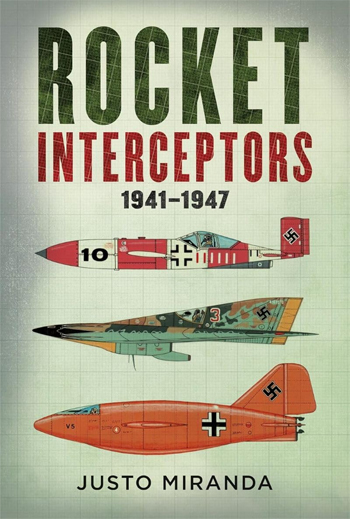
Coming soon from Fonthill Media and author Justo Miranda is Rocket Interceptors 1941–1947:

During its short life, the rocket interceptor, a concept that reached maturity towards the end of the Second World War, attracted the attention of top scientists, designers and aeronautical engineers in Germany, the USSR, the United States and Japan. It was universally agreed that an interceptor capable of flying 300 mph faster than any other aircraft would give the wielding power untouchable aerial superiority. However, this new technology was unable to adapt to the realities of war.

The complexity of the propulsion system and the need to develop new aerodynamic concepts were challenges too great for the aeronautical industries of the major powers at the time, which specialized in the mass construction of piston fighters. Nor were fighter pilots able to adapt to the high-G combat conditions that came with achieving speeds of nearly 900 mph; it was simply not possible for them to aim and fire.

In 280 immaculate technical drawings, each set within its historical context and with full performance specifications, Rocket Interceptors 1941–1947 presents 125 project, prototype and combat rocket-powered aircraft developed by Germany, the United States, the USSR and Japan in the 1940s, though initial development for some can be traced as far back as the 1920s. This is the last word on a technology that, had it been properly harnessed, might have changed the course of the Second World War.

The 288 page, hardcover book is currently available for pre-order with release set for May 30.

Product Page

Please Note: This post contains an Amazon affiliate link. When you purchase through links on our site, we may earn an affiliate commission.
Posted on

The Harrowing Experiences of Doolittle Raid Pilot Donald Smith Told in New Book

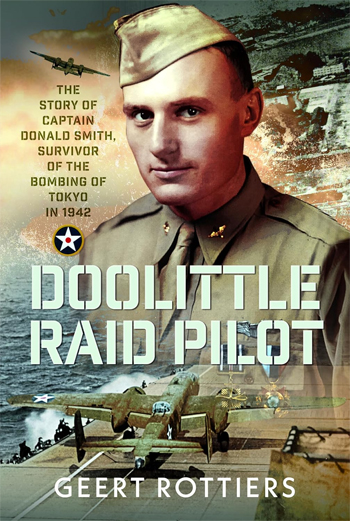
Set for release later this year from Pen & Sword and author Geert Rottiers is Doolittle Raid Pilot: The Story of Captain Donald Smith, Survivor of the Bombing of Tokyo in 1942.

Donald Gregory Smith’s early years were shaped by trauma. He was 5 years old when his mother died, following which he was placed in an orphanage by his father. Despite this background, in 1940, Donald earned a Bachelor of Science degree from the University of South Dakota. After graduation, he was commissioned as a second lieutenant in the infantry, but his passion led him to a career in aviation. By March 1941, through sheer determination and discipline Smith had completed his flight training and became a pilot in the Army Air Corps. In 1942, he was selected for a top-secret mission led by Lieutenant Colonel James H. Doolittle: a surprise bombing raid on Japan in retaliation for Pearl Harbor. The story follows Smith during his embarkation aboard the USS Hornet, alongside fifteen other B-25 Mitchell crews. During training, he successfully lifted off after only eighty-seven meters – the shortest take-off of all the Raiders. On 18 April 1942, the day of the infamous Doolittle Raid, Donald’s crew bombed industrial targets in Kobe with precision. During the subsequent diversionary flight to China, his aircraft was attacked by Japanese fighters, but Smith managed to evade them over the Sea of Japan. A shortage of fuel forced Smith to execute a perfect belly landing on water in the East China Sea before getting ashore. With the help of Chinese villagers, Smith and his crew evaded advancing Japanese patrols and eventually returned home. After returning to the United States, Smith was reassigned to the 319th Bomb Group. In November 1942, he flew a B-26 Marauder to Europe as part of a ferry operation. A few weeks later, during a transfer flight from RAF Attlebridge in Norfolk to St. Eval in Cornwall, his aircraft crashed in bad weather. Smith was killed.

The 256 page, hardcover book is currently available for pre-order with release scheduled for September 30.

Product Page

Please Note: This post contains an Amazon affiliate link. When you purchase through links on our site, we may earn an affiliate commission.

Posted on

New Book Takes You Inside The Top Secret USAF MiG Squadron

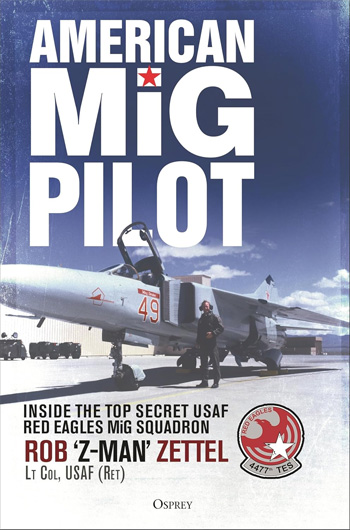
Coming soon from Osprey and author Rob Zettel is American MiG Pilot: Inside the Top Secret USAF “Red Eagles” MiG Squadron, which puts readers inside the head of one of America’s most experienced MiG pilots as he tells the thrilling tale of the top-secret US operation that wouldn’t feel out of place in Top Gun.

After finding themselves outflown over Vietnam, the American military launched top-secret Operation Constant Peg, using illicitly obtained Russian Fighters pitted against star US fighter pilots in simulated combat exercises. With controls labelled in Russian and the only spare parts being the ones they could salvage, the pilots who climbed into the MiGs – the Red Eagles – accepted all of the risks associated with operating these aircraft.

This book describes what it was like to be there day in and day out at one of the most access-restricted airfields in the entire USAF, flying MiGs alongside some of the very best fighter pilots hand-picked from the ranks of the USAF, US Navy and US Marine Corps. Rob “Z-Man” Zettel tells the Red Eagles story for the first time through the experiences of a pilot who flew these aircraft to their maximum performance in simulated combat engagements, often several times a day, against frontline fighter pilots of the three US sister services.

Vivid accounts of training engagements put the reader right in the cockpit, while historical photographs help paint the picture of an operation that took the US Air Force from its disappointing performance in the Vietnam War to unprecedented success in Operation Desert Storm.

The 368 page hardcover book is currently available for pre-order with release slated for February 12.

Product Page

Please Note: This post contains an Amazon affiliate link. When you purchase through links on our site, we may earn an affiliate commission.
Posted on

From Biplanes to Jets: The RAF’s Long Watch in the Far East

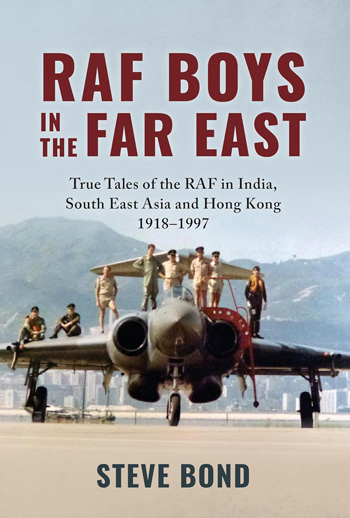
Newly released from author Steve Bond and Grub Street Publishing is RAF Boys in the Far East: True Tales of the RAF in India, South East Asia and Hong Kong.

For 82 years the Royal Flying Corps (RFC), which in 1918 became the Royal Air Force (RAF), maintained a permanent military aviation presence in the Far East. Throughout that time a huge variety of squadrons, flying many different aircraft types, together with all the necessary operational, technical and administrative support, took on all that was asked of them. The first RFC units arrived in India in 1915. RAF India grew substantially in the interwar period and throughout World War Two. Various changes in the command structure finally saw the creation of the Far East Air Force (FEAF) in June 1949, covering South East Asia and Hong Kong. In the 1960s the UK government decided to withdraw all forces East of Suez and on 31 October 1971 the FEAF disbanded and most UK forces withdrew from Singapore at this time. The last RAF unit to leave the region was 28 Squadron flying. They had been operating Whirlwind and Wessex helicopters in Hong Kong until the territory was handed back to China in 1997. RAF Boys in the Far East illustrates what it was like for those air and ground crew who were there by telling their stories in their own words, supported by explanation of the situations at the time and photographs primarily drawn from veterans’ own collections. The stories are as varied as the locations, the units and the personnel; everyday operations, exercises, triumph and tragedy, off duty time, and of course, the humour for which the RAF is renowned. Chapters focus on differing aircraft roles and their operations, including emphasis on the war years in India and Burma, and the Singapore era with actions such as Operation Firedog and the Indonesian Confrontation. Today those veterans who look back on their time served in the FEAF do so with a great deal of pride, and rightly so. This is their story.

The 256 page book is available in hardcover, Kindle and audiobook editions.

Product Page

Please Note: This post contains an Amazon affiliate link. When you purchase through links on our site, we may earn an affiliate commission.
Posted on

Defenders of the Reich: The Luftwaffe’s Fierce Battle Against America’s Bombers

Recently released by Osprey Publishing and author Robert Forsyth is Defenders of the Reich: The Luftwaffe’s War Against America’s Bombers, which tells the story of the Luftwaffe fighter arm’s desperate defense of the Third Reich from the growing Allied bomber offensive in WW2.

The Reichsverteidigung (Defence of the Reich) was a do or die campaign that saw the very best fighter pilots in the Luftwaffe attempt to defend German skies from increasingly large formations of RAF and USAAF medium and heavy bombers. Flying both piston-engined and, eventually, the first jet-engined fighters to see operational service, the Jagdflieger employed a wide range of weapons and tactics in an effort to blunt the Allied air offensive across Nazi Germany and Occupied Europe.

Defenders of the Reich focusses on the story of the pilot, his aircraft, his weaponry, his draining, dangerous missions and Luftwaffe tactics against the USAAF and the RAF bombers from the summer of 1942 through to VE Day. They fought until they were all but obliterated as USAAF and RAF fighters decimated their ranks in the air and targeted their airfields in devastating strafing attacks.

Leading Luftwaffe historian Robert Forsyth uses German and Allied archival documents coupled with interviews with former Jagdwaffe pilots, to tell the history of this last-ditch aerial campaign from the perspective of the Luftwaffe.

The 466 page book is available in hardcover, Kindle and audiobook editions.

Product Page

Please Note: This post contains an Amazon affiliate link. When you purchase through links on our site, we may earn an affiliate commission.
Posted on

Arming the Luftwaffe: Machine Guns, Cannon and Aerial Artillery that Powered German Air Combat, 1939–1945

Soon to be released from Pen and Sword History and author Tim Heath is German Aircraft Weaponry: Machine Guns, Cannon and Aerial Artillery in Luftwaffe Service, 1939-1945. The book examines the use of the humble rifle calibre machine gun as an aircraft weapon along with the efforts to develop suitable cannon with greater destructive power for aircraft use, the advances made during the inter-war years and the various barrelled weaponry either used or proposed by the German Luftwaffe in the Second World War.

This work encompasses not only the technical and operational appraisals of the various weapons used by the German Luftwaffe aircrews, which include some of Germany’s leading surviving fighter aces of the Second World War, but also the armourers tasked with their day-to-day maintenance, the instructors and technicians on the ground, and those who found themselves at the receiving end of their firepower both in the air and on the ground. This unique work encompasses many new and previously unpublished testimonies as told by those who were there in their own words and for the first time.

The 256 page hardcover book is currently available for pre-order with release slated for March 30.

Product Page

Please Note: This post contains an Amazon affiliate link. When you purchase through links on our site, we may earn an affiliate commission.
Posted on

DC-3’s Epic Milestone: 90 Glorious Years Soars Onto US Shelves!

Fonthill will soon release The Douglas DC-3: 90 Glorious Years, author Geoff Jones’ comprehensive history of the Douglas DC-3, exploring its military, commercial, and enduring global legacy.

In Douglas DC-3: 90 Glorious Years, Geoff Jones explores the rich history of the aircraft from its beginnings in Southern California in the 1930s, to its participation in military operations such as the D-Day Normandy Landings, through to its use as a commercial aircraft into the twenty-first century. The Airbus and Boeing operators of today have their DC-3 operations to thank for their current success, and numerous enthusiast organisations continue to keep DC-3s airworthy and fly them for their members. Ninety years on, the legacy of this extraordinary aircraft is as strong as ever.

The 176 page paperback is currently available for pre-order with release slated for January 15.

Product Page

Please Note: This post contains an Amazon affiliate link. When you purchase through links on our site, we may earn an affiliate commission.
Posted on

Bloody Skies Incoming: XV Fighter Command’s Untold War

Coming soon from Osprey and author Thomas McKelvey Cleaver is the new book Bloody Skies: XV Fighter Command Against all Odds, which details the operations of the USAAF’s overlooked XV Fighter Command that protected bombers during the campaign against the Romanian oil fields in World War II.

Formed in the fall of 1943, the Fifteenth Air Force was popularly known as the “The Forgotten Fifteenth,” as its achievements were overshadowed by more glamorous exploits of the Eighth Air Force in the air war over Germany. Nevertheless, the Fifteenth’s contribution to Allied victory was crucial, and a vital part of that was the role played by the escorting fighter groups from the XV Fighter Command who protected the B-17s and B-24s from the Luftwaffe in the skies over Romania.

In this new history of the campaign, renowned aviation historian Tom Cleaver tells the story of the Fifteenth’s air war through first-person accounts of the fighter pilots of the Fifteenth Fighter Command, including such famous units as the Red Tails – the Tuskegee Airmen – the 82nd Fighter Group and the 325th’s “Checkertail Clan,” and with his ability to place wartime events in their greater context.

The 320 page book is currently available for pre-order in hardcover and Kindle editions. Release is scheduled for March 10.

Product Page

Please Note: This post contains an Amazon affiliate link. When you purchase through links on our site, we may earn an affiliate commission.
Posted on

Double Sunrise: How Qantas Reopened Australia’s Severed Air Route to Britain in WWII

In his new book Double Sunrise, author Geoff Goodall explores Qantas Empire Airways Indian Ocean wartime services between 1943 and 1946.

The Japanese conquest cut Australia off from Britain in early 1942, leaving the country isolated. From June 1943, Qantas revived the Perth-to-Ceylon route—the world’s longest at the time—creating 27-hour, radio-silent flights that witnessed two sunrises, giving birth to the “Double Sunrise” service; five months later, the route extended to Karachi. In mid-1944, faster Qantas Liberators joined, shortening the Ceylon–Exmouth Gulf leg, followed by the introduction of Qantas Lancastrians in 1945. Despite wartime isolation, the service ran accident-free until a Lancastrian vanished on a final Indian Ocean leg in March 1946, after which operations returned to Singapore routes. Sir Hudson Fysh later called the wartime Indian Ocean service the most fascinating and romantic achievement of Qantas.

The 134 page paperback book is currently available for pre-order with release set for December 15.

Product Page

Please Note: This post contains an Amazon affiliate link. When you purchase through links on our site, we may earn an affiliate commission.