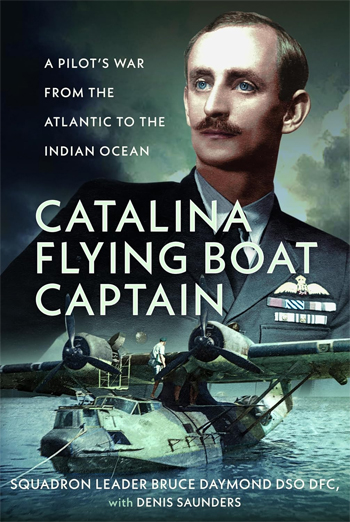
Coming soon from Air World and author Denis Saunders is Catalina Flying Boat Captain: A Pilot’s War from the Atlantic to the Indian Ocean. The book is a survivor’s wartime voyage, chronicling long, perilous Catalina flights / missions, and steadfast leadership amid oceanic dangers and relentless duty.
Aged 21, Bruce Daymond enlisted in the Royal Australian Air Force in 1941. He had joined to serve the British Empire, as it then was, knowing he would serve thousands of miles from Australia.
Sixteen days into my flying training, Bruce went solo for the first time. Having trained as pilot and navigator under the Empire Air Training Scheme, in both Australia and Canada, he went on to serve in the RAF throughout the Second World War. As a pilot of a Consolidated Catalina flying boat, he flew with a number of Coastal Command units, namely Nos. 209, 357, 628, and 240 squadrons. Throughout his service, Bruce maintained a huge, detailed, candid, and personal daily diary; it is that which forms the basis of this insightful account of one flying boat captain’s service. The result is a revealing account of one man’s dedication to service and leadership, endurance of hundreds of hours of monotonous flying interspersed with periods of terror and courage in the face of great danger. Continue reading Catalina Flying Boat Captain: A Pilot’s War from the Atlantic to the Indian Ocean
Please Note: This post contains an Amazon affiliate link. When you purchase through links on our site, we may earn an affiliate commission.