Posted on

The RAF’s Post-WW1 Operations, Fight For Survival Documented in New Book

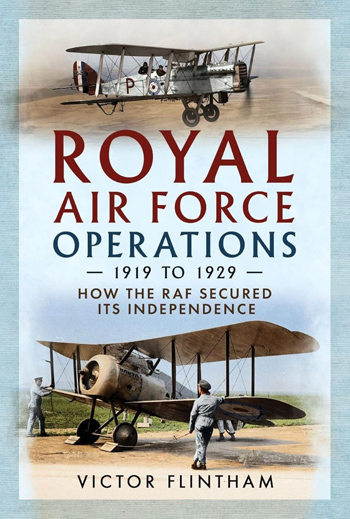
Coming soon from Fonthill Media and author Vic Flintham is Royal Air Force Operations 1919 to 1929: How the RAF Secured Its Independence.

The Royal Air Force was just eight months old when the First World War ended. It then had to fight for survival against huge pressure from the Admiralty and War Office. The number of squadrons was swiftly reduced to a handful, but salvation came with the application of air control in India and mandated Iraq. In addition, Chief of the Air Staff Lord Trenchard laid strong foundations with the establishment of the Cadet College, Staff College and apprentice scheme, institutions not easily dismantled.

Throughout the first decade of its existence, the RAF, which then also controlled the Fleet Air Arm, performed operations in Somalia, Germany, Iraq, Palestine, Ireland, Russia, India, Turkey and China, while bringing into service new types of aircraft, albeit in small numbers. In the Middle East and Africa, it conducted and supported trailblazing flights, continually pushing the boundaries of what was achievable.

Royal Air Force Operations 1919 to 1920: How the RAF Secured Its Independence is the comprehensive story of the RAF in the 1920s, covering the service’s development at both home and abroad, including all its operations across the globe. Controversies, such as the RAF’s alleged use of chemical weapons in Iraq, are examined in detail, and some 350 photographs, many previously unpublished, bring the story to life like never before.

The 432 page, hardcover book is currently available for pre-order with release set for September 30.

Product Page

Please Note: This post contains an Amazon affiliate link. When you purchase through links on our site, we may earn an affiliate commission.
Posted on

Vulcan to Spitfire and Back: Flying in an RAF Squadron During the Cold War

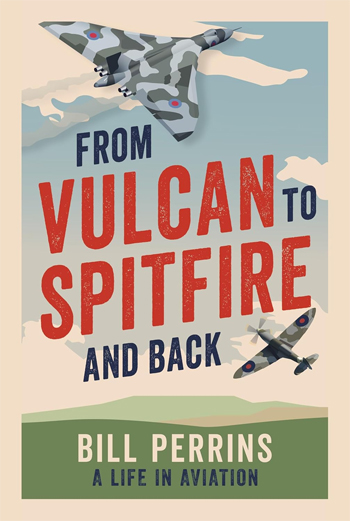
Coming soon from Fonthill Media and author Bill Perrins is From Vulcan to Spitfire and Back: A Life in Aviation, described as “a humorous, unguarded, and often self-deprecating account of what it was like to be part of an RAF squadron during the Cold War.”

Growing up in Belfast during the Troubles, Bill Perrins was a young man hell-bent on a career as a pilot. He made it through RAF pilot training—thanks more, perhaps, to sheer determination than aptitude—and finally graduated to the role of Vulcan pilot in time to take part in the 1982 Falklands War. After the RAF, Bill entered the world of commercial aviation, flying Boeing 747s and Dreamliners on long-haul, though he still found time to pilot the world’s only privately owned nuclear bomber, the mighty Vulcan XH558, at air shows, along with P51 Mustangs, Yaks and the legendary Spitfire. Way back in his boyhood, the fantasy of one day flying the Spitfire was where it had all begun—and it did not disappoint.

From Vulcan to Spitfire and Back: A Life in Aviation is… about the simple joys of flying, whether in the cockpit of the enormous delta-winged Vulcan or behind the sprightly controls of the inimitable Spitfire, and the camaraderie that comes with it, both in military and civil aviation.

The 224 page hardcover book is currently available for pre-order with release set for June 30.

Product Page

Please Note: This post contains an Amazon affiliate link. When you purchase through links on our site, we may earn an affiliate commission.
Posted on

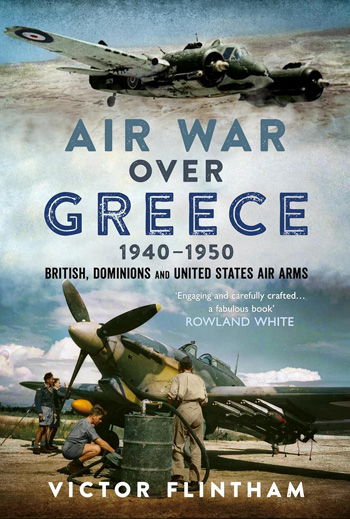
British, Dominions and US Wings: Air War Over Greece 1940–1950 Out Soon

Soon to be released by Fonthill Media is Air War Over Greece 1940–1950: British, Dominions and United States Air Arms, author Victor Flintham’s examination of a neglected corner of military aviation history.

Following the Italian invasion of Greece in October 1940, the RAF reluctantly deployed three squadrons of Bristol Blenheim light bombers and one squadron of Gloster Gladiators, an obsolescent biplane fighter, to assist the Greek defenders. The fear among the Allies was that with Greece in Axis hands, enemy supply lines to North Africa would be significantly shortened, threatening the Allied position there and in the Middle East.

By the time Germany joined the invasion in April 1941, both the RAF and FAA had committed more squadrons and been joined by army units, but they were soon overwhelmed, retreating to Crete, from where they were evicted in May 1941 after a massive German paratroop operation. For the next three years the RAF and FAA attacked Axis forces on Crete, mainland Greece and in the Aegean with mixed success. In addition, Allied air arms, including USAAF units, dropped weapons and supplies to the Greek partisan groups. In late 1944, as the Germans were forced to withdraw from Greece, RAF units once again flew into Greek airfields, yet they were soon drawn into the bitter civil war, fighting alongside Greek government forces against Communist insurgents. After the final withdrawal of operational units in 1946, the RAF retained an air delegation in Athens until 1952, when Greece joined NATO.

The upcoming, 272 page hardcover release is currently available for pre-order with release slated for March 30.

Product Page

Please Note: This post contains an Amazon affiliate link. When you purchase through links on our site, we may earn an affiliate commission.
Posted on

Dakotas Unleashed: 46 Group’s D-Day to VE Day Heroics Detailed in New Book

In his newly released book Dakota Squadrons in Action From D-Day to V.E. Day: Airborne, Support and Supply Operations in the Liberation of Europe, author Clive Bennett provides “a microscopic examination of No. 46 Group’s flight operations, day by day, squadron by squadron, often down to crew names and takeoff/landing times.”

RAF Transport Command’s 46 Group, formed in January 1944 and operating Douglas C-47 Dakotas from RAF Broadwell, Blakehill Farm, and Down Ampney, provided critical airborne support, resupply, and casualty evacuation during WWII’s final phase. From D-Day on June 6, 1944, its squadrons delivered troops, paratroopers, and gliders over France, with WAAF ‘Flying Nightingales’ nurses aiding wounded on return flights—though LACW Margaret Campbell died in an October 1944 crash. During Operation Market Garden in September 1944, they conducted daily resupplies, earning Flight Lieutenant David Lord a posthumous Victoria Cross for bravery under flak, and in March 1945’s Operation Varsity, they enabled the war’s last major airborne assault, significantly aiding the defeat of Nazi Germany.

The 304 page title is available in hardcover and Kindle formats.

Product Page

Please Note: This post contains an Amazon affiliate link. When you purchase through links on our site, we may earn an affiliate commission.

Posted on

Gardening with Bombs: New Book Reveals RAF’s Secret WWII Campaign

New from Tempest and author Jane Gulliford Lowes is The Invisible Campaign: Bomber Command Gardening Operations 1940-1945 which details the crucial yet little-known aerial minelaying operations by RAF Bomber Command which successfully disrupted Axis shipping between 1940–1945.

The Invisible Campaign, based on Air Ministry and Admiralty archival material, together with squadron records, veteran accounts and logbooks as well as contemporary publications and press releases, provides the most detailed account of Bomber Command’s minelaying operations and their effects ever written.

Historian Jane Gulliford Lowes looks at the aims of the campaign and how it was implemented, together with the measure of its success and how it compared against the mining operations implemented by the Luftwaffe and Kriegsmarine. The role of Arthur ‘Bomber’ Harris in overseeing minelaying operations is assessed and the experiences of the men who delivered the campaign, particularly the hazards they faced, are explored.

Featuring a foreword by renowned historian James Holland, The Invisible Campaign – Bomber Command Gardening Operations 1940-1945 sheds new light on a little-discussed but important and ultimately highly successful aspect of Bomber Command and is a must-read for anyone interested the RAF’s in wartime bombing operations.

The 300 page, hardcover title is currently available for pre-order with release slated for December 30.

Product Page

Please Note: This post contains an Amazon affiliate link. When you purchase through links on our site, we may earn an affiliate commission.