Posted on

Spitfires over Tokyo: Commonwealth Air Forces in Japan 1945–1948

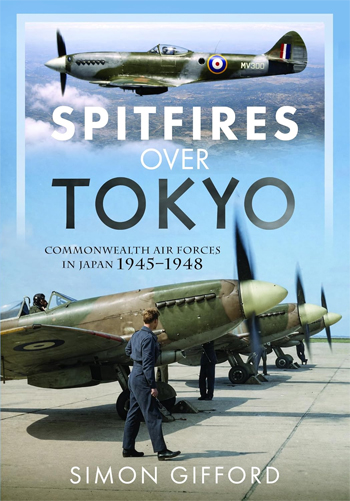
Coming soon from Fonthill and author Simon Gifford is Spitfires over Tokyo: Commonwealth Air Forces in Japan 1945–1948.

In the spring of 1946, the Royal Air Force, Royal Australian Air Force, Royal Indian Air Force and Royal New Zealand Air Force dispatched aircraft and men to form the air element of the British Commonwealth Occupation Force of Japan. Equipped with Spitfire XIVs, P51D Mustangs and FG-1D Corsairs, seven squadrons of fighter aircraft spent the next two years backing up the American forces in the successful disarmament of Japan and the country’s transition to a democratic nation. Supporting the fighters were RAF, RAAF, RNZAF Dakotas, which flew numerous sorties linking the forces in Japan to Hong Kong, Australia and New Zealand. Other aircraft flown in Japan included Austers, Ansons, Harvards and Wirraways.

Spitfires over Tokyo: Commonwealth Air Forces in Japan 1945–1948 traces the formation of the occupation force, including the formation of the Spitfire squadrons in India, through their helping liberate Malaya, Singapore and Hong Kong, and on to their final disbandment in Japan and the end of occupation duties in 1948. Profusely illustrated with photos of all of the aircraft flown in Japan, the majority of which have not been published previously, the book offers an illuminating window on a little-known area of post-war aviation history.

The 264 page, hardcover book is currently available for pre-order with release set for January 30, 2027.

Product Page

Please Note: This post contains an Amazon affiliate link. When you purchase through links on our site, we may earn an affiliate commission.
Posted on

New Guinea Eagles: The Japanese Air Army Campaign in New Guinea 1942-43

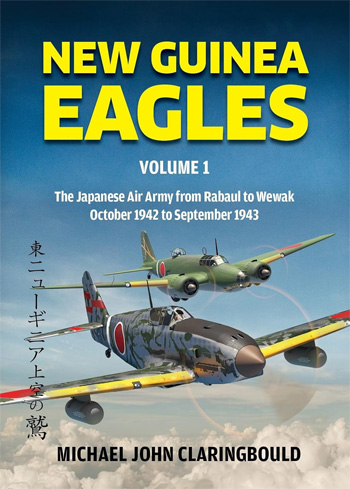
Coming soon from Avonmore Books and author Michael Claringbould is New Guinea Eagles Volume 1: The Japanese Air Army from Rabaul to Wewak October 1942 to September 1943, which chronicles the Japanese Air Army campaign in New Guinea from when its first units arrived in October 1942 until the late September 1943 raids against Nadzab and Port Moresby.

Never before have the rationale, activities and losses of JAAF air power in New Guinea been chronicled in such detail and accuracy. The force operated an impressive range of aircraft types but found it much easier to commit than withdraw from the challenging theatre.

This volume covers Rabaul’s and Wewak’s beginnings as major JAAF bases. The period involved guarding supply convoys, attacking Wau and two major forays into the Solomons. Then by mid-1943 the Allied air war had gravitated towards the burgeoning JAAF airfield complexes spreading out along New Guinea’s northern coast. Two air divisions were combined to create the 4th Air Army in August 1943, and its aircraft soon ventured into the New Guinea Highlands before defending Nassau Bay, Lae and Salamaua. Continue reading New Guinea Eagles: The Japanese Air Army Campaign in New Guinea 1942-43

Please Note: This post contains an Amazon affiliate link. When you purchase through links on our site, we may earn an affiliate commission.
Posted on

Defeating the Zero: How a Tactical Innovation Overcame Japan’s Deadly Fighter

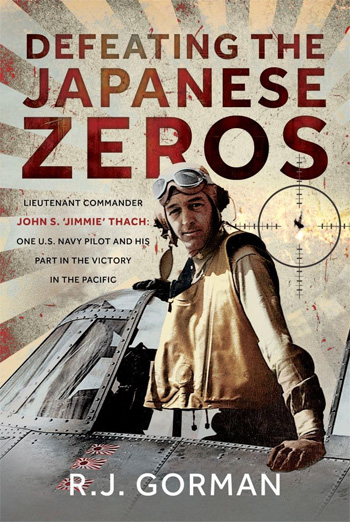
Coming soon from Air World and author R J Gorman is Defeating the Japanese Zeros: Lieutenant Commander John S. ‘Jimmie’ Thach: One U.S. Navy Pilot and his Part in the Victory in the Pacific , detailing how a brilliant U.S. aerial tactic overcame Japan’s deadly Zero fighter, turning Midway into a decisive Pacific victory.

Lieutenant Commander John S. “Jimmie” Thach of the U.S. Navy recognized the threat posed by the Zero and devised a tactic to counter it. With the Japanese preparing to attack Midway Atoll, Thach trained his pilots in the “Thach Weave,” a revolutionary formation designed to offset the Zero’s superior performance. This tactic proved highly effective in air combat and allowed Thach’s squadron to neutralize the Japanese advantage. The battle at Midway became a turning point in the Pacific War. The U.S. Navy’s victory, aided by Thach’s tactical innovation, crippled Japan’s offensive capabilities. After Midway, the Japanese would never win another major battle, while the Americans would never lose one, marking a decisive shift in the war’s outcome.

The 240 page, hardcover book is currently available for pre-order with release slated for January 30.

Product Page

Please Note: This post contains an Amazon affiliate link. When you purchase through links on our site, we may earn an affiliate commission.

Posted on

Fighting Falcons: New WWII Pacific Air War History Landing Soon

Coming soon from Naval Institute Press and author Peter F. Owen is Fighting Falcons: The Campaigns of VMF-221 in the Pacific . The book “offers a compelling account of Marine Fighting Squadron 221 (VMF-221), a unit that played a key role in the Pacific during World War II.”

Author Peter F. Owen examines the operational realities behind the squadron’s missions, analyzing the Marine Corps’ performance in the Pacific air war. He explores how missteps at higher levels of command shaped outcomes in the air, and he sheds light on the complex logistics and maintenance challenges crucial to success. Based on extensive research, Fighting Falcons provides new insight into how Marine aviation functioned at the squadron level. The book delivers a valuable perspective on one of the Marine Corps’ notable fighter squadrons and the larger story of how the United States fought—and learned—its way to victory in the Pacific.

The 304 page book is currently available for pre-order in hardcover and Kindle editions with release slated for March 17.

Product Page

Please Note: This post contains an Amazon affiliate link. When you purchase through links on our site, we may earn an affiliate commission.