Posted on

FineMolds Releases “Meticulous” New A6M Zero Prototype Model Kit

FineMolds has released their new Mitsubishi A6M Zero prototype model kit in 1/72 scale.

The Zero prototype, designated A6M1, was the first version of the Japanese Navy’s famous carrier‑based fighter, built in 1939 as a lightweight, single‑seat monoplane with retractable gear and an enclosed cockpit to meet strict demands for speed, range, and extreme maneuverability. It used a 780 hp Mitsubishi Zuisei 13 radial engine and a very light airframe of aluminum alloy with fabric‑covered control surfaces, giving it low wing loading and excellent low‑speed handling even in its underpowered prototype form; after Navy trials, the design was refined into the A6M2 by switching to the more powerful Nakajima Sakae engine, launching the Zero’s long‑production run.

The new kit (FR03) “meticulously reproduces the details of the Type 12 Carrier Fighter ‘Unit 2.'” It offers molding in different colors (fuselage, wings, engine, and propeller are in gray, landing gear in black, and interior of the aircraft in yellow-green). PE parts also appear to be included.

Click below to check out the product link and additional images.

Continue reading FineMolds Releases “Meticulous” New A6M Zero Prototype Model Kit

Please Note: This post contains an eBay affiliate link. When you purchase through links on our site, we may earn an affiliate commission.

Posted on

FineMolds to Release New A6M Zero Kits Representing Prototype and Model 32

FineMolds has announced the upcoming release of two new Mitsubishi Zero kits in 1/72 scale. The offerings include the Mitsubishi A6M Zero prototype (FR03) and Mitsubishi A6M2 Zero Model 32 (FR04).

The A6M1 prototypes of 1939 were lightweight, long-range, carrier-based fighters with a low-wing monoplane layout, retractable landing gear, and a 580 kW Zuisei 13 engine driving an initially two-blade, later three-blade propeller, emphasizing extreme maneuverability and range at the expense of protection. The later A6M3 Model 32, first flown in 1941, introduced the more powerful Nakajima Sakae 21 engine with a two-speed supercharger, a shortened, squared-off wing without folding tips, enlarged wing fuel tanks, and upgraded Type 99 Mark 2 20 mm cannon, trading some of the earlier model’s turning ability and range for better roll rate, higher diving speed, and improved short-range combat performance.

The kits are currently set for release in April. Click below to check out additional photos, kit contents and livery options.

Continue reading FineMolds to Release New A6M Zero Kits Representing Prototype and Model 32

Posted on

Defeating the Zero: How a Tactical Innovation Overcame Japan’s Deadly Fighter

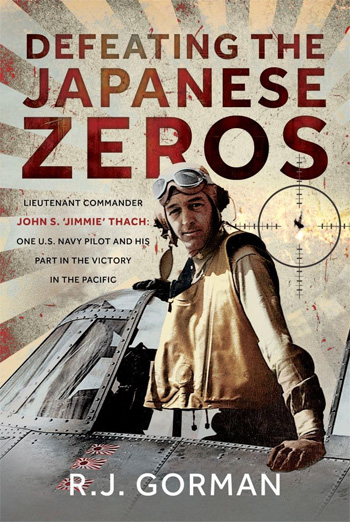
Coming soon from Air World and author R J Gorman is Defeating the Japanese Zeros: Lieutenant Commander John S. ‘Jimmie’ Thach: One U.S. Navy Pilot and his Part in the Victory in the Pacific , detailing how a brilliant U.S. aerial tactic overcame Japan’s deadly Zero fighter, turning Midway into a decisive Pacific victory.

Lieutenant Commander John S. “Jimmie” Thach of the U.S. Navy recognized the threat posed by the Zero and devised a tactic to counter it. With the Japanese preparing to attack Midway Atoll, Thach trained his pilots in the “Thach Weave,” a revolutionary formation designed to offset the Zero’s superior performance. This tactic proved highly effective in air combat and allowed Thach’s squadron to neutralize the Japanese advantage. The battle at Midway became a turning point in the Pacific War. The U.S. Navy’s victory, aided by Thach’s tactical innovation, crippled Japan’s offensive capabilities. After Midway, the Japanese would never win another major battle, while the Americans would never lose one, marking a decisive shift in the war’s outcome.

The 240 page, hardcover book is currently available for pre-order with release slated for January 30.

Product Page

Please Note: This post contains an Amazon affiliate link. When you purchase through links on our site, we may earn an affiliate commission.
Posted on

For Sale: “Time Capsule” 1943 A6M5 Model 52 Zero

Please Note: This is an archived post. The information presented here may not be current and the associated listing may no longer be active.

A Mitsubishi A6M5 Model 52 Zero, described as “a time capsule” has hit the market.

The aircraft was “built presumably at the Nakajima No. 2 Koizumi plant in Gunma Prefecture” and bears construction number 1303. It was reportedly assigned to Naval Air Group (NAG) 261 in the 61st Air Flotilla of the First Air Fleet. It received the tail code 61-121 and was eventually captured by the Americans at Aslito airfield on Saipan. It went to Technical Air Intelligence Center (TAIC) at NAS Anacostia for evaluation, where it became “T.A.I.C. 11.” In late 1945 it became part of the Victory Squadron’s “Navy’s Flying Might” tour in support of the last bond drive, but suffered a nose up accident shortly afterward. The engine and propeller were changed, however it was ground-looped and abandoned before rejoining the tour. Continue reading For Sale: “Time Capsule” 1943 A6M5 Model 52 Zero

Posted on

Mitsubishi Zero Relic Spotted For Sale: “Original With Known History and Provenance”

Please Note: This is an archived post. The information presented here may not be current and the associated listing may no longer be active.

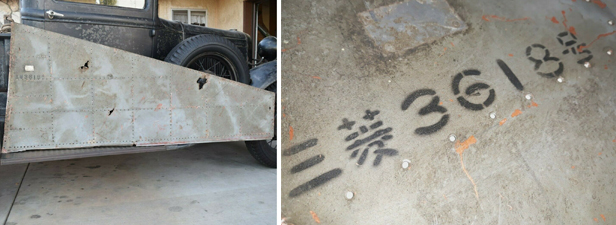
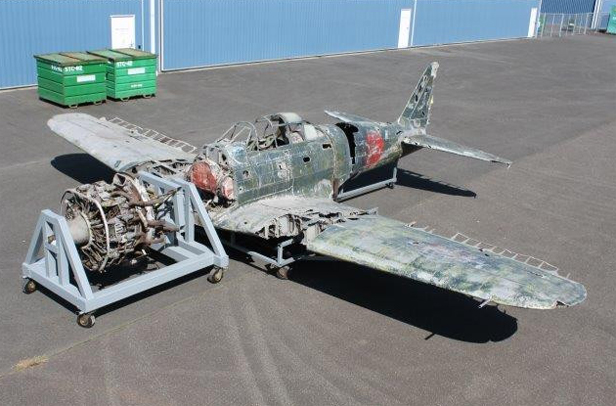
A Mitsubishi Zero artifact described as “original and untouched” with “known history and provenance” as well as “jungle dirt and battle damage” has been spotted for sale. The listing states (in part):

This relic is from a 1943 Mitsubishi Zero A6M3 Model 22 (aircraft carrier duty, with folding wing tips). It is the port horizontal stabilizer lower aluminum shin, which is the only location on the Mitsubishi Zero that displayed a large factory-applied stenciled serial number. This skin is from Zero serial number 3618… This piece is original and untouched; it’s complete with jungle dirt and battle damage. It is ‘as found’ at Buin Japanese airfield, which was located at the north end of the notorious air battle zone famously known as the “Solomon Slot”… In 1980 the skin was removed from the original horizontal stabilizer during a restoration project

The artifact is located in Huntington Beach, California and is currently available for bidding. Click here to check out the complete listing on eBay, which includes a number of additional photos and details on the part’s history.

Please Note: This post contains an eBay affiliate link. When you purchase through links on our site, we may earn an affiliate commission.
Posted on

“Original”, “Restored”, “Movie Star” Mitsubishi A6M3 Zero Offered For Sale

Please Note: This is an archived post. The information presented here may not be current and the associated listing may no longer be active.

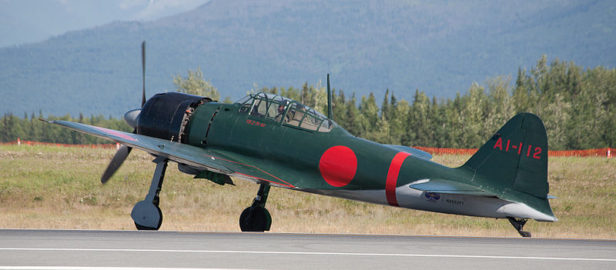
A 1942 Mitsubishi A6M3 Zero (S/N 3858 / N553TT) has hit the market. The listing states:

Legendary WWII fighter aircraft – Original, salvaged airframe recovered from New Guinea – Detailed logbook listing all work and certifications – Original Nakajima Sakae engine available – Movie Star with combat history – Located in CA, USA

The machine reportedly underwent a “historic and authentic restoration using original engineering drawings (set of original Zero blueprints)” and returned to the air in 2000. It is marked as AI-112 and finished in the colors it wore for the film Pearl Harbor, where it flew some 55 hours for filming. The machine is reportedly fitted with a Pratt & Whitney R-1830 engine modified in order to fit without unduly changing the cowling lines of the Zero – however, as stated above, an original Nakajima Sakae engine is reportedly available.

Pricing is available upon request. Click here to check out the complete listing.

(via Trade-a-Plane Photo: Frank Kovalchek via Wikimedia Commons)