Posted on

Finnish vs Russian Air Combat During the Winter War: An Illustrated Study

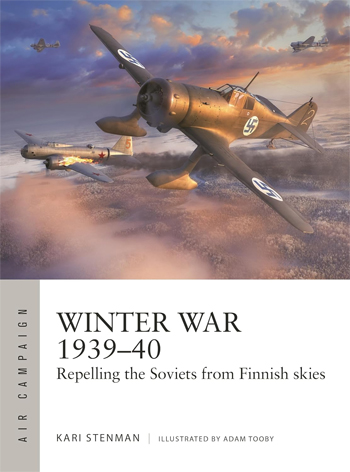
Coming this summer from Osprey and author Kari Stenman is Winter War 1939–40: Repelling the Soviets from Finnish skies, touted as the first illustrated study in English of the Finnish Air Force’s battle to repel the Soviet invaders during the Winter War, one of the greatest David-and-Goliath air battles in history.

In 1939, the Soviet Union invaded its neighbour Finland, sparking the Winter War. While Finland was heavily outnumbered in all respects, in few respects was the contest so uneven as in the air. In this book, veteran Finnish aviation historian Kari Stenman draws on his decades of research to present the first account in English of the Finnish Air Force’s defence of the country’s skies, a clash that pitted its 114 combat aircraft against the Soviets’ 2,318.

He explains that, equipped initially with a handful of British and Dutch aircraft, Finland’s air force adopted similar guerrilla tactics to its infantry. Fokker D.XXI interceptors were scattered to remote landing grounds to ambush the Soviets and give an impression of strength, while the bombers were first used for long-range reconnaissance and harassment. Over the course of the war, the Finns received new Gladiators, Fiat G.50s and French MS.406s, until at the close of the war, all flying units were thrown in to repel the Russian invasion across the frozen Gulf of Finland.

Illustrated with previously unpublished photos, superb original artwork, 3D diagrams and maps, this reveals for the first time the full story of how Finnish aviators fought for their country’s independence.

The 96 page publication is currently available for pre-order in paperback and Kindle editions. Release is set for June 16.

Product Page

Please Note: This post contains an Amazon affiliate link. When you purchase through links on our site, we may earn an affiliate commission.
Posted on

Pacific Turning Point: Airpower in New Guinea 1943–44

Coming soon from Osprey and authors Mark Stille and John Rogers is New Guinea 1943–44: The Allies assume the offensive, a fully illustrated history of airpower in the decisive stage of the New Guinea campaign, when the Allies could finally go on the offensive to shatter Japanese forces.

In this book, the second of two on the New Guinea campaign, Pacific War scholars Mark Stille and John Rogers draw upon years of research and Japanese, American and Australian sources to explain how the New Guinea air war turned against the Japanese between June 1943 and 1944. The over-extended IJAAF gradually lost combat strength in the face of vastly improved Allied airpower, leaving the Japanese unable to contend. One prong of the Allies’ air offensive targeted Japanese shipping to isolate its forces, while the other supported the ground offensives and landings that smashed Japanese forces and left most of them isolated for the rest of the war.

Packed with artwork, maps, and archive photos, this book explains how the lessons learned and the forces built up during the harsh struggle for Papua in 1942–43 transformed the Allies’ airpower into a decisive element in MacArthur’s 1943–44 campaign.

The 96 page publication is currently available for pre-order in paperpack and Kindle editions. Release is set for August 25.

Product Page

Please Note: This post contains an Amazon affiliate link. When you purchase through links on our site, we may earn an affiliate commission.

Posted on

WW2 Rocket Interceptors Detailed With Immaculate Tech Drawings, Full Performance Specs

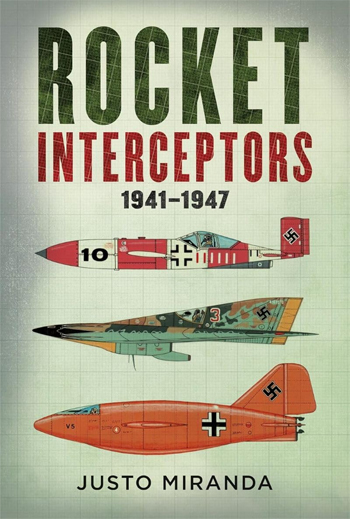
Coming soon from Fonthill Media and author Justo Miranda is Rocket Interceptors 1941–1947:

During its short life, the rocket interceptor, a concept that reached maturity towards the end of the Second World War, attracted the attention of top scientists, designers and aeronautical engineers in Germany, the USSR, the United States and Japan. It was universally agreed that an interceptor capable of flying 300 mph faster than any other aircraft would give the wielding power untouchable aerial superiority. However, this new technology was unable to adapt to the realities of war.

The complexity of the propulsion system and the need to develop new aerodynamic concepts were challenges too great for the aeronautical industries of the major powers at the time, which specialized in the mass construction of piston fighters. Nor were fighter pilots able to adapt to the high-G combat conditions that came with achieving speeds of nearly 900 mph; it was simply not possible for them to aim and fire.

In 280 immaculate technical drawings, each set within its historical context and with full performance specifications, Rocket Interceptors 1941–1947 presents 125 project, prototype and combat rocket-powered aircraft developed by Germany, the United States, the USSR and Japan in the 1940s, though initial development for some can be traced as far back as the 1920s. This is the last word on a technology that, had it been properly harnessed, might have changed the course of the Second World War.

The 288 page, hardcover book is currently available for pre-order with release set for May 30.

Product Page

Please Note: This post contains an Amazon affiliate link. When you purchase through links on our site, we may earn an affiliate commission.
Posted on

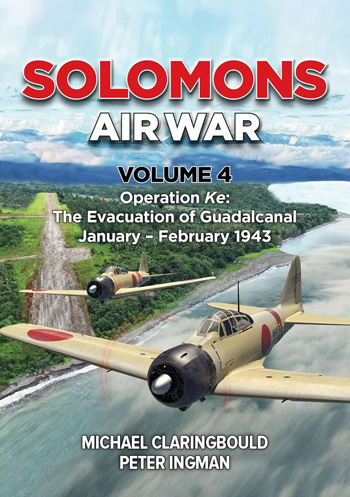
New Release: Solomon’s Air War Vol. 4 — The Epic Evacuation of Guadalcanal

Coming soon from Avonmore Books and authors Michael Claringbould and Peter Ingman is Solomons Air War Volume 4: Operation Ke: The Evacuation of Guadalcanal January – February 1943, which sheds new light on hitherto little-known or misunderstood episodes in the Pacific air war.

This fourth volume of Solomons Air War chronicles aerial warfare throughout the Solomons theatre during the months of January and February 1943. It can be read alone or as part of the ongoing Solomons Air War series. This crucial period saw the Japanese swallow a bitter pill and launch Operation Ke, which was the evacuation of Guadalcanal. It was a complex operation conceived under utmost secrecy, which then unfolded over several weeks. Included was a widespread air offensive that saw the Japanese Army Air Force in the Solomons for the first time. Ironically, this operation was arguably the most successful yet for the Japanese in the theatre.

Against this background the intense air campaign continued. Enjoying a secure foothold on Guadalcanal and ever-growing facilities, Cactus Air Force expanded and pushed operations northwards into the Solomons chain where the Japanese were operating from Munda and building a new airfield at Vila. Temporary reinforcements were provided by carrier squadrons from both sides operating from land bases, including for the first time air units from USN escort carriers. Continue reading New Release: Solomon’s Air War Vol. 4 — The Epic Evacuation of Guadalcanal

Please Note: This post contains an Amazon affiliate link. When you purchase through links on our site, we may earn an affiliate commission.
Posted on

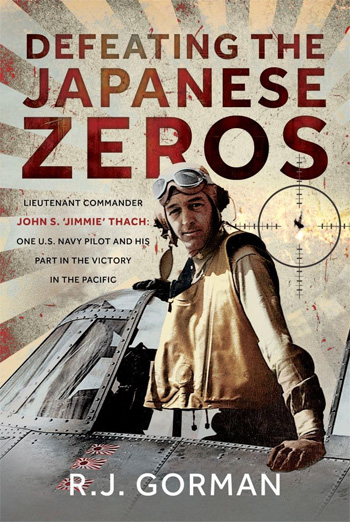
Defeating the Zero: How a Tactical Innovation Overcame Japan’s Deadly Fighter

Coming soon from Air World and author R J Gorman is Defeating the Japanese Zeros: Lieutenant Commander John S. ‘Jimmie’ Thach: One U.S. Navy Pilot and his Part in the Victory in the Pacific , detailing how a brilliant U.S. aerial tactic overcame Japan’s deadly Zero fighter, turning Midway into a decisive Pacific victory.

Lieutenant Commander John S. “Jimmie” Thach of the U.S. Navy recognized the threat posed by the Zero and devised a tactic to counter it. With the Japanese preparing to attack Midway Atoll, Thach trained his pilots in the “Thach Weave,” a revolutionary formation designed to offset the Zero’s superior performance. This tactic proved highly effective in air combat and allowed Thach’s squadron to neutralize the Japanese advantage. The battle at Midway became a turning point in the Pacific War. The U.S. Navy’s victory, aided by Thach’s tactical innovation, crippled Japan’s offensive capabilities. After Midway, the Japanese would never win another major battle, while the Americans would never lose one, marking a decisive shift in the war’s outcome.

The 240 page, hardcover book is currently available for pre-order with release slated for January 30.

Product Page

Please Note: This post contains an Amazon affiliate link. When you purchase through links on our site, we may earn an affiliate commission.
Posted on

Arming the Luftwaffe: Machine Guns, Cannon and Aerial Artillery that Powered German Air Combat, 1939–1945

Soon to be released from Pen and Sword History and author Tim Heath is German Aircraft Weaponry: Machine Guns, Cannon and Aerial Artillery in Luftwaffe Service, 1939-1945. The book examines the use of the humble rifle calibre machine gun as an aircraft weapon along with the efforts to develop suitable cannon with greater destructive power for aircraft use, the advances made during the inter-war years and the various barrelled weaponry either used or proposed by the German Luftwaffe in the Second World War.

This work encompasses not only the technical and operational appraisals of the various weapons used by the German Luftwaffe aircrews, which include some of Germany’s leading surviving fighter aces of the Second World War, but also the armourers tasked with their day-to-day maintenance, the instructors and technicians on the ground, and those who found themselves at the receiving end of their firepower both in the air and on the ground. This unique work encompasses many new and previously unpublished testimonies as told by those who were there in their own words and for the first time.

The 256 page hardcover book is currently available for pre-order with release slated for March 30.

Product Page

Please Note: This post contains an Amazon affiliate link. When you purchase through links on our site, we may earn an affiliate commission.

Posted on

Fighting Falcons: New WWII Pacific Air War History Landing Soon

Coming soon from Naval Institute Press and author Peter F. Owen is Fighting Falcons: The Campaigns of VMF-221 in the Pacific . The book “offers a compelling account of Marine Fighting Squadron 221 (VMF-221), a unit that played a key role in the Pacific during World War II.”

Author Peter F. Owen examines the operational realities behind the squadron’s missions, analyzing the Marine Corps’ performance in the Pacific air war. He explores how missteps at higher levels of command shaped outcomes in the air, and he sheds light on the complex logistics and maintenance challenges crucial to success. Based on extensive research, Fighting Falcons provides new insight into how Marine aviation functioned at the squadron level. The book delivers a valuable perspective on one of the Marine Corps’ notable fighter squadrons and the larger story of how the United States fought—and learned—its way to victory in the Pacific.

The 304 page book is currently available for pre-order in hardcover and Kindle editions with release slated for March 17.

Product Page

Please Note: This post contains an Amazon affiliate link. When you purchase through links on our site, we may earn an affiliate commission.

Posted on

New Book Details How Assembly Ships Ensured Successful Bombing Raids in WW2

MMPBooks is slated to release Jacek Jackiewicz’s Assembly Ships of the Mighty Eight, which “is a detailed exploration of the specialized aircraft used during World War II to help organize and assemble bomber formations.”

This book delves into the vital role these assembly ships played in ensuring successful bombing missions by the US Eighth Air Force. Featuring meticulously researched text and a rich collection of period photographs, the book also includes color profiles by Jacek Jackiewicz, offering a comprehensive visual representation of these unique aircraft.

The 184 page paperback title is currently available for pre-order with release scheduled for January 8, 2026.

Product Page

Please Note: This post contains an Amazon affiliate link. When you purchase through links on our site, we may earn an affiliate commission.