
Posted on

The Harrowing Experiences of Doolittle Raid Pilot Donald Smith Told in New Book

Set for release later this year from Pen & Sword and author Geert Rottiers is Doolittle Raid Pilot: The Story of Captain Donald Smith, Survivor of the Bombing of Tokyo in 1942.

Donald Gregory Smith’s early years were shaped by trauma. He was 5 years old when his mother died, following which he was placed in an orphanage by his father. Despite this background, in 1940, Donald earned a Bachelor of Science degree from the University of South Dakota. After graduation, he was commissioned as a second lieutenant in the infantry, but his passion led him to a career in aviation. By March 1941, through sheer determination and discipline Smith had completed his flight training and became a pilot in the Army Air Corps. In 1942, he was selected for a top-secret mission led by Lieutenant Colonel James H. Doolittle: a surprise bombing raid on Japan in retaliation for Pearl Harbor. The story follows Smith during his embarkation aboard the USS Hornet, alongside fifteen other B-25 Mitchell crews. During training, he successfully lifted off after only eighty-seven meters – the shortest take-off of all the Raiders. On 18 April 1942, the day of the infamous Doolittle Raid, Donald’s crew bombed industrial targets in Kobe with precision. During the subsequent diversionary flight to China, his aircraft was attacked by Japanese fighters, but Smith managed to evade them over the Sea of Japan. A shortage of fuel forced Smith to execute a perfect belly landing on water in the East China Sea before getting ashore. With the help of Chinese villagers, Smith and his crew evaded advancing Japanese patrols and eventually returned home. After returning to the United States, Smith was reassigned to the 319th Bomb Group. In November 1942, he flew a B-26 Marauder to Europe as part of a ferry operation. A few weeks later, during a transfer flight from RAF Attlebridge in Norfolk to St. Eval in Cornwall, his aircraft crashed in bad weather. Smith was killed.

The 256 page, hardcover book is currently available for pre-order with release scheduled for September 30.

Product Page

Please Note: This post contains an Amazon affiliate link. When you purchase through links on our site, we may earn an affiliate commission.
Posted on

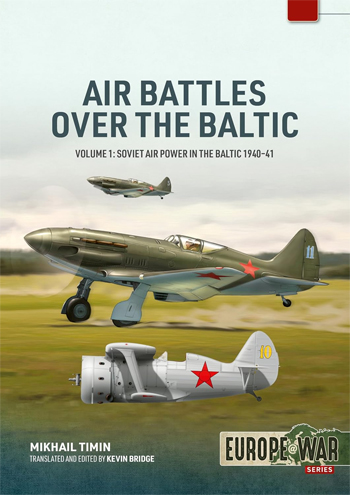
From Sopwith Camel to Harrier: Hawker’s Naval Fighters Chronicled in New Book

The naval fighters of Sopwith and Hawker will take center stage in author Christopher Budgen’s upcoming book Hawker’s Naval Fighters: Camel to Sea Harrier, released by Pen & Sword.

In 1912, TOM Sopwith transitioned from running a flying school to manufacturing aircraft, leveraging his nautical interests to create designs purchased by Britain’s Royal Navy. The onset of the First World War solidified the Sopwith Aviation Company’s reputation with aircraft like the Sopwith Camel widely used onboard the ships of the day. After the war, cancellations of government orders forced Sopwith Aviation into liquidation, However, a new company, the HG Hawker Engineering Company, was quickly formed, having been named after Sopwith’s test pilot, Harry Hawker. Throughout the 1920s and 1930s, Hawker produced designs that continued to be purchased by the Royal Navy, being used on the early aircraft carriers as well as the larger vessels of the fleet. With the outbreak of the Second World War, the RN’s Fleet Air Arm found itself woefully unprepared for battle, having mainly biplanes and slow monoplanes with which to face the modern German fighters and bombers. As a temporary solution, Hawker adapted the Hurricane into the Sea Hurricane. Hawker later developed advanced piston-engine fighters like the Fury and its naval counterpart, the Sea Fury, which saw action during the Korean War and Suez Crisis in 1956. The Sea Fury was succeeded by Hawker’s first jet, the Sea Hawk, marking the Fleet Air Arm’s transition into the jet age. The Sea Hawk also served the Indian Navy during its conflicts with Pakistan. Hawker’s successful Hunter, although primarily for the RAF, was used by the Royal Navy for land-based operations. Meanwhile, Hawker’s next design, the ground breaking Harrier, was ordered as the Sea Harrier; it saw action during the Falklands War, and, in due course, in the conflict in the former Yugoslavia and in Iraq. From its earliest days then, the Hawker Aircraft Company has supplied winning designs to the Royal Navy and to many navies overseas, a feat that few other companies could match.

The 232 Page hardcover book is currently available for pre-order with release scheduled for April 30.

Product Page

Please Note: This post contains an Amazon affiliate link. When you purchase through links on our site, we may earn an affiliate commission.
Posted on

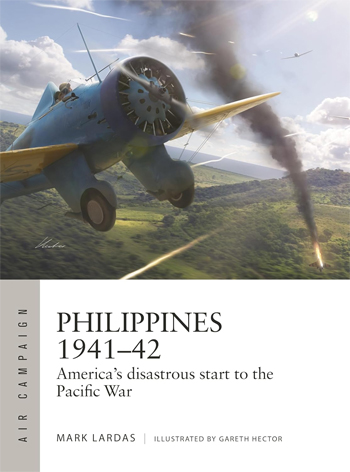
The Disappearance of R.E.P. Brooker DSO, DFC: Answering the Mystery and Controversy

Coming soon from Pen & Sword Books and author Malcolm Sutherland is A Fighter Pilot’s War: Battle of Britain, Far East, D-Day, & Germany – The Remarkable Career of Wing Commander R.E.P. Brooker DSO & Bar, DFC & Bar. The book is a detailed biography which reportedly provides the answers to the mystery and controversy surrounding Brooker’s disappearance in 1945.

Richard Edgar Peter Brooker left school and joined the RAF in 1937. He was posted to 56 Squadron and in 1940 he served for several weeks as personal assistant to Air Vice-Marshal Keith Park, before flying throughout the height of the Battle of Britain. In the spring of 1941, promoted to Acting Squadron Leader, Brooker commanded No.1 Squadron during the Blitz; for this he was awarded the D.F.C. After being posted to Singapore late in 1941, where he led Nos. 232 and 242 squadrons fighting the Japanese invasion, he was evacuated on the last flight out of Bandoeng, Java, to Australia in March 1942. For his gallantry, determination in the face of heavy odds during the fall of Singapore, Brooker was awarded a Bar to the D.F.C. In the spring of 1944, Brooker became Wing Commander Flying of 123 Wing of Hawker Typhoons at RAF Thorney Island, in preparation for the liberation of Europe. Exhausted after an intensive spell of operational flying during and after D-Day, Brooker was taken off flying in July and sent to complete the Senior Staff Officers’ course at the RAF Staff College. At this time, he was awarded the DSO. In January 1945 Brooker became Wing Commander Flying of 122 Wing operating Hawker Tempest Vs, initially in Holland and then in Germany. In this period he was awarded a Bar to his DSO – but it was an award that was made posthumously. It was from Rheine-Hopsten in Germany that Peter took off on the evening, of 16 April 1945, and failed to return, just twenty-two days from VE Day. His aircraft and his remains have never been accounted for.

The 256 page hardcover book is currently available for pre-order with release set for March 31.

Product Page

Please Note: This post contains an Amazon affiliate link. When you purchase through links on our site, we may earn an affiliate commission.
Posted on

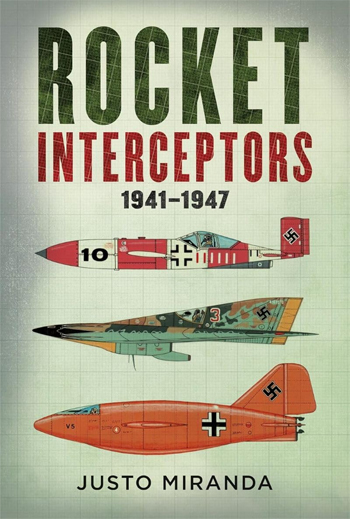
MiG-21 in the Polish Air Force: “An Essential Visual Reference”

Recently released by MMP and author Artur Juszczak is MiG-21 3rd Generation in the Polish Air Force.

The book presents 90 high-quality color profiles of third-generation MiG-21 variants, including the MF, M, and R models used by the Polish Air Force. It is an essential visual reference for aviation enthusiasts, historians, and scale modelers with a focus on accurate camouflage and markings. Additional features include detailed captions with each aircraft’s operational history, close-up views of the pilot’s personal emblems and bilingual English-Polish text.

The 48 page publication is now available in paperback format.

Product Page

Please Note: This post contains an Amazon affiliate link. When you purchase through links on our site, we may earn an affiliate commission.

Posted on

New Book Explores All WW1 Russian Aircraft Types

New from Aeronaut Books is Russian Aircraft of WWI by noted aviation historian Viktor Kulikov.

The book covers all aircraft of Russian design and all aircraft of foreign design built under license in Russia. It includes more than 600 photos and drawings and scale drawings of 17 aircraft. In addition it has 17 color profiles.

The 422 page book is now available in paperback format.

Product Page

Please Note: This post contains an Amazon affiliate link. When you purchase through links on our site, we may earn an affiliate commission.
Posted on

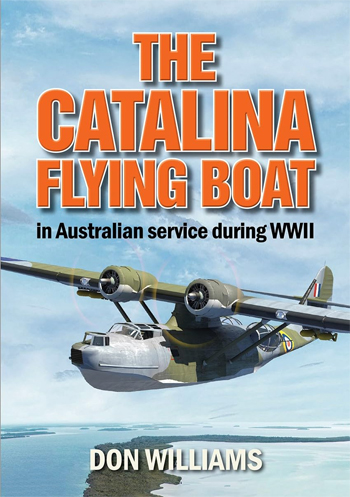
Coming Soon: The Definitive Book on Modeling the Pfalz D.III / D.IIIa

Coming soon from Fonthill Media and author M. R. Bentley is The Pfalz D.III and D.IIIa: First World War Aircraft in Scale, which focuses on what is arguably the most beautiful aircraft produced during WW1.

While not as numerous or well-loved as the famous Albatroses, the Pfalz D.III/D.IIIa was nonetheless critical to the strength of the German Luftstreitkräfte in the First World War. From a technical perspective the aircraft was innovative and its advantages were proven on the aerial battlefield: several of Germany’s greatest pilots achieved fighter ace status in the cockpit of a Pfalz D.III or D.IIIa. First World War Aircraft In Scale: The Pfalz D.III and D.IIIa is the definitive book on modelling this iconic fighter. As well as providing detailed information on the aircraft’s design, construction and marking variations, it presents, with extensive illustrations and superb attention to detail, five different builds: Roden’s 1/32 kit of the D.III, and of the D.IIIa, Valom’s 1/144 kit, MAC’s 1/72, Roden’s 1/72 and Eduard’s 1/48. Moreover, via illustrations of the aircraft’s virtual form within the flight simulator game IL2 Sturmovik: Great Battles, this book explores the world of digital paint schemes and their use in model making.

The 176 page paperback book is currently available for pre-order with release set for Feb 28.

Product Page

Please Note: This post contains an Amazon affiliate link. When you purchase through links on our site, we may earn an affiliate commission.
Posted on

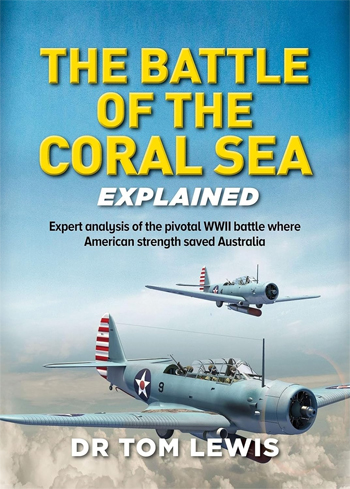
New Book Takes You Inside The Top Secret USAF MiG Squadron

Coming soon from Osprey and author Rob Zettel is American MiG Pilot: Inside the Top Secret USAF “Red Eagles” MiG Squadron, which puts readers inside the head of one of America’s most experienced MiG pilots as he tells the thrilling tale of the top-secret US operation that wouldn’t feel out of place in Top Gun.

After finding themselves outflown over Vietnam, the American military launched top-secret Operation Constant Peg, using illicitly obtained Russian Fighters pitted against star US fighter pilots in simulated combat exercises. With controls labelled in Russian and the only spare parts being the ones they could salvage, the pilots who climbed into the MiGs – the Red Eagles – accepted all of the risks associated with operating these aircraft.

This book describes what it was like to be there day in and day out at one of the most access-restricted airfields in the entire USAF, flying MiGs alongside some of the very best fighter pilots hand-picked from the ranks of the USAF, US Navy and US Marine Corps. Rob “Z-Man” Zettel tells the Red Eagles story for the first time through the experiences of a pilot who flew these aircraft to their maximum performance in simulated combat engagements, often several times a day, against frontline fighter pilots of the three US sister services.

Vivid accounts of training engagements put the reader right in the cockpit, while historical photographs help paint the picture of an operation that took the US Air Force from its disappointing performance in the Vietnam War to unprecedented success in Operation Desert Storm.

The 368 page hardcover book is currently available for pre-order with release slated for February 12.

Product Page

Please Note: This post contains an Amazon affiliate link. When you purchase through links on our site, we may earn an affiliate commission.
Posted on

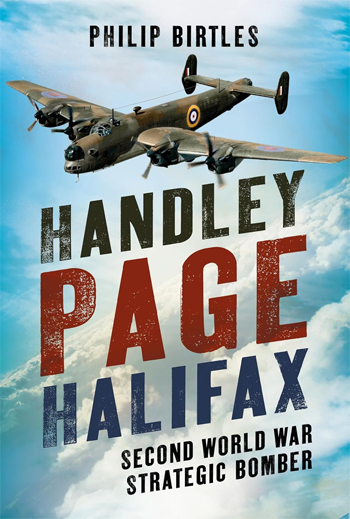
The F-14 and its Final Mission Detailed in Lavishly Illustrated New Book

Coming soon from Osprey and author Tony Holmes is The Last Catfight: The F-14 Tomcat’s final combat cruise, a lavishly illustrated celebration of the much loved workhorse of the US Navy – the F-14 Tomcat – and a unique insight into its crucial final operational tour over the skies of Iraq.

The Last Catfight charts the combat experiences of the US Tomcat crews that took the jet into action during Operation Iraqi Freedom, flying hundreds of missions all over strife-torn Iraq to try to ensure the safety of Coalition troops on the ground. The F-14 units played a key part in protecting the polling stations during two vital government elections held in 2005, and were also in the vanguard of Operation Steel Curtain, when the US Marine Corps went head-to-head with al-Qaeda near the Syria/Iraq border.

Combat accounts from the men and women flying these missions bring the F-14’s exploits to life as Grumman’s last fighter is put through its paces in the world’s most demanding combat environment. Whether conducting convoy patrols, looking for IEDs, chasing insurgents through the streets of Baghdad, destroying bomb-making factories or strafing and bombing enemy strongholds, the Tomcat was never found wanting thanks to the professionalism of the crews and the new technologies debuted by the iconic naval fighter on its very last cruise.

Aviation author and editor Tony Holmes has interviewed the commanding officers, pilots and radar intercept officers, and their first-hand accounts are featured alongside a stunning array of colour photos.

The 320 page, hardcover book is currently available for pre-order with release slated for February 12.

Product Page

Please Note: This post contains an Amazon affiliate link. When you purchase through links on our site, we may earn an affiliate commission.

Posted on

Three Volume Set Examines P-51 Variants in Detail and Scale

Newly released from author Bert Kinzey is P-51 Mustang in Detail & Scale, Part 3: P-51D and Subsequent Variants, the final book in a trilogy of titles covering the P-51 Mustang in the Detail & Scale Series of books. Part 1 provided a look at the early Allison-engined Mustang variants, and Part 2 covered the first of the Merlin-powered versions up through the P-51C. This final part takes a look at the late single-seat Mustang variants from the P-51D and its near twin, the P-51K, through the P-51H.

The book begins with a brief historical summary of the development and operational use of these later versions of the P-51. This is followed by a chapter that is divided into eight sections, each of which takes a closer look at one of the later variants. This includes the fighter variants and the photographic-reconnaissance versions derived from them. But the primary emphasis and focus of each title in the Detail & Scale Series is an extensive look at the details of the aircraft. The Late Mustang Details chapter is divided into two sections: one on the P-51D and P-51K, and a second on the P-51H, which illustrates the differences and similarities of this, the final single-seat Mustang variant to enter production, compared to the more numerous and better-known P-51D and P-51K. In all, the huge details chapter contains more than 150 photographs. These are a combination of scores that were taken specifically for this publication and many vintage photographs from North American’s archives and other sources. As with all books in the Detail & Scale Series, the last section is devoted to scale modelers. It provides a good look at the many kits of these late Mustang variants now available in all the standard modeling scales, as well as some classic older kits.

P-51 Mustang in Detail & Scale, Part 3, has 305 high resolution photographs, 266 of which are in full color, with 16 drawings and seven color profiles.

The 102 page publication is currently available in paperback format and will likely be an indispensable resource for modelers and P-51 enthusiasts.

Product Page

Please Note: This post contains an Amazon affiliate link. When you purchase through links on our site, we may earn an affiliate commission.
Posted on

History of Fw 190 Jabo Units As Told By First-Hand Accounts, Private Photos

Soon to be released by Osprey Publishing is Malcolm V. Lowe’s Fw 190 Jabo Units in the West (Combat Aircraft, 160), an illustrated study of the Luftwaffe’s iconic Fw 190 Jabo units and their high-speed, low-level attacks on the south coast of England.

The service debut of the Fw 190 in the late summer of 1941 marked a quantum leap in the Luftwaffe’s capability to oppose the RAF on the Channel Front. Conceived to be purely a fighter, the type soon revealed its potential as a Jabo fighter-bomber, and the manner in which it was used matured from the ad hoc style of its early operations to highly effective ‘hit-and-run’ coastal raids. This progress was aided both by frequent refinements from Focke-Wulf and the development of sub-types designed specifically for air-to-ground operations, equipping the Fw 190 to deliver useful munitions loads and also to look after itself when meeting British fighter interception.

This engaging study sees Luftwaffe historian Malcolm V. Lowe chart the action-packed history of the Fw 190 Jabo force on the Channel Front. Following the aircraft from its origins to its successful strikes on valued targets on England’s south coast and eventual combat during D-Day, the text complements first-hand accounts from both Luftwaffe pilots and their RAF opponents with photographs from private archives and 24 specially commissioned profile artworks.

The 96 page publication is currently available for pre-order in paperpack and Kindle editions with release slated for February 24.

Product Page

Please Note: This post contains an Amazon affiliate link. When you purchase through links on our site, we may earn an affiliate commission.