
Posted on

Beaufighter vs German Flak Ships: An Illustrated History

On the way from Osprey Publishing and author Matthew Willis is Beaufighter vs German Flak Ships: North Sea and Mediterranean 1941–45 (Duel, 151), an illustrated study of RAF Coastal Command’s deployment of the Beaufighter against German supply lines in 1941 and the long-running ‘arms race’ with Kriegsmarine Flak ships that followed.

Crucial German shipping lines faced a new threat in 1941 when RAF Coastal Command debuted the iconic long-range Beaufighter. The aircraft and its subsequent Mk VIC and Mk X versions gave the Allies a tough, relatively fast and very hard-hitting platform for air attack on German convoys, and so it became essential for the Kriegsmarine to fit ever-heavier anti-aircraft batteries to its escort vessels, and even to develop specialist Flak vessels.

In this compelling study, naval aviation historian Matthew Willis chronicles the little-explored arms race that saw RAF Coastal Command and the Kriegsmarine engaged in a fierce battle of one-upmanship until war’s end. New artwork, rare archive photography and contemporary records of Beaufighter operations add depth to fascinating historical accounts, including the actions of the famous North Coates Strike Wing against shipping in the North Sea and the exploits of Beaufighter units tasked with severing Rommel’s all-important supply lines.

The 80 page, publication is currently available for pre-order in paperback and Kindle editions with release set for March 30.

Product Page

Please Note: This post contains an Amazon affiliate link. When you purchase through links on our site, we may earn an affiliate commission.
Posted on

New Release: Solomon’s Air War Vol. 4 — The Epic Evacuation of Guadalcanal

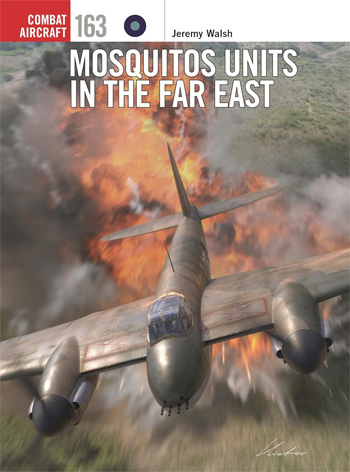
Coming soon from Avonmore Books and authors Michael Claringbould and Peter Ingman is Solomons Air War Volume 4: Operation Ke: The Evacuation of Guadalcanal January – February 1943, which sheds new light on hitherto little-known or misunderstood episodes in the Pacific air war.

This fourth volume of Solomons Air War chronicles aerial warfare throughout the Solomons theatre during the months of January and February 1943. It can be read alone or as part of the ongoing Solomons Air War series. This crucial period saw the Japanese swallow a bitter pill and launch Operation Ke, which was the evacuation of Guadalcanal. It was a complex operation conceived under utmost secrecy, which then unfolded over several weeks. Included was a widespread air offensive that saw the Japanese Army Air Force in the Solomons for the first time. Ironically, this operation was arguably the most successful yet for the Japanese in the theatre.

Against this background the intense air campaign continued. Enjoying a secure foothold on Guadalcanal and ever-growing facilities, Cactus Air Force expanded and pushed operations northwards into the Solomons chain where the Japanese were operating from Munda and building a new airfield at Vila. Temporary reinforcements were provided by carrier squadrons from both sides operating from land bases, including for the first time air units from USN escort carriers. Continue reading New Release: Solomon’s Air War Vol. 4 — The Epic Evacuation of Guadalcanal

Please Note: This post contains an Amazon affiliate link. When you purchase through links on our site, we may earn an affiliate commission.
Posted on

Into the Nuclear Cloud: A Cold War Pilot’s Story

Coming soon from Air World and author Robin Adams is Flying Through a Nuclear Cloud: Twenty Years on the Frontline During the Cold War, which tells the unusual story of a frontline navigator who flew on Canberra, Shackleton and F4 Phantom squadrons between 1954 and 1974 as well as his involvement with nuclear weapon testing in 1956 and 1958.

It was during his time on Canberras that, in 1955, volunteers were called for ‘An Interesting Overseas Tour’. Robin Adams put his hand up. The task was to collect samples resulting from nuclear explosions. This, however, was only revealed to the volunteers after they had arrived in Australia.

On 19 June 1956 that Robin, then the navigator of Canberra WH976, took off from the RAAF Perth. Along with his pilot, Robin was about to be involved in the second and final nuclear test under Operation Mosaic – both explosions taking place at the Montebello Islands.

In 1957 Robin joined Coastal Command flying the Avro Shackleton. After this interlude, a year later he was back nuclear testing. This time it was at Christmas Island in the Pacific, with the awesome megaton H bombs of Operation Grapple Z. His task was to collect weather data and clear shipping from the potential danger areas. From 1963-1966 Robin was on 31 Squadron which, equipped with Canberra PR.7s, was stationed in Germany and tasked with day and night low-level photo reconnaissance. It was during this time that he was involved in a serious aircraft accident following a single engine approach at night.

By 1969 the front-line days were over for the Canberra, and Robin was posted onto the F4 Phantom as a Flight Commander on 14 Squadron. The squadron’s primary role was all-weather tactical nuclear weapon delivery to targets in East Germany, secondary roles being ground attack and air defence. Crews stood Quick Reaction Alert for twenty-four hour stretches, twice a month, in a hut, with a nuclear weapon loaded on the aircraft parked outside. Robin’s nuclear journey had gone full circle.

The 256 page hardcover book is currently available for pre-order with release slated for March 30.

Product Page

Please Note: This post contains an Amazon affiliate link. When you purchase through links on our site, we may earn an affiliate commission.
Posted on

From Biplanes to Jets: The RAF’s Long Watch in the Far East

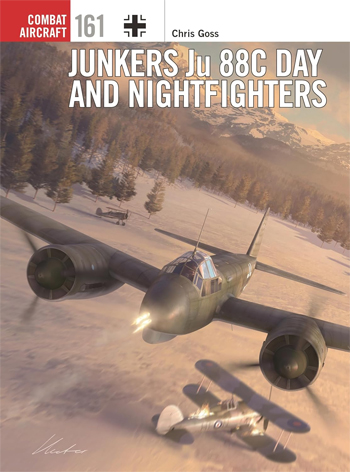
Newly released from author Steve Bond and Grub Street Publishing is RAF Boys in the Far East: True Tales of the RAF in India, South East Asia and Hong Kong.

For 82 years the Royal Flying Corps (RFC), which in 1918 became the Royal Air Force (RAF), maintained a permanent military aviation presence in the Far East. Throughout that time a huge variety of squadrons, flying many different aircraft types, together with all the necessary operational, technical and administrative support, took on all that was asked of them. The first RFC units arrived in India in 1915. RAF India grew substantially in the interwar period and throughout World War Two. Various changes in the command structure finally saw the creation of the Far East Air Force (FEAF) in June 1949, covering South East Asia and Hong Kong. In the 1960s the UK government decided to withdraw all forces East of Suez and on 31 October 1971 the FEAF disbanded and most UK forces withdrew from Singapore at this time. The last RAF unit to leave the region was 28 Squadron flying. They had been operating Whirlwind and Wessex helicopters in Hong Kong until the territory was handed back to China in 1997. RAF Boys in the Far East illustrates what it was like for those air and ground crew who were there by telling their stories in their own words, supported by explanation of the situations at the time and photographs primarily drawn from veterans’ own collections. The stories are as varied as the locations, the units and the personnel; everyday operations, exercises, triumph and tragedy, off duty time, and of course, the humour for which the RAF is renowned. Chapters focus on differing aircraft roles and their operations, including emphasis on the war years in India and Burma, and the Singapore era with actions such as Operation Firedog and the Indonesian Confrontation. Today those veterans who look back on their time served in the FEAF do so with a great deal of pride, and rightly so. This is their story.

The 256 page book is available in hardcover, Kindle and audiobook editions.

Product Page

Please Note: This post contains an Amazon affiliate link. When you purchase through links on our site, we may earn an affiliate commission.
Posted on

Defeating the Zero: How a Tactical Innovation Overcame Japan’s Deadly Fighter

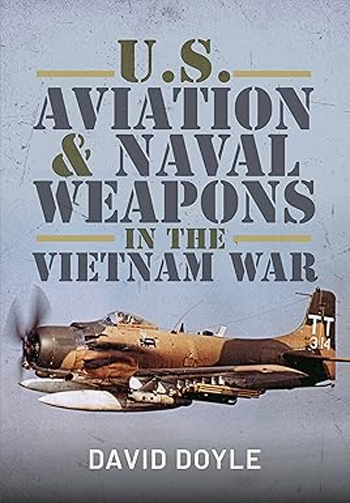
Coming soon from Air World and author R J Gorman is Defeating the Japanese Zeros: Lieutenant Commander John S. ‘Jimmie’ Thach: One U.S. Navy Pilot and his Part in the Victory in the Pacific , detailing how a brilliant U.S. aerial tactic overcame Japan’s deadly Zero fighter, turning Midway into a decisive Pacific victory.

Lieutenant Commander John S. “Jimmie” Thach of the U.S. Navy recognized the threat posed by the Zero and devised a tactic to counter it. With the Japanese preparing to attack Midway Atoll, Thach trained his pilots in the “Thach Weave,” a revolutionary formation designed to offset the Zero’s superior performance. This tactic proved highly effective in air combat and allowed Thach’s squadron to neutralize the Japanese advantage. The battle at Midway became a turning point in the Pacific War. The U.S. Navy’s victory, aided by Thach’s tactical innovation, crippled Japan’s offensive capabilities. After Midway, the Japanese would never win another major battle, while the Americans would never lose one, marking a decisive shift in the war’s outcome.

The 240 page, hardcover book is currently available for pre-order with release slated for January 30.

Product Page

Please Note: This post contains an Amazon affiliate link. When you purchase through links on our site, we may earn an affiliate commission.
Posted on

Defenders of the Reich: The Luftwaffe’s Fierce Battle Against America’s Bombers

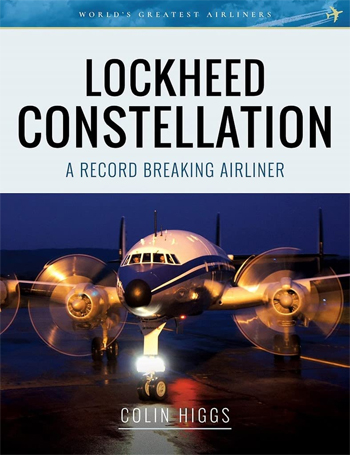
Recently released by Osprey Publishing and author Robert Forsyth is Defenders of the Reich: The Luftwaffe’s War Against America’s Bombers, which tells the story of the Luftwaffe fighter arm’s desperate defense of the Third Reich from the growing Allied bomber offensive in WW2.

The Reichsverteidigung (Defence of the Reich) was a do or die campaign that saw the very best fighter pilots in the Luftwaffe attempt to defend German skies from increasingly large formations of RAF and USAAF medium and heavy bombers. Flying both piston-engined and, eventually, the first jet-engined fighters to see operational service, the Jagdflieger employed a wide range of weapons and tactics in an effort to blunt the Allied air offensive across Nazi Germany and Occupied Europe.

Defenders of the Reich focusses on the story of the pilot, his aircraft, his weaponry, his draining, dangerous missions and Luftwaffe tactics against the USAAF and the RAF bombers from the summer of 1942 through to VE Day. They fought until they were all but obliterated as USAAF and RAF fighters decimated their ranks in the air and targeted their airfields in devastating strafing attacks.

Leading Luftwaffe historian Robert Forsyth uses German and Allied archival documents coupled with interviews with former Jagdwaffe pilots, to tell the history of this last-ditch aerial campaign from the perspective of the Luftwaffe.

The 466 page book is available in hardcover, Kindle and audiobook editions.

Product Page

Please Note: This post contains an Amazon affiliate link. When you purchase through links on our site, we may earn an affiliate commission.
Posted on

Fighting Fifteen: The Inspiring, Action-Packed Story of the Pacific’s Deadliest Hellcat Squadron

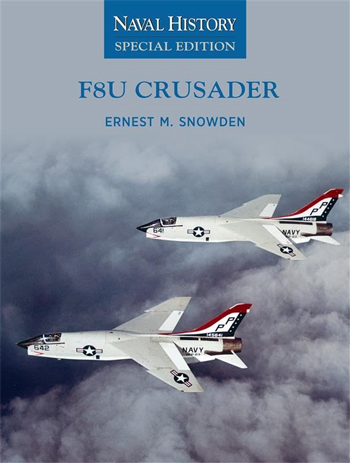
In his recently released book Fighting Fifteen: The Navy’s Top Ace and the Deadliest Hellcat Squadron of the Pacific War, author Stephen L. Moore shares the inspiring, action-packed tale of VF-15, the elite group of U.S. Navy “top gun” pilots that destroyed more enemy planes than any other Pacific War squadron.

David McCampbell ended his tour of duty as the navy’s “ace of aces,” with thirty-four confirmed enemy planes shot down, and received the Medal of Honor. His “Fighting Fifteen” played a major part in bringing an end to the Pacific War. But when the squadron was commissioned in 1943, most of its men—some barely out of their teenage years—were completely new to aerial combat. A string of deadly crashes during training in their rugged new F6F-3 Hellcats led the men to be booted off their first carrier. With their commander fired and McCampbell installed in his place, the group’s future looked bleak.

But McCampbell transformed this ragged group of talented but disparate individuals into a selfless team of well-trained aviators, and by the time they formally entered the Pacific War with a series of daring island strikes, they were ready. Nicknamed “Satan’s Playmates,” during six critical months of combat the squadron destroyed a record-setting 660 enemy planes across air and ground. Twenty-six of the men would eventually become aces, ascending to an elite fraternity and immortalizing the “Fabled Fifteen.” Now, using previously unknown accounts from the aviators themselves, military historian Stephen L. Moore places readers in the heart of the action as McCampbell and his flying band of brothers battle the Japanese navy and its formidable Zero fighters to the death.

The 432 page book is currently available in hardcover, Kindle and audiobook formats.

Product Page

Please Note: This post contains an Amazon affiliate link. When you purchase through links on our site, we may earn an affiliate commission.
Posted on

Lightning: A Comprehensive Study of Britain’s First and Only Jet Interceptor

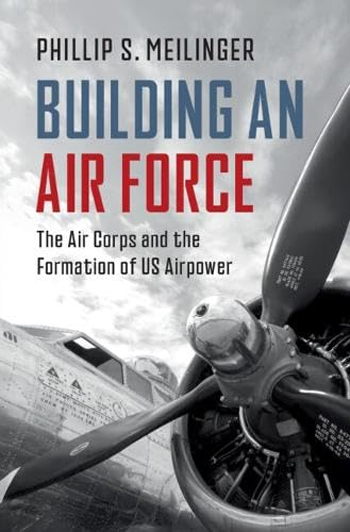
The English Electric/BAC Lightning will take center stage in Richard Hall’s upcoming book Lightning: From Inception to Preservation.

The Lightning was advanced for its time and required considerable investment and research to take it from the drawing board to active service as an effective fighting machine. Significant strides were made in the early years after the award of the contract—all of which could have come to nothing when it was deemed in the 1957 Defence White Paper that piloted aircraft had had their day. The design was saved only by its advanced stage of development; as is often the case in flight, turbulence is to be expected. But despite the obstacles put in its path, the Lightning prevailed to become one of Britain’s most admired and respected fast jets.

The book takes the reader through the politics that threatened its development, its groundbreaking design, its service career and many other aspects of its extraordinary history. The 224 page, hardcover book is currently available for pre-order with release slated for January 30.

Product Page

Please Note: This post contains an Amazon affiliate link. When you purchase through links on our site, we may earn an affiliate commission.
Posted on

How To Fly A Spitfire: A Nut-and-Bolt Guide to the World’s Greatest Aircraft

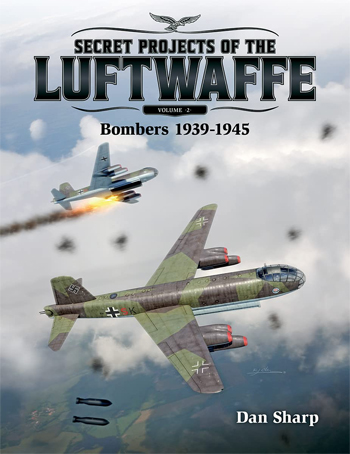
Coming soon from publisher Frances Lincoln and author Hattie Hearn is How To Fly A Spitfire: A Nut-and-Bolt Guide to the World’s Greatest Aircraft, which takes readers into the cockpit of the legendary Supermarine Spitfire to discover what it really takes to fly Britain’s most iconic fighter.

First flown in March 1936 and operated decisively throughout the Second World War and beyond, the Spitfire is considered a mechanical work of art. Its elegant elliptical wings, powerful Rolls‑Royce Merlin engine, and pivotal role in the Battle of Britain have secured its place in history, and in the hearts of aviation enthusiasts worldwide.

How to Fly a Spitfire takes you on a fascinating, hands‑on tour of this remarkable machine. Much more fun than an overly technical manual, it offers a readable, richly illustrated and step‑by‑step walkthrough of the Spitfire’s controls and systems, giving a unique impression of what it was like to actually pilot one.

The 192 page, hardcover book is currently available for pre-order with release slated for April 7.

Product Page

Please Note: This post contains an Amazon affiliate link. When you purchase through links on our site, we may earn an affiliate commission.
Posted on

Mosquito Night Hunters: The Daring RAF Intruders Who Terrorized the Luftwaffe

Coming soon from Air World and author Jeremy Walsh is Mosquito Intruders – Target Europe: The RAF’s First Elite Night Raider Units

Using diaries, first-hand accounts, official records, and contemporaneous sources, the book chronicles the elite RAF Mosquito intruder squadrons—Nos. 23, 418, and 605—that conducted daring low-level night operations across Europe during WW2, targeting Luftwaffe airfields to intercept returning enemy bombers and fighters. The narrative traces the concept’s origins in the Battle of Britain, evolving from early Defiant and Boston aircraft to the superior de Havilland DH.98 Mosquito FB VI and NF II by mid-1943, highlighting the squadrons’ exceptional ‘Battle Honours’ in defending Malta, supporting Sicily’s invasion, aiding the Dambusters’ Dortmund-Ems Canal raid, spearheading D-Day attacks, and countering V1 flying bombs under charismatic fighter ace leadership. Featuring vivid portrayals of the Mosquito’s beautifully balanced design, speed, firepower, and resilience that earned aircrew reverence, the book immerses readers in these high-stakes missions’ development, execution, and pivotal role in Allied victory.

The 272 page, hardcover title is currently available for pre-order with a March 30 release.

Product Page

Please Note: This post contains an Amazon affiliate link. When you purchase through links on our site, we may earn an affiliate commission.