Posted on

Flying Colours: Historic Aircraft Color Profiles By Richard J. Caruana

Coming soon from MMPBooks and Richard J. Caruana is Flying Colours of Richard J. Caruana, which focuses on illustrations of historic aircraft produced over his 50 year career.

During the last decade or so a considerable number of requests were received, especially from the younger generation, for me to put together a cross-section of my work into a book. Truly an impossible task considering the thousands of illustrations produced over these fifty years. It was therefore with this in mind that I’m embarking on this voyage of memories that will hopefully be met with approval by both those who remember the drawings in now-defunct or difficult to find publications and also those too young to have had the opportunity of enjoying them. It also gave me the chance to update older illustrations to today’s standards.

This release will be the latest in a series of publications focusing on his aircraft profiles. It will include the Fokker D.VII, FIAT CR.32, Fleet Air Arm Corsairs, Boulton Paul Defiant, Last of the Spitfires, USAF Starblazers, SEPECAT Jaguar and Guido Pongiluppi.

The 48 page, paperback publication is currently available for pre-order with release set for March 15.

Product Page

Please Note: This post contains an Amazon affiliate link. When you purchase through links on our site, we may earn an affiliate commission.
Posted on

Italeri Releases Spitfire Mk IX Focused on RAF Aces

Italeri has released a new edition of their 1/48 Spitfire Mk. IX focused on ace liveries.

The Mk. IX was an interim upgrade to counter the German Fw 190, entering service in 1942 with over 5,600 units produced, making it the second most numerous Spitfire variant. Powered by a more powerful Rolls-Royce Merlin 60-series engine with a two-stage supercharger, it offered superior high-altitude performance, speed up to around 408 mph, exceptional climb rate, and improved structural reinforcements compared to the earlier Mk. V, while retaining excellent maneuverability. Typically armed with two 20mm Hispano cannons and four .303 Browning machine guns (or variations), it served extensively in escort roles, intercepting bombers, and air superiority missions across Europe, significantly restoring Allied dominance during WW2.

The release (2843) includes new decals representing five aircraft flown by RAF aces: F/Lt Pierre Clostermann of 602 Squadron, W/Cdr James E. Johnson of 402 Squadron, F/Lt Jan Falkowski of 402 Squadron, S/Ldr Russell Foskett of 94 Squadron and F/Lt George Beurling of 412 Squadron.

Buy on eBay

Please Note: This post contains an eBay affiliate link. When you purchase through links on our site, we may earn an affiliate commission.

Posted on

Coming Soon: Illustrated Study of America’s Failed First Pacific Air Campaign

Coming soon from Osprey Publishing and author Mark Lardas is Philippines 1941–42: America’s disastrous start to the Pacific War, a fully illustrated study of the Pacific War’s little-known first major air campaign.

On December 7, 1941, the Japanese not only attacked Pearl Harbor, but also struck at US and allied bases throughout the Pacific, including the USA’s biggest overseas territory, the Philippines. However, that was an air battle the US was expecting. The USAAF had beefed up its assets in the Philippines, sending nearly a quarter of its available B-17s to the Far Eastern Air Force (FEAF).It could also call on the Philippine Army Air Corps (PAAC).

Aviation historian Mark Lardas explains how despite that, in a campaign that lasted barely a month, Japan’s air forces routed both the FEAF and the PAAC, gaining air superiority and permitting Imperial Army troops undisturbed access to the Philippine coast. Within a week Japan ruled the skies over Luzon. Two weeks later it had air superiority over all the Philippines. After a month, its control was so complete the Imperial Army felt confident to move its 5th Air Group back out of the Philippines. While desultory air combat would continue off and on for the next three months, the issue was decided by 5 January 1942.

Packed with original artwork, 3D diagrams, maps and photos, this is the history of how the first air campaign of the Pacific War turned into a humiliating defeat for the United States.

The 96 page publication is currently available for pre-order in paperback and Kindle editions with release scheduled for July 28.

Product Page

Please Note: This post contains an Amazon affiliate link. When you purchase through links on our site, we may earn an affiliate commission.
Posted on

WW2 Rocket Interceptors Detailed With Immaculate Tech Drawings, Full Performance Specs

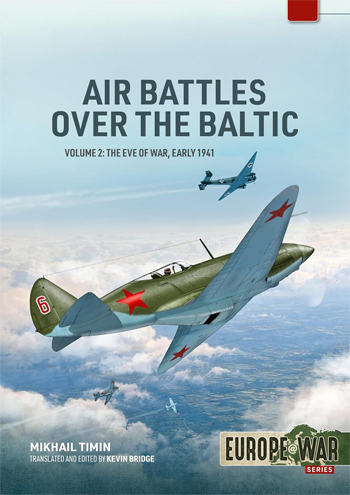
Coming soon from Fonthill Media and author Justo Miranda is Rocket Interceptors 1941–1947:

During its short life, the rocket interceptor, a concept that reached maturity towards the end of the Second World War, attracted the attention of top scientists, designers and aeronautical engineers in Germany, the USSR, the United States and Japan. It was universally agreed that an interceptor capable of flying 300 mph faster than any other aircraft would give the wielding power untouchable aerial superiority. However, this new technology was unable to adapt to the realities of war.

The complexity of the propulsion system and the need to develop new aerodynamic concepts were challenges too great for the aeronautical industries of the major powers at the time, which specialized in the mass construction of piston fighters. Nor were fighter pilots able to adapt to the high-G combat conditions that came with achieving speeds of nearly 900 mph; it was simply not possible for them to aim and fire.

In 280 immaculate technical drawings, each set within its historical context and with full performance specifications, Rocket Interceptors 1941–1947 presents 125 project, prototype and combat rocket-powered aircraft developed by Germany, the United States, the USSR and Japan in the 1940s, though initial development for some can be traced as far back as the 1920s. This is the last word on a technology that, had it been properly harnessed, might have changed the course of the Second World War.

The 288 page, hardcover book is currently available for pre-order with release set for May 30.

Product Page

Please Note: This post contains an Amazon affiliate link. When you purchase through links on our site, we may earn an affiliate commission.
Posted on

FineMolds to Release New A6M Zero Kits Representing Prototype and Model 32

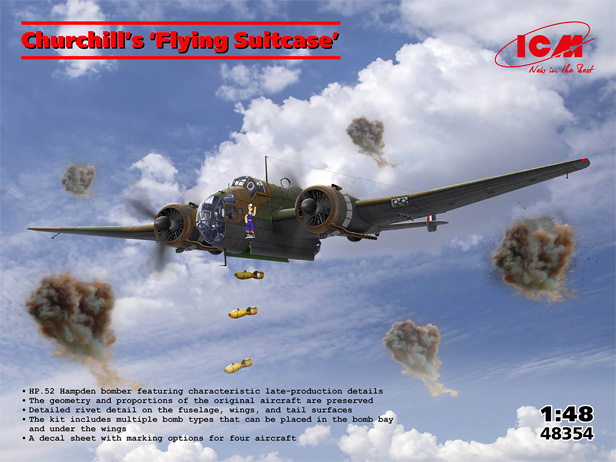
FineMolds has announced the upcoming release of two new Mitsubishi Zero kits in 1/72 scale. The offerings include the Mitsubishi A6M Zero prototype (FR03) and Mitsubishi A6M2 Zero Model 32 (FR04).

The A6M1 prototypes of 1939 were lightweight, long-range, carrier-based fighters with a low-wing monoplane layout, retractable landing gear, and a 580 kW Zuisei 13 engine driving an initially two-blade, later three-blade propeller, emphasizing extreme maneuverability and range at the expense of protection. The later A6M3 Model 32, first flown in 1941, introduced the more powerful Nakajima Sakae 21 engine with a two-speed supercharger, a shortened, squared-off wing without folding tips, enlarged wing fuel tanks, and upgraded Type 99 Mark 2 20 mm cannon, trading some of the earlier model’s turning ability and range for better roll rate, higher diving speed, and improved short-range combat performance.

The kits are currently set for release in April. Click below to check out additional photos, kit contents and livery options.

Continue reading FineMolds to Release New A6M Zero Kits Representing Prototype and Model 32

Posted on

IBG Releases Limited Edition Spitfire Mk Vb Kit Bursting With Features

IBG has released their new Supermarine Spitfire Mk Vb (North West Europe 1941-44) Black Box Limited Edition model kit in 1/72 scale.

As previously reported, the offering (72591) boasts two full model kits with two comprehensive sets of 3D printed upgrade parts as well as 18 unique, thoroughly researched marking options. The box will also include four fuselages and four sets of wing upper halves allowing builders to represent any two options of the Mk Vb they choose from the box.

Full list of Supermarine Spitfire Mk Vb – North West Europe 1941-44 – Black Box Limited Edition contents:
2x Complete Spitfire Mk Vb plastic model kits (each of them including two different fuselage versions and two different wing upper halves variants)
1x Huge decal sheet with 18(!) marking options (containing 42 roundels and 20 fin flashes to cater for the huge variety included in the box!)
2x 3D-printed cockpit structure insert (with/without additional armour and headrest)
2x Sets of 3D-printed wheels
2x Sets of 3D-printed exhausts (each of them in 4 different variants!)
2x 3D-printed seamless carburetor air intakes
10x 3D-printed rear view mirrors (5 variants, each in 2 copies)
6x 3D-printed gunsights (3 variants, each in 2 copies)
2x Photo-etched frames with some of the smaller details
2x Sets of the most thoroughly researched stencils ever prepared for a Spitfire Mk Vb model in any scale (with separate subsets for Supermarine, CBAF and Westland-produced machines)
2x Sets of painting masks
1x Special bonus

Buy on eBay

Please Note: This post contains an eBay affiliate link. When you purchase through links on our site, we may earn an affiliate commission.

Posted on

After the Bombs: The Doolittle Raiders’ Suspenseful, Moving Fight to Survive

Soon to be released from Air World is The Doolittle Raiders’ Battle for Survival: The Men Who Bombed Tokyo and their Harrowing Story of Escape and Capture in China. This is author Geert Rottiers’ extraordinary account of courage, survival, and sacrifice in the aftermath of one of the Second World War’s most daring missions. While the Doolittle Raid on Japan is often celebrated for its audacity and strategic importance, this book focuses on the tortuous journey of the Raiders once their mission was complete, as they descended – quite literally – into the unknown.

After striking targets in Japan on 18 April 1942, the Raiders, flying their North American B-25 bombers, faced an impossible challenge: reaching safety with dwindling fuel reserves. While one crew landed in the Soviet Union, the remaining fifteen crash-landed or baled out over Japanese-occupied China, initiating a desperate struggle for survival. Spread across rugged terrain, the Raiders battled severe weather, injuries, starvation, and the constant threat of capture or death at the hand of the Japanese forces.

This book delves deeply into the human stories of the Doolittle Raiders during their escape through hostile territory. It highlights the critical role played by Chinese villagers and resistance fighters who risked – and often lost – their lives to protect the stranded Americans. Through their heroic efforts, many Raiders made it to safety, but not without significant losses. The Japanese retaliated mercilessly against the Chinese in one of the largest manhunts the Japanese ever mounted, killing tens of thousands in the Zhejiang-Jiangxi Campaign, underscoring the devastating costs of the mission.

With its rich blend of action, human drama, and historical depth, and drawing on declassified military records, personal diaries, and interviews with descendants of the Raiders and their Chinese allies, The Doolittle Raiders’ Battle of Survival vividly reconstructs the Raiders’ perilous journey to safety – or not. From parachute landings into dense forests and dangerous mountain crossings to encounters with guerrilla fighters and near-capture by Japanese troops, the narrative is both suspenseful and deeply moving.

The 256 page hardcover book is currently available for pre-order with release slated for May 30.

Product Page

Please Note: This post contains an Amazon affiliate link. When you purchase through links on our site, we may earn an affiliate commission.
Posted on

Now Available: IBG’s New Fw 190D-9 “Jagdgeschwader 301” Model Kit

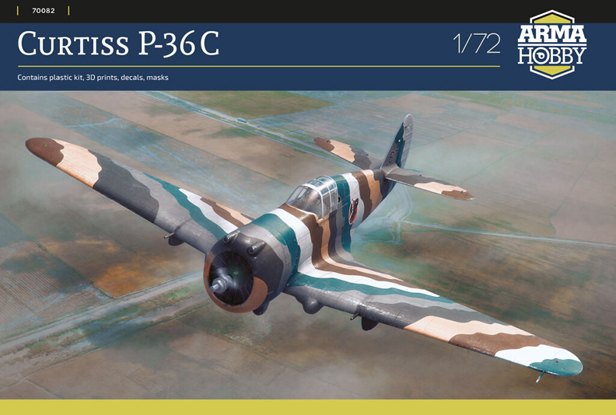
IBG Models has released their new Fw 190D-9 model kit (72543) in 1/72 scale.

The Focke-Wulf Fw 190D was the final mass-produced version of the company’s famed fighter, representing the culmination of a long line of design evolution aimed at improving high-altitude performance. Although often seen as a late-war development, work on fitting the Fw 190 with an inline engine began as early as 1941 in response to Allied advancements in turbocharged bomber technology. Early prototypes using radial and inline engines (Fw 190B and C) failed due to technical issues, but the introduction of the Junkers Jumo 213 engine revived the project. After extensive testing and modifications to correct stability problems caused by the new engine, the Fw 190D-9 entered production in August 1944, marking a major success. Subsequent variants featuring improved engines were developed, though most remained prototypes due to the war’s end. Between 1,500 and 1,700 Fw 190D aircraft were produced, with only a portion reaching active Luftwaffe units before Germany’s defeat.

As previously reported, the new offering is based on the new tool Focke-Wulf Fw 190D-9 kit (72531 / eBay Product Link) released in 2022, but with markings representing Jagdgeschwader 301.

Buy on eBay

Please Note: This post contains an eBay affiliate link. When you purchase through links on our site, we may earn an affiliate commission.
Posted on

Catalina Flying Boat: The Complete Operational History in Australian Service

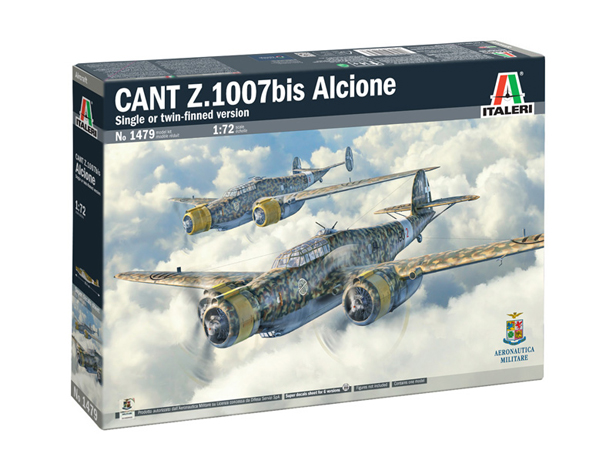
Coming soon from Avonmore Books and author Don Williams is The Catalina Flying Boat in Australian Service During WWII, a “full color, fully illustrated, complete operational history of the Catalina in Australian service during WWII, during which 225 airmen lost their lives.”

The RAAF effort during the Pacific War was massive, with glamorous types such as Spitfires, P-40s, Beaufighters and Hudsons grabbing most of the attention. While the ungainly Catalina flying boat played an equally important frontline role in the conflict, its contribution remains largely unheralded. Catalinas had unique characteristics and were in the combat zone from the first day of the war to the last, serving in several key roles. From the earliest desperate weeks of the Pacific War, RAAF Catalinas serving as bombers were one of the few Allied types with the range to strike the key Japanese base of Rabaul. Catalinas also monitored the enemy advance up to the Battle of the Coral Sea and paid a heavy price at the hands of Japanese fighters. From 1943 the Catalina force began expanding, and eventually 168 of the flying boats were received by the RAAF. These made a major strategic contribution to the war over the next two years, undertaking a successful minelaying campaign that ranged throughout the Netherlands East Indies and beyond as far as the Chinese coast. Catalinas also provided the RAAF with a valuable air-sea rescue capability, while others serving with Qantas maintained what was the longest regular airline route in the world between Perth and Ceylon.

The 132 page paperback publication is currently available for pre-order with release set for June 1.

Product Page

Please Note: This post contains an Amazon affiliate link. When you purchase through links on our site, we may earn an affiliate commission.
Posted on

Airscale Releases New “State of the Art” Hawker Typhoon Mk.Ib Hybrid Kit

Airscale has released their new 3D printed Hawker Typhoon Mk.Ib “car door” in 1/32 scale.

Combining state of the art injection moulding with high end 3D parts, this hybrid kit sets the tone for future modellers. Fuselage, wings, tailplanes and clear parts are all injection moulded, while everything else bristles with finely realised 3D detail.

The model is released in partnership with Typhoon Legacy in Canada, and a percentage of sales will go toward their restoration of JP843 to flying condition. Click below for product link and additional images.

Continue reading Airscale Releases New “State of the Art” Hawker Typhoon Mk.Ib Hybrid Kit