Posted on

Follow the 9th Bomb Squadron Into WW2’s Most Dangerous Flying Conditions

Coming soon from McFarland Publishing and author Charles B. Kastner is To War and Back with the 9th Bomb Squadron: In the Skies Over Burma, Thailand, and China in 1945:

Written by his son, and incorporating his father’s stories, personal papers, and original research, this work follows Lt. Walt Kastner from the start of World War Two until its end. Walt joined a new B-24 bomber crew that fought with the 9th Bomb Squadron from its base in India during the drive to liberate Burma from the Japanese Army. His air crew attacked Japanese troop concentrations that barred the advance of the British 14th Army and flew missions deep into Thailand, including attacking the Burma-Siam Railway, the crucial rail link that carried supplies that fed and equipped the Japanese Army in Burma–a railway made famous by the movie The Bridge on the River Kwai. When air combat ended in May 1945, the squadron moved to Assam in eastern India where they hauled aviation gasoline over “the Hump” to the 14th Air Force in China, exposing them to the most dangerous flying conditions in the world.

The 155 page book is currently available for pre-order with release set for August 21.

Product Page

Please Note: This post contains an Amazon affiliate link. When you purchase through links on our site, we may earn an affiliate commission.

Posted on

Air Battles Over the Baltic 1941: Revised and Expanded Third Volume Coming Soon

The third revised and expanded installment in a four volume series on Air Battles over the Baltic 1941 is scheduled for release shortly from Helion and Company and author Mikhail Timin.

Volume 3 of Air Battles Over the Baltic 1941 turns to the Luftwaffe and the German preparations for Operation Barbarossa, examining in unprecedented detail the aerial build-up to the invasion of the Soviet Union on 22 June 1941. Drawing extensively upon German and Russian archival sources, Mikhail Timin reconstructs the strategic planning, reconnaissance operations and combat deployments that shaped the opening hours of the war in the Baltic theatre.

The volume examines the composition and disposition of Luftwaffe forces assembled against the Baltic Special Military District, including bomber, fighter and reconnaissance formations tasked with achieving immediate air superiority. Particular attention is paid to the activities of the secretive Rowehl reconnaissance units, whose pre-war aerial intelligence-gathering operations over Soviet territory enabled the Germans to identify Soviet airfields, infrastructure and troop concentrations in remarkable detail. Continue reading Air Battles Over the Baltic 1941: Revised and Expanded Third Volume Coming Soon

Please Note: This post contains an Amazon affiliate link. When you purchase through links on our site, we may earn an affiliate commission.
Posted on

Coming Soon: An Illustrated History of BAC Lightning Units of the Cold War

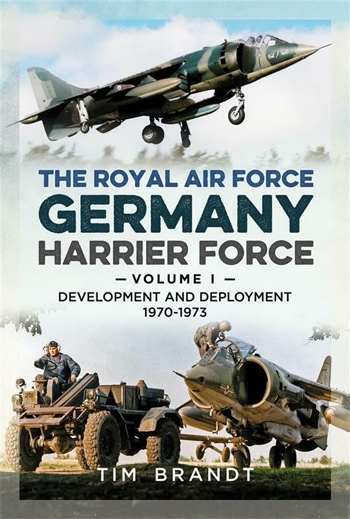
Coming soon from Osprey Publishing and author Michael Napier is RAF Lightning Units of the Cold War, an illustrated study of the Lightning Jet Fighter and its eventful operational history as the RAF’s star aircraft of the Cold War era.

The Mach 2-capable English Electric Lightning is perhaps the most iconic RAF aeroplane of the Cold War. Boasting a massive increase in performance and improved radar and weapons systems over its predecessors, the Lightning brought new capabilities to the RAF’s air defences. Tactics were adapted to fit the aircraft, including incorporating air-to-air refuelling as a routine part of operations because of the Lightning’s notoriously short range.

Retired fighter pilot Mike Napier draws on first-hand accounts from RAF aviators to tell the story of Britain’s ultimate Cold War jet fighter. Covering everything from the Lightning’s exercises with other NATO air forces to its interception of Soviet long-range ‘Badger’ and ‘Bear’ bombers in the late 1960s, this volume complements the aircraft’s colourful operational history with 20 profile artworks and photography from both official and personal archives.

The 96 page book is currently available for pre-order in paperback and Kindle editions with release set for February 16, 2027.

Product Page

Please Note: This post contains an Amazon affiliate link. When you purchase through links on our site, we may earn an affiliate commission.
Posted on

B-47 Stratojet: An Illustrated History of Its Development and Operations

Coming later this year from Osprey Publishing and author C. Mike Habermehl is B-47 Stratojet Units of the Cold War, an illustrated account of the development and operations of one of the most influential aircraft of the Cold War.

The B-47 Stratojet was the most numerous jet bomber to ever serve with the USAAF’s Strategic Air Command (SAC), and arguably Boeing’s most significant aircraft. Initially plagued by design and production problems, it eventually proved to be a capable medium-range bomber, an influential testbed, and an effective reconnaissance platform, paving the way for the successes of the B-52 and the KC-135. The Stratojet also provided SAC with crucial lessons – sometimes at the cost of lives – that moved operations such as aerial refuelling, combat tactics, global reconnaissance and strategic deterrence from the glacial pace of World War 2 into the jet age of the Cold War.

This detailed new study sees Stratojet expert Mike Habermehl draw upon more than 50 years’ research to assemble a complete operational history of the B-47 in all its roles. First-hand accounts and archive photographs are combined with SAC correspondence, documents, and manuals, helping to bring to life the fascinating story of this profoundly influential aircraft.

The 96 page book is currently available for pre-order in paperback and Kindle editions with release set for December 15.

Product Page

Please Note: This post contains an Amazon affiliate link. When you purchase through links on our site, we may earn an affiliate commission.
Posted on

New Book Explores Unorthodox Cold War Fighter Escort Experiments

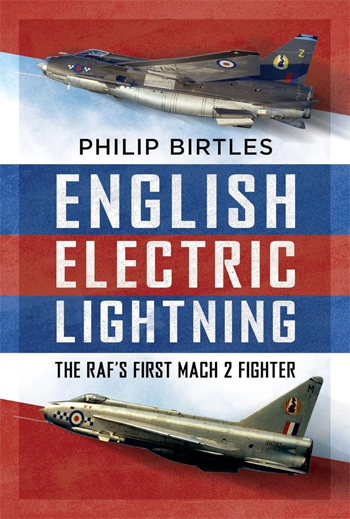
Coming later this year from Air World and author William Wolf is Cold War Long-Range Jet Fighter Program: USAF Experiments for Bombers to Take Fighters into Battle.

After the Second World War, the introduction of the six-engine Consolidated-Vultee B-36 Peacemaker bomber, capable of intercontinental ranges of 5,000 miles or more, reignited the long-standing problem of fighter escort. Early-generation US jet fighters consumed enormous amounts of fuel and lacked the endurance to accompany the B-36 over extended distances. Designing a jet fighter with enough fuel capacity for such missions would result in an aircraft far too large and unwieldy to engage smaller, more agile enemy interceptors effectively.

In response, during the early Cold War, the United States Air Force explored two experimental methods to extend fighter range. The first was wingtip-to-wingtip towing, in which a fighter would attach itself to the bomber’s wing for fuel support. The second involved carrying a fighter inside the bomber’s bomb bay on a trapeze mechanism, allowing it to be launched and later recovered in flight. Continue reading New Book Explores Unorthodox Cold War Fighter Escort Experiments

Please Note: This post contains an Amazon affiliate link. When you purchase through links on our site, we may earn an affiliate commission.
Posted on

Cold War Air Thieves: Inside the Race to Steal Enemy Aircraft Secrets

Coming soon from Pen & Sword and author Steven Taylor is Cold War Air Thieves: Stealing Military Aviation Technology and the East-West Battle for Aviation Secrets. The book provides the first in-depth exploration of the hidden Cold War battle fought by the intelligence services of both sides to obtain, by any means necessary, the secrets of some of the most potent warplanes ever to take to the skies.

The Cold War was a conflict defined by the battle for intelligence. And nowhere was this intelligence war more keenly fought than in the sphere of military aviation. Gaining information on the enemy’s latest warplanes and aviation-related hardware was a prime intelligence objective for both sides throughout the titanic ideological struggle that dominated the second half of the 20th century. Had the Cold War turned hot, the side possessing the greatest knowledge of its opponents’ combat aircraft would enjoy a crucial tactical advantage. Lagging behind the US and its NATO allies in many areas of aviation technology, the USSR also relied heavily on industrial espionage as a means of bridging the technological gap between East and West, shaving years and many millions of roubles off the development process in such key areas as the gas-turbine engine, long-range strategic bombers, air-to-air guided missiles, electronic countermeasures and stealth technology. Recruiting senior engineers and designers working in the opposing side’s aviation industries to spy for them, orchestrating the defection of pilots in their state-of-the-art aircraft, recovering shot-down aircraft wreckage from warzones like Korea, Vietnam and Afghanistan, even stealing components from under the noses of their enemies – nothing was off limits for the CIA, KGB, MI6 and Mossad in their relentless pursuit of aviation technology.

The 256 page hardcover book is currently available for pre-order with release set for August 30.

Product Page

Please Note: This post contains an Amazon affiliate link. When you purchase through links on our site, we may earn an affiliate commission.
Posted on

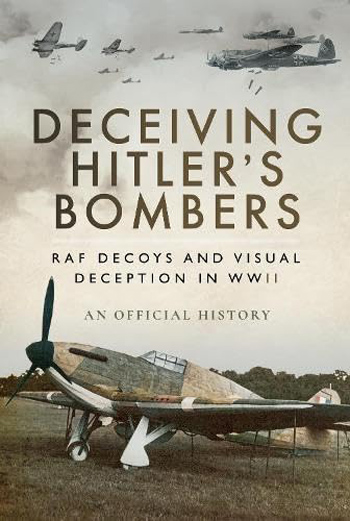
Baptism of Fire: 1939 Combat Debut of Hungarian / Slovak Air Forces Explored in New Edition

Coming soon from Helion and Company and author Csaba B. Stenge is a revised and expanded edition of Baptism of Fire: The First Combat Experiences of the Royal Hungarian Air Force and Slovak Air Force, March 1939, which draws on years of research using scarce surviving archives, veteran reminiscences and rare photographs.

Baptism of Fire explores a little-known but significant episode in the history of Central Europe on the eve of the Second World War: the brief but fierce border conflict that erupted between Hungary and the newly formed Slovak state in March 1939. While the Third Reich’s annexation of Czech territories often dominates history books, Csaba B. Stenge focuses the spotlight on this parallel struggle between a newly independent Slovakia and a revisionist Hungary over the strategically vital territories of Sub-Carpathia.

The narrative provides a meticulous reconstruction of the first aerial engagements of both the nascent Royal Hungarian and Slovak Air Forces. The author explores the early reconnaissance missions, air raids, and ground support operations carried out under difficult weather conditions and with limited resources. The chaos and technical challenges of a burgeoning air war are captured in detail, including the dogfights and the retaliatory bombing raid against the Spišská Nová Ves airfield, exposing the navigational errors and tactical improvisations that defined this ‘baptism of fire’ for both air arms. These engagements reveal valuable insights into military preparedness, coordination, and the realities of evolving midtwentieth-century air combat.

This new edition includes a thoroughly updated text, with additional detail and new insights drawn from further research by the author. The colour profile captions have been revised and extended to include additional technical and operational information on the aircraft depicted, while a number of new colour profiles have been commissioned. The volume is further enhanced by the inclusion of additional photographs and a new appendix, extending the scope and depth of the work.

The 84 page book is currently available for pre-order with release set for June 30.

Product Page

Please Note: This post contains an Amazon affiliate link. When you purchase through links on our site, we may earn an affiliate commission.
Posted on

Spanish Civil War in the Air Examined in “Profusely Illustrated” Two Volume Series

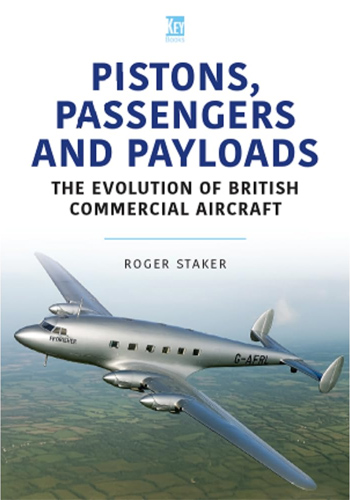
Coming soon from and Helion and Company author Eduardo Manuel Gil Martínez is Spanish Civil War in the Air Volume 2: 1938-1939, which details the evolution of air combat in Spain while examining the roles of fighters, ground attack aircraft and strategic bombing.

This volume examines the importance of the air forces of both sides in supporting their comrades on the ground and at sea, the sinking of the rebel cruiser Baleares by fast SB-2s, the expansion of strategic bombing with ever greater numbers of aircraft over cities, industrial centres, ports and Republican communication hubs, and the massive fighter battles in Spanish skies. This volume also details the early post-civil war air force of Spain and the fate of many of the aircraft and personnel who had fought in the war.

Profusely illustrated throughout, The Spanish Civil War in the Air Volume 2: 1938–1939 features a wealth of rare and original photographs, detailed maps, and specially commissioned full colour artworks by Jean-Marie Guillou depicting the aircraft, insignia and emblems of all participants. Together, they bring to life the formative years of one of the most significant and transformative aerial conflicts of the twentieth century – where the lessons of modern air warfare were written in the skies over Spain.

The 84 page book follows volume 1 (1936-37) which was released in January. It is currently available for pre-order with release set for May 15.

Product Page

Please Note: This post contains an Amazon affiliate link. When you purchase through links on our site, we may earn an affiliate commission.
Posted on

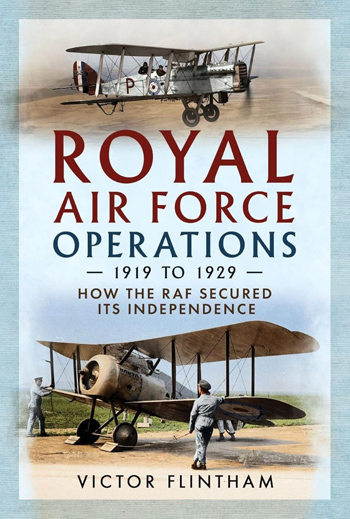
Surprise Release: The Flying Machine #28 Now Available!

Now available from our online store is the 28th installmanet of The Flying Machine early aero journal. This newly released special spans 52 pages and includes the following content:

The Busy World — Aeronauts Soar on Silken Wings (Excerpt: Flight Not Improbable. Octave Chanute and the Worldwide Race Toward Flight); Honoring a World War I Hero by Restoring a Piece of Our Aviation History (Original DH.4 Restoration); Finishing Art Scarborough’s S.E.5a; News Briefs: National Museum of the U.S. Air Force Begins Blériot XI Restoration, Pima Air & Space Museum Sopwith Camel Nears Completion, Kip Aero Sopwith Pup; Old Rhinebeck Aerodrome Albatros D.Va Restoration Update; DX Modelworks Balsa Albatros D.II Model; Products

The Flying Machine focuses exclusively on “aeroplanes” manufactured prior to 1920, as well as the current work of historians, builders, restorers, museums and collectors to preserve and promote interest in the early years of flight. Published in print and digital formats, The Flying Machine is offered on a pay-per-issue basis – no subscription required.

Click here to check out our full selection of issues.

Posted on

New Book Takes Readers on International Exploration of Aircraft Graveyards

Coming later this year from Pen & Sword and author Lorraine Evans is Boneyards of Steel: Exploring the World’s Aircraft Graveyards, which unearths the remains of aircraft in some of the planets most inhospitable regions.

The study of aviation graveyards is a much maligned area of death research. The final resting place of sizeable non-organic beasts is routinely overlooked, yet it is still, in every respect, a graveyard and deserves to be recognised as such. From an extensive desert necropoli to a war-torn underwater mausoleum, very little of the world remains untouched by the boneyard phenomenon, and less has been written about these remarkable cemeteries. With a significant percentage still languishing in ‘Top Secret’ facilities, hidden behind barbed wire-fences and gated perimeters, it is hardly surprising. Nonetheless, advancements in technology has enabled those with an adventurous spirit, armchair or otherwise, to peel back these layers of secrecy and take a sneaky peak at the skeletal remains of once aeronautic marvels, the findings of which are truly astonishing.

The 224 page, hardcover book is currently available for pre-order with release set for September 30.

Product Page

Please Note: This post contains an Amazon affiliate link. When you purchase through links on our site, we may earn an affiliate commission.