
Posted on

WW2 Air Battles Over Hungary Detailed in New, Comprehensive, Richly illustrated Account

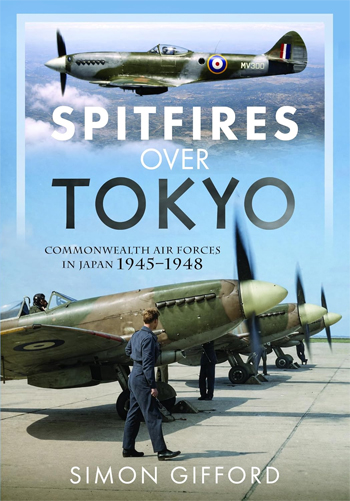
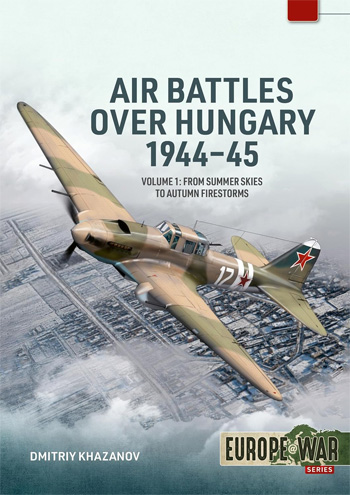
Coming soon from Helion and Company and author Dmitriy Khazanov is Air Battles over Hungary 1944-45 Volume 1: From Summer Skies to Autumn Firestorms: The Air War Over Hungary, 1944 – a “comprehensive, richly illustrated account” that surveys the escalating air war over Hungary in 1944, detailing fighter, bomber, and ground-attack operations across multiple nations and their human realities.

In the summer of 1944, Hungary found itself at the centre of a rapidly shifting front as Soviet forces surged westward and Allied bombing intensified. Air Battles over Hungary 1944–45 – Volume 1 offers a comprehensive, richly illustrated account of the escalating air war during this pivotal year, when the skies over Hungary became a deadly arena for fighters, bombers, and ground-attack aircraft from multiple nations.

This volume traces the development of the campaign from its early stages through to the final weeks of 1944. It explores in detail the operations and experiences of the Royal Hungarian Air Force, the Luftwaffe, the Red Air Force, and the United States Army Air Forces (USAAF). Drawing from a wealth of archival material, combat reports, memoirs, and previously unpublished photographs, the book reconstructs a dynamic and often chaotic picture of aerial combat as Hungary’s strategic importance grew. Continue reading WW2 Air Battles Over Hungary Detailed in New, Comprehensive, Richly illustrated Account

Please Note: This post contains an Amazon affiliate link. When you purchase through links on our site, we may earn an affiliate commission.
Posted on

Flying Pianos: The Eccentric Birth of British Aviation

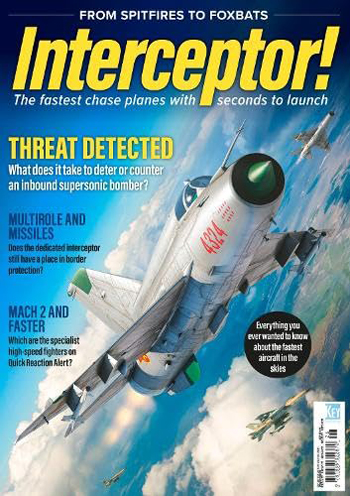
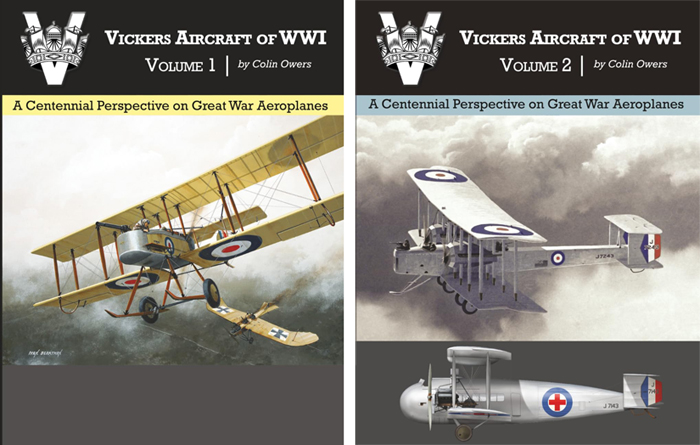
Coming soon from Oneworld Publications and author Charles Spicer is Flying Pianos: The Eccentric Birth of British Aviation, which surveys the transformation of flight from genteel gentleman’s hobby to terrifying military force.

In the first few decades of the twentieth century British aviators went from gliding a handful of yards to crossing the Atlantic. Journeying from perilous ‘cotton-and-hope’ prototypes to the Spitfire, Flying Pianos…

Charles Spicer meets the cast of colourful characters who helped Britain take flight. There’s Hugh ‘Boom’ Trenchard, eccentric ‘father’ of the RAF; the glamorous Harriet Quimby – journalist, screenwriter and record-breaking pilot; and Grahame Christie, passionate aviator, spy and uneasy acquaintance of Hermann Göring. Charting the soaring highs and catastrophic lows of this technological revolution, Flying Pianos tells the remarkable tale of how Britain took to the skies.

The 400 page, hardcover book is currently available for pre-order with release set for October 1.

Product Page

Please Note: This post contains an Amazon affiliate link. When you purchase through links on our site, we may earn an affiliate commission.
Posted on

“Luftwaffe Night Fighter Aces” Profiles 70 WW2 Aces From Victories to Fates

Coming soon from Frontline Books and author Jeremy Dixon is Luftwaffe Night Fighter Aces: Battling the Allies’ Bombers: Night Fighter Pilots Awarded the Knight’s Cross in WW2.

This is a study of the seventy Luftwaffe night fighter aces who were awarded the Knight’s Cross and its higher grades between 1940 and 1945. Of this number, two were night fighter pilots who were awarded the Knight’s Cross with Diamonds, while another two who were awarded the Knight’s Cross with Swords, and twenty-four who were awarded the Oakleaves.

The 232 page, hardcover book also explores the ranks, commands, victories, and fates for each ace profiled. It is currently available for pre-order with release set for December 30.

Product Page

Please Note: This post contains an Amazon affiliate link. When you purchase through links on our site, we may earn an affiliate commission.
Posted on

Jagdverband 44, the Me 262 and the Luftwaffe’s Mavericks

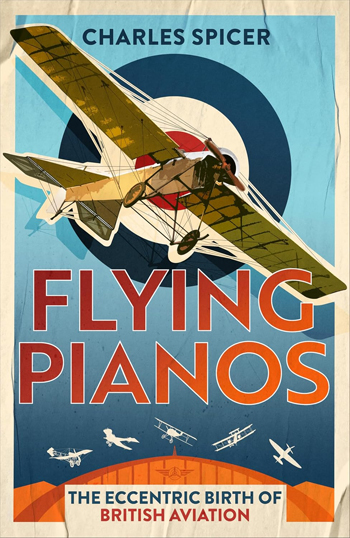
Coming soon from Osprey and author Robert Forsyth is Jagdverband 44: The Luftwaffe’s Mavericks, the dramatic story of Jagdverband 44, the squadron of aces founded by leading Luftwaffe pilot Adolf Galland equipped with the new Messerschmitt Me 262 jet fighter.

Jagdverband (JV) 44 was formed as a result of conflict and dissent within the Luftwaffe’s high command. Following disagreement with Reichsmarschall Herman Göring, the commander of the fighter arm, Adolf Galland, was dismissed from his post and exiled. He was given permission to set up a small fighter unit with which to prove that the revolutionary Me 262 was the war-winning jet fighter he believed it to be.

Assembling a small group of disillusioned and weary Luftwaffe fighter aces and flying instructors, Galland – arguably the most famous German fighter ace of World War II – moved his unit, JV 44, to Munich, from where it operated the Me 262 against USAAF aircraft bombing targets in Austria and southern Germany.

In this reappraisal of JV 44, published 30 years after his acclaimed and bestselling first study of the unit, leading Luftwaffe historian Robert Forsyth assesses Galland’s motives for forming the unit and whether it can be regarded more accurately as a ‘Squadron of Aces’ or a ‘Squadron of Outcasts and Exiles’. The book contains numerous first-hand accounts sourced by the the author during his research in the 1990s when he met with several former pilots from the squadron.

The 448 page book is currently available for pre-order in hardcover, audiobook and Kindle editions with release set for November 3.

Product Page

Please Note: This post contains an Amazon affiliate link. When you purchase through links on our site, we may earn an affiliate commission.
Posted on

Scanning the Skies: Radar Research and Development Flying 1935-1977

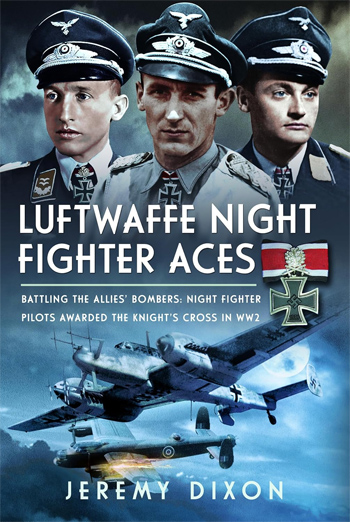
Coming soon from Crecy Publishing and author Dennis Williams is Scanning the Skies: Radar Research and Development Flying 1935-1977

This book offers a detailed overview of a complex yet fascinating aspect of British aviation history, about which comparatively little has been published. The early development of radar in Britain culminated in the successful introduction of ground-based radar, which played a crucial role during the Battle of Britain. This was followed by the considerable challenges of designing airborne systems that had to be compact, lightweight, and energy-efficient. The widespread use of radar and other electronic systems (including countermeasures) made a significant contribution to the major operations of RAF Coastal Command in the North Atlantic and Bomber Command over Europe; these aspects are covered in detail. During the Cold War, development priorities included navigation and guidance systems for the V-bombers and guided missile projects. Equally important as the scientific advances were the aircraft on which these technologies were tested. A large part of the book is devoted to the aircraft types used in British radar research and development over five decades, from the modifications required for this specialized task and the airfields used to operate them to the operational procedures. The development of aircraft, on the one hand, and the radar and other electronic systems tested on them, on the other, combine to form a coherent history of aviation in the service of scientific research. The account essentially follows a chronological sequence and illustrates how the rapid development of airframes and engines, as well as the advances in electronics and later in computer technology, went hand in hand throughout the entire period under consideration.

The hardcover book is currently available for pre-order with release set for October 31.

Product Page

Please Note: This post contains an Amazon affiliate link. When you purchase through links on our site, we may earn an affiliate commission.
Posted on

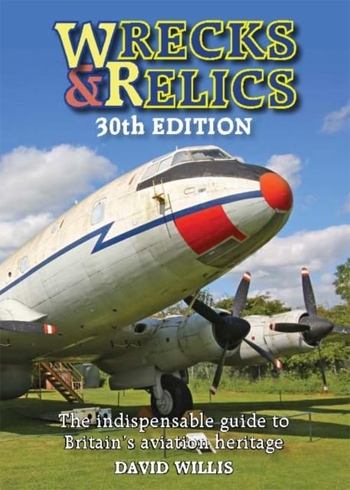
Wrecks & Relics 30th Edition: The Indispensable Guide to Britain’s Aviation Heritage

Coming soon from Crecy Publishing and author David Willis is Wrecks & Relics 30th Edition: The indispensable guide to Britain’s aviation heritage, A comprehensive, illustrated guide that chronicles more than 700 locations and 4,000 aircraft across the British Isles, detailing histories, current statuses, and where to explore preserving aviation heritage.

Wrecks & Relics remains the only publication required to discover the incredible aeronautical treasures found across the UK and Ireland. It provides a trusted, comprehensive rundown of museums and collections and their exhibits – static or flying – together with workshops, military ‘gate guardians’, stored and instructional airframes etc. It also reveals redundant and even derelict airframes being used for the most unlikely of purposes, including ‘glamping’ and at paint-ball sites.

Each edition of Wrecks & Relics is profusely illustrated with both colour and black and white photographs and is fully indexed making easy the task of where to go over the weekend, or where to find an extant example of a favourite aircraft type. Whether it travels in the car or sits on the bookshelf, this new and fully revised edition of this classic publication will continue to be the most useful and accurate companion to the aviation heritage of the British Isles, which will be referred to again and again.

The 392 page, hardcover book is currently available for pre-order with release set for August 26.

Product Page

Please Note: This post contains an Amazon affiliate link. When you purchase through links on our site, we may earn an affiliate commission.
Posted on

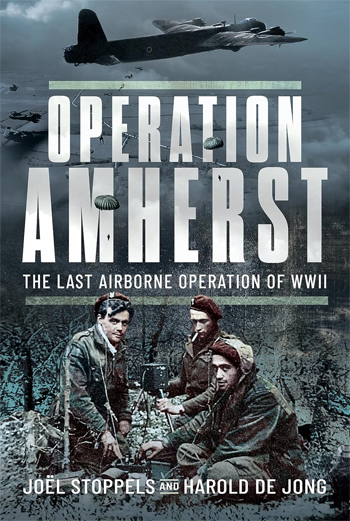
Operation Amherst: The Last Airborne Operation of WWII

Coming soon from Pen and Sword Military and authors Joël Stoppels and Harold de Jong is Operation Amherst: The Last Airborne Operation of WWII, which covers the final airborne operation of WWII, detailing French paratroopers’ landings, rapid combat in Drenthe and Friesland, and subsequent liberation efforts in Groningen and beyond.

In preparation for the liberation of the northern part of the Netherlands, Operation Amherst was launched on the night of 7 to 8 April 1945. This last airborne operation of the Second World War was carried out by 702 French (SAS) paratroopers. The fighting developed quickly after the landings in the province of Drenthe and a part of southeast Friesland. Canadian and British forces would then engage in the liberation of Groningen and the Westerbork concentration camp, and the elimination of the Delfzijl Pocket.

The 224 page hardcover book is currently available for pre-order with release set for October 30.

Product Page

Please Note: This post contains an Amazon affiliate link. When you purchase through links on our site, we may earn an affiliate commission.
Posted on

Bird Men: The B-29 Superfortress and WW2 American Airpower

Coming soon from Mariner Books and bestselling author A.J. Baime is Bird Men: The Rise of American Airpower and the Machine That Ended World War II – A WWII History of American Airpower and the Superfortress That Changed the Course of the War.

Of all the feats of American ingenuity in World War II, perhaps none was as impressive in scale or vital to the Allied victory as the creation of American airpower. Just a few years before the start of World War II, the American military was stuck in the dark ages of aviation, with the U.S. Army’s Air Corps mainly focused, not on combat, but on mail delivery. Fast forward to end of the war, and America had launched the most impressive flying machine the world had ever seen: the B-29 Superfortress, a weapon so essential to ending the war that its research and development process cost more than the Manhattan Project. Continue reading Bird Men: The B-29 Superfortress and WW2 American Airpower

Please Note: This post contains an Amazon affiliate link. When you purchase through links on our site, we may earn an affiliate commission.
Posted on

Trace the Harrier’s Transformation From Prototype to Revolutionary Combat Aircraft

Coming soon from Fonthill Media and author Tim Brandt is The Royal Air Force Germany Harrier Force: Volume 1: Development and Deployment 1970-1973. This new account traces the Harrier aircraft’s transformation from prototype to complex war machine through the RAF Germany Harrier Force’s early years, detailing field operations, development, and the people who mastered vertical flight.

Royal Air Force Germany was the chief operator of the RAF’s Harriers during the Cold War. Its Harrier Force remains the only unit to have routinely taken large numbers of fast-jet aircraft into unprepared fields and woods, operating them in constant readiness for combat.

This book, the first of three volumes on the RAF Germany Harrier Force, describes how the aircraft was developed from a simple proof-of-concept prototype into a much more complex war machine, overcoming the extraordinary demands of vertical flight. It tells of the forming of the Harrier Wing at RAF Wildenrath in 1970, and how its people learned the hard way to fly and operate the ‘jump jet’ on base and in the field during those accident-laden early years. Volume I concludes at the end of 1973 when, having proven its capabilities, the Harrier Wing became the Harrier Force.

The 256 page, hardcover book is currently available for pre-order with release set for November 30.

Product Page

Please Note: This post contains an Amazon affiliate link. When you purchase through links on our site, we may earn an affiliate commission.
Posted on

Mastering The Cold War Jets: In-Depth Insights into Flying the Harrier, Jaguar, Phantom and Tornado

Coming soon from Grub Street Publishing and authors George Robertson and Alan Munnro is Mastering The Cold War Jets: In-Depth Insights into Flying the Harrier, Jaguar, Phantom and Tornado, which contains thought-provoking first-hand accounts that come from two friends who joined the RAF together on the same day in 1963, went through basic and advanced flying training together and then followed two parallel but different careers.

…As the book is written jointly, you get two different perspectives on the main RAF front-line roles in the Cold War. They describe going through the RAF pilot training system in the 1960s, the aircraft they flew, and the bases they operated from. After completing advanced flying training on the Folland Gnat at RAF Valley in Anglesey they followed different paths from then on. George went to the Canberra Conversion Unit (OCU) at RAF BAssingbounre and then to RAF Luqa in Malta to fly the Canberra PR9 in the reconnaissance role. Alan went to RAF Leuchars to convert on to the Gloster Javelin. Continue reading Mastering The Cold War Jets: In-Depth Insights into Flying the Harrier, Jaguar, Phantom and Tornado

Please Note: This post contains an Amazon affiliate link. When you purchase through links on our site, we may earn an affiliate commission.