
Posted on

Skyhookers: An Illustrated History of Parasite Fighters

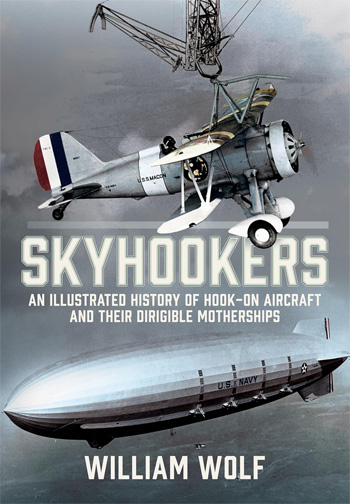
New from Air World and author William Wolf is Skyhookers: An Illustrated History of Hook-on Aircraft and Their Dirigible Motherships.

From the First World War’s Zeppelins to the Second World War’s large bombers, military aircraft were vulnerable to fast, manoeuvrable interceptors. To address this, fighter escorts were used, but their limited range often left bombers exposed. A solution was the use of Composite aircraft, where larger bombers carried smaller, short-range fighters, which could be launched and retrieved as needed.

Zeppelins, particularly vulnerable to interceptors, were ideal for this concept. During the First World War, Germany briefly experimented with carrying parasite aircraft, while the British conducted post-war trials using airships like His Majesty’s Airship R-23 and R-33, carrying fighters such as the Sopwith Camel and de Havilland DH.53 Humming Bird. However, successful hook-on/retrievals were only achieved with the Humming Bird.

The US Navy and Army further developed this concept. In 1918, the Navy launched a Curtiss JN ‘Jenny’ from a C-1 Blimp, and in 1924, the Army successfully flew a Sperry Messenger from a TC-Class airship. The US perfected the carry/launch/retrieval method for airship defence and scouting, notably with the USS Los Angeles, which carried aircraft on a ‘trapeze’ device. The Akron and Macon airships, with internal storage for aircraft, further advanced this technique, making them some of the most remarkable aircraft of their time.

The 200 page book is currently available in hardcover and Kindle editions.

Product Page

Please Note: This post contains an Amazon affiliate link. When you purchase through links on our site, we may earn an affiliate commission.
Posted on

Heinkel He 219 History Told Through Photos and First-Hand Accounts

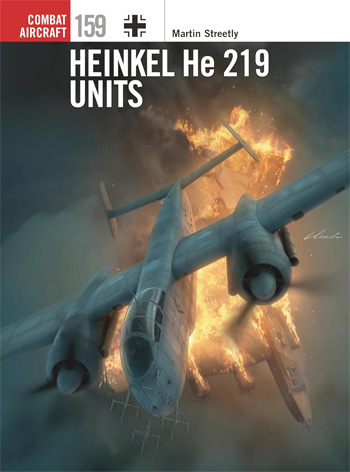
New from Osprey and author Martin Streetly is Heinkel He 219 Units, an illustrated study of the famous Heinkel He 219 – the Luftwaffe’s only purpose-built nightfighter – and its role in the bitterly contested nocturnal defense of the Reich.

Originally conceived as a high-performance reconnaissance aircraft, the Heinkel He 219 went on to become the Luftwaffe’s only purpose-built nightfighter. Despite its many sterling qualities (including ejector seats for its two crew members), the type’s production was bedevilled by political manoeuvring and consequently it was only used in strength by one unit – the Luftwaffe’s elite Nachtjagdgeschwader 1.

In this volume, respected historian Martin Streetly examines the development of the He 219, from its origins through to its implementation against the RAF’s ever-more destructive night offensive. First-hand accounts from Nachtjagdverband crew shed light on the He 219’s successes and failures in battle, while archive photos and newly commissioned artwork demonstrate the unique design and technology of this near-legendary aircraft.

The 96 page publication is now available in paperback and Kindle editions.

Product Page

Please Note: This post contains an Amazon affiliate link. When you purchase through links on our site, we may earn an affiliate commission.
Posted on

An Illustrated History of the Mosquito’s Design, Construction and Far East Ops

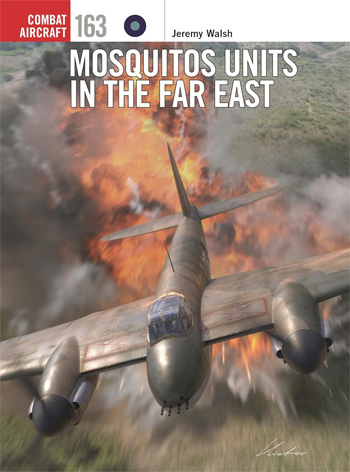
Coming later this year from Osprey Publishing and author Jeremy Walsh is Mosquito Units in the Far East, an illustrated history of the remarkable DH 98 Mosquito, from its unusual design and construction through to its pivotal actions the Far East.

The RAF and RAAF’s de Havilland DH 98 Mosquito played an important role in forcing the Japanese retreat from Burma and the Far East. Combining innovative composite-wood construction, world-class performance and beautifully balanced handling, the ‘Mossie’ excelled in intruder/strike and long-range photo-reconnaissance roles, despite its vulnerability to the hot, humid climate and challenging weather conditions. Moreover, Mosquito crews undertook their missions with great skill and determination, whether skimming the jungle to attack supply lines, supporting ground attack of artillery emplacements, denying airspace to the Japanese or identifying the enemy’s command centres.

In this new study, Mosquito specialist Jeremy Walsh reviews the aircraft’s background, its operational history across both RAF and RAAF squadrons in the Far East and its contribution to Allied success in this often ‘forgotten’ theatre. Accounts from aircrew bring first-hand perspectives to the story, while archive photographs and 21 newly commissioned aircraft profiles detail the aerodynamic efficiency and revolutionary nature of the Mosquito’s design.

The 96 page publication is currently available for pre-order in paperback and Kindle editions. Release is scheduled for September 22.

Product Page

Please Note: This post contains an Amazon affiliate link. When you purchase through links on our site, we may earn an affiliate commission.
Posted on

F4F Wildcat vs 6M2-N ‘Rufe’ Battles Brought to Life in New Illustrated Study

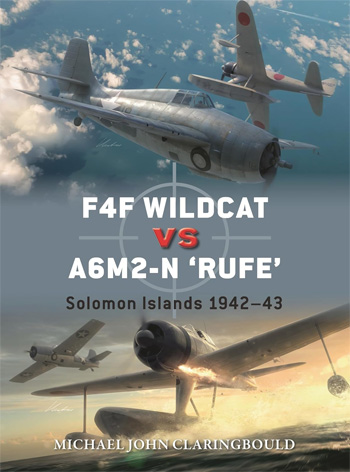
Set for release later this year from Osprey Publishing is F4F Wildcat vs A6M2-N “Rufe”: Solomon Islands 1942–43, author Michael John Claringbould’s illustrated study of engagements between the F4F Wildcat and 6M2-N ‘Rufe’ during the Solomon Islands campaign.

A number of unique confrontations took place between floatplanes and land-based fighters during the fierce aerial battles fought above the Solomon Islands throughout 1942–43. Whilst the most famous Battle of Guadalcanal ‘slugfests’ saw US Marine Corps/US Navy F4F Wildcats engage the Zero-sens of the Imperial Japanese Naval Air Force, the pugnacious Wildcats also came up against the A6M2-N ‘Rufe’ floatplane – termed the ‘Zero on floats’ by American pilots. Such encounters have gone under-explored and misrepresented in Western histories, with the elusive capabilities of the ‘Rufe’ and its role combatting raids against Guadalcanal receiving only scant attention.

In this revelatory study, Pacific War expert Michael John Claringbould uncovers an aspect of the Pacific air war that has, until now, remained largely unknown. Operational documents, combat reports and first-hand accounts from both Wildcat and ‘Rufe’ pilots are combined to help align adversaries, in some cases one-on-one, for the first time in print, while archive photographs, formation diagrams and newly commissioned artwork brings the action to life.

The 80 page publication is currently available for pre-order in paperback and Kindle editions with release set for August 25.

Product Page

Please Note: This post contains an Amazon affiliate link. When you purchase through links on our site, we may earn an affiliate commission.
Posted on

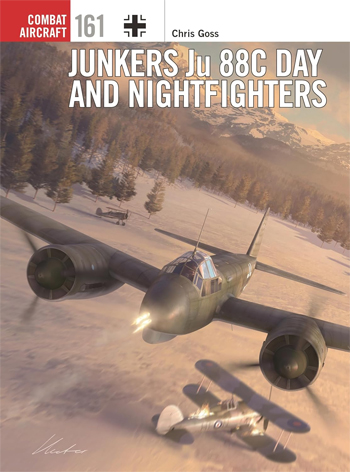
Junkers Ju 88C Day and Nightfighter Missions: The Illustrated Account

Soon to be released by Osprey Publishing is Junkers Ju 88C Day and Nightfighters, author Chris Goss’ illustrated account of the action-packed combat missions carried out by the Luftwaffe’s powerfully armed Junkers Ju 88C day and nightfighters.

The Junkers Ju 88A was the Luftwaffe’s most effective medium bomber during much of World War 2, and its high speed and surprising agility made it an ideal candidate for conversion into a Zerstörer (destroyer) fighter. Initially designed to be used as a long-range bomber escort, the solid-nosed Ju 88C fighter boasted powerful cannon that made the aircraft ideally suited to the nightfighter role. Its unrivalled endurance also meant the Ju 88C could undertake sweeps of the Bay of Biscay from the French Atlantic coast in search of Allied maritime patrol aircraft hunting U-boats.

Luftwaffe historian Chris Goss charts the action-packed service history of the Ju 88C through first-hand accounts and combat reports from the crews that flew the twin-engined Zerstörer into combat. Newly commissioned profile artworks and more than 50 photographs of aircraft and crews help detail the aircraft’s conversion from a fast bomber into a deadly heavy fighter that proved to be the scourge of Allied bomber and patrol aircraft.

The 96 page publication is currently available for pre-order in paperback and Kindle editions. Release is set for May 19.

Product Page

Please Note: This post contains an Amazon affiliate link. When you purchase through links on our site, we may earn an affiliate commission.
Posted on

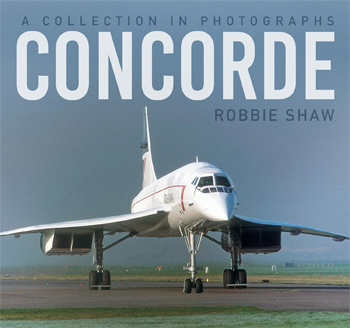
New Book Details the Service History of the Concorde in Photographs

New from The History Press and author Robbie Shaw is Concorde: A Collection in Photographs which is packed with stunning color photographs of Concorde aircraft throughout the aircraft’s service history.

Compiled by Robbie Shaw, ex air traffic controller and lifetime aviation photographer and enthusiast, it covers both British and Air France Concorde aircraft and highlights the impressive collaboration between the two nations that resulted in such an important and beloved aircraft. With over 140 images covering such themes as British Airways and Air France Concordes, the Pepsi Cola ad campaign, and the emotional retirement day at Heathrow, this book showcases quality photographs of an iconic supersonic airliner, for which only 14 of the type entered airline service, and whose like will never be seen again.

The book spans 145 pages and is available in paperback format.

Product Page

Please Note: This post contains an Amazon affiliate link. When you purchase through links on our site, we may earn an affiliate commission.
Posted on

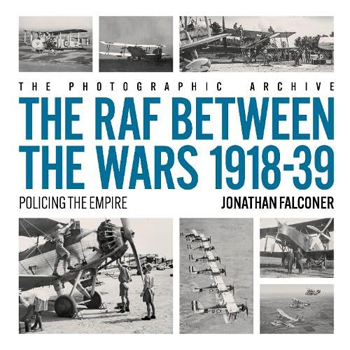
RAF’s Interwar Activities Chronicled With Hundreds of Rare Photos

Coming soon from Jonathan Falconer and JJN Publishing is The RAF Between The Wars 1918-39 (The Photographic Archive): Policing The Empire

The book is a visual history chronicling the Royal Air Force’s imperial policing operations from 1918 to 1939 across British territories like Iraq, Palestine, Aden, and India. Featuring hundreds of rare archival photographs of aircraft such as the Vickers Vernon and Airco DH.9A, personnel, and campaigns against tribal unrest, it highlights the RAF’s evolution into a key imperial tool through tactics like air control for low-intensity policing amid post-WWI budget constraints.

The 144 page, hardcover book is currently available for pre-order with release scheduled for March 6.

Product Page

Please Note: This post contains an Amazon affiliate link. When you purchase through links on our site, we may earn an affiliate commission.
Posted on

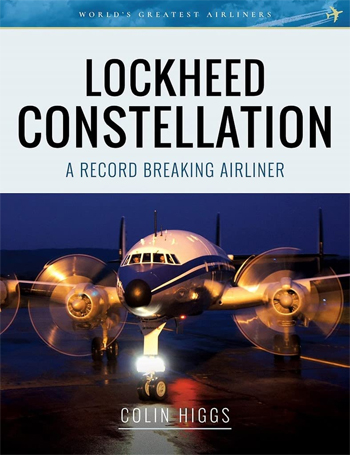
Lockheed Constellation: Its Development, Service and Legacy in Detail

Set for release later this year is author Colin Higgs’ examination of the iconic Lockheed Constellation, which has become a symbol of the golden age of air travel worldwide.

Lockheed Constellation tells the story of the aircraft that was used by more than 100 airlines and air forces in thirty-eight countries; an airliner that came to epitomize the grand and romantic age of flight in the post-war years before the jet engine ruled. It tells of the wartime development which made the USAAF buy the first few aircraft off the production line; the post-war development which would see nine variants built; of the great airlines around the globe that would make the Constellation their first choice flagships; of the amazing technological advances made during development; and of the enduring legacy of this unique aircraft.

The 176 page paperback publication is currently available for pre-order with release scheduled for June 30.

Product Page

Please Note: This post contains an Amazon affiliate link. When you purchase through links on our site, we may earn an affiliate commission.
Posted on

Discover the Vital Role and Stunning Exploits of the F8U Crusader

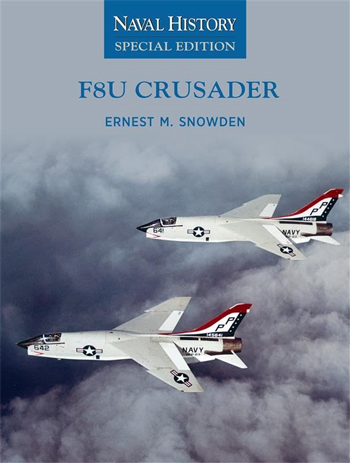
Newly released from Naval Institute Press and author Ernest M. Snowden is F8U Crusader: Naval History Special Edition, a richly illustrated volume exploring the F8U Crusader’s storied role in Cold War and Vietnam-era naval aviation, from setting speed records to earning its reputation as the “Last of the Gunfighters.”

From its first flight in 1955, the F8U Crusader proved to be an extraordinary aircraft, establishing a renowned fighter legacy for naval aviation. Building on its success with the F4U Corsair, aviator pioneer Chance Vought brought the Navy into the supersonic age with the Crusader, the first carrier-based fighter to exceed 1,000 mph in level flight. The Crusader earned the Navy its first Thompson Trophy for military aircraft speed and won the Collier Trophy for its innovative carrier suitability features. In 1957 future astronaut John Glenn set a new intercontinental speed record in an F8U-1P, flying from California to New York in just 3 hours and 23 minutes. At a time when guns were being replaced by missiles, Vought designers retained an integrated aircraft cannon, solidifying the Crusader’s reputation as the “Last of the Gunfighters” and earning the loyalty of its pilots.

The contribution of the Crusader to U.S. Cold War operations was substantial. The F8U-1P photoreconnaissance variant, the longest-serving Crusader model, debuted operationally during the Cuban Missile Crisis, providing irrefutable low-level imagery of Soviet activity. During the Vietnam War, Crusader pilots achieved an enviable 6-to-1 kill ratio, outperforming both Air Force and Navy F-4 Phantom pilots―a testament to the aircraft’s maneuverability and the dogfighting ethos of the Crusader’s pilot community.

The Crusader retired from U.S. Navy service in 1987, but its legacy endured as it continued to serve with the Philippine Air Force and the French Navy until 1999, forty-four years after its first flight. Author Ernest Snowden, a former naval aviator, provides an in-depth look at the design and operational history of this iconic aircraft, making this book a must-read for air combat history enthusiasts.

The publication spans 114 pages and is available in Mook format – a hybrid publication format blending elements of a magazine and a book.

Product Page

Please Note: This post contains an Amazon affiliate link. When you purchase through links on our site, we may earn an affiliate commission.
Posted on

Building an Air Force: Trace the Rise of US Airpower During the Air Corps Era

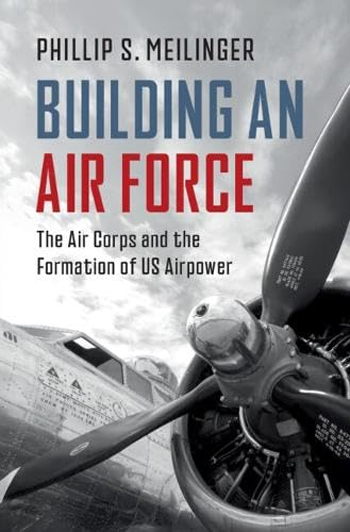
Coming soon from Cambridge University Press and author Phillip S. Meilinger is Building an Air Force: The Air Corps and the Formation of US Airpower.

Until the Japanese attack on Pearl Harbor, America did not want war, with the 1930s marked by strong isolationism and an emphasis on defense. However, in December 1941, it wasn’t defensive aircraft the Army Air Corps had been steadily procuring, but offensive long-range heavy bombers, whilst US pursuit planes were decidedly inferior to their European counterparts. In this new history of the development of American air power, Phillip Meilinger dispels the notion that young air zealots pushed for a bomber-heavy force, revealing instead the technological, economic and bureaucratic forces which shaped the air force. He examines the role of scientists and engineers, developments in commercial aviation, and conflicting priorities of the Army and Air Corps, as well as how these were in turn influenced by America’s political leaders. Building an Air Force is essential for understanding a conflict in which whoever controlled the skies controlled the land and seas beneath.

The 330 page, hardcover book is currently available for pre-order with release set for May 7.

Product Page

Please Note: This post contains an Amazon affiliate link. When you purchase through links on our site, we may earn an affiliate commission.