
Posted on

How To Fly A Spitfire: A Nut-and-Bolt Guide to the World’s Greatest Aircraft

Coming soon from publisher Frances Lincoln and author Hattie Hearn is How To Fly A Spitfire: A Nut-and-Bolt Guide to the World’s Greatest Aircraft, which takes readers into the cockpit of the legendary Supermarine Spitfire to discover what it really takes to fly Britain’s most iconic fighter.

First flown in March 1936 and operated decisively throughout the Second World War and beyond, the Spitfire is considered a mechanical work of art. Its elegant elliptical wings, powerful Rolls‑Royce Merlin engine, and pivotal role in the Battle of Britain have secured its place in history, and in the hearts of aviation enthusiasts worldwide.

How to Fly a Spitfire takes you on a fascinating, hands‑on tour of this remarkable machine. Much more fun than an overly technical manual, it offers a readable, richly illustrated and step‑by‑step walkthrough of the Spitfire’s controls and systems, giving a unique impression of what it was like to actually pilot one.

The 192 page, hardcover book is currently available for pre-order with release slated for April 7.

Product Page

Please Note: This post contains an Amazon affiliate link. When you purchase through links on our site, we may earn an affiliate commission.

Posted on

Mosquito Night Hunters: The Daring RAF Intruders Who Terrorized the Luftwaffe

Coming soon from Air World and author Jeremy Walsh is Mosquito Intruders – Target Europe: The RAF’s First Elite Night Raider Units

Using diaries, first-hand accounts, official records, and contemporaneous sources, the book chronicles the elite RAF Mosquito intruder squadrons—Nos. 23, 418, and 605—that conducted daring low-level night operations across Europe during WW2, targeting Luftwaffe airfields to intercept returning enemy bombers and fighters. The narrative traces the concept’s origins in the Battle of Britain, evolving from early Defiant and Boston aircraft to the superior de Havilland DH.98 Mosquito FB VI and NF II by mid-1943, highlighting the squadrons’ exceptional ‘Battle Honours’ in defending Malta, supporting Sicily’s invasion, aiding the Dambusters’ Dortmund-Ems Canal raid, spearheading D-Day attacks, and countering V1 flying bombs under charismatic fighter ace leadership. Featuring vivid portrayals of the Mosquito’s beautifully balanced design, speed, firepower, and resilience that earned aircrew reverence, the book immerses readers in these high-stakes missions’ development, execution, and pivotal role in Allied victory.

The 272 page, hardcover title is currently available for pre-order with a March 30 release.

Product Page

Please Note: This post contains an Amazon affiliate link. When you purchase through links on our site, we may earn an affiliate commission.
Posted on

“Completely New, Lavishly Illustrated” F-86 Epic Drops Soon

Coming soon from author Duncan Curtis is Famous American Aircraft: F-86 Sabre, a thorough history of America’s first swept-wing jet fighter.

This is a completely new monograph detailing the entire F-86 series from gestation and development, through the many variants that were produced, to its retirement from duty. Its operational career is also given detailed analysis. The book makes use of many primary-sources including documents held by the US Air Force Historical Records Agency, US National Archives, Boeing archives and the UK Public Record Office. Much of this data has only been available in the public domain in recent years and so was not accessible when previous books on the F-86 were compiled.

Lavishly illustrated throughout, there are around 500 colour and black and white photos in the book, many previously unpublished. The thoroughly researched text and extensive photographic coverage will make this a close to definitive work on this seminal aircraft. This book will appeal to all who are interested in Cold War aviation history and also to those engaged in modelling the aircraft of this era.

The 384 page hardcover book is currently available for pre-order with release scheduled for February 19.

Product Page

Please Note: This post contains an Amazon affiliate link. When you purchase through links on our site, we may earn an affiliate commission.
Posted on

The Navigator’s Letter: WWII’s Hidden Bond Ignited by One Doomed Flight

Soon to get its U.S. release is the new book The Navigator’s Letter: The True Story of Two WWII Airmen, a Doomed Mission, and the Woman Who Bound Them Together from author Jan Cress Dondi. The book deals with the costliest US air raid of WW2, which occurred over Hitler’s oil fields at Ploesti, Romania on August 1, 1943. It brings to light one of the best untold and dangerous stories of the war, chronicling a moving and heroic story of patriotic duty, familial bonds, brotherhood, and love.

A true story, The Navigator’s Letter is a tale of uncanny coincidences: two friends from the same small Illinois town; both joined the Air Corps; both became navigators; both were assigned to B-24 Liberators; both flew missions over Europe; both of their planes were forced down over Ploesti; and both went missing-in-action.

Intertwined with events of WWII, the story follows the two B-24 navigators coursing through wartime, both with ties to the same woman. Their lives unfurl with the Air Force’s darkest day, Operation Tidal Wave. It was the first-ever zero-altitude air raid, which lead to Operation Reunion, the largest evacuation by air in history repatriating 1,162 POWs from Romania back to American air bases in Italy.

The 400 page, hardcover book is currently available for pre-order with release scheduled for February 10.

Product Page

Please Note: This post contains an Amazon affiliate link. When you purchase through links on our site, we may earn an affiliate commission.
Posted on

Incoming: Examination of America’s Secret Cold War Fighters and Interceptors

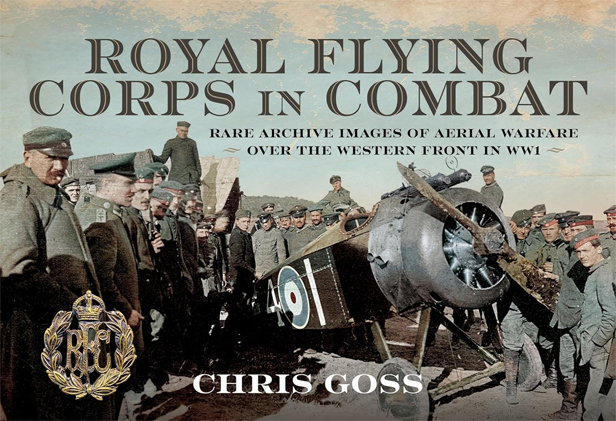
Coming soon from Crecy Publishing Ltd and author Tony Buttler is American Secret Projects 5: Fighters and Interceptors 1950 to 1980. The new release is a revised and expanded edition of a book published some years ago which looks at American fighter projects that were proposed during the period.

This was an exciting era in terms of fighter development. It was during these years that the jet finally eclipsed the propeller, wings took on entirely new shapes, the ‘sound barrier’ was breached and maximum speeds were multiplied. It was an era in which aeronautical engineering became much more complex but before the computer would come to the designer’s assistance. This meant much more of a ‘try it and see’ attitude to new ideas. Therefore, when an air arm required a new fighter, several design teams could prepare proposals that could be very different from one another.

The topics discussed in detail in the book’s seven chapters include the quest for a long-range interceptor, vertical takeoff aircraft, naval developments and lightweight fighters. Appendices provide listings of all projects that were developed and their specifications. A new separate appendix looks at the Canadian Avro CF-105 Arrow which in many ways matched the work undertaken in the US on long-range interceptors and thus makes an interesting comparison.

The timeframe is fluid as some early projects included originated in the late 1940s. At the other end of the scale, although the design competitions which led to the F-16, YF-17 and F-18 are the final subjects covered in depth, a few projects that followed these fighters are included which again makes the 1980 closing date only approximate. No coverage is given to projects from that point onwards because much of the background is still secret and will probably remain so for a long time.

The 392 page hardcover book is currently available for pre-order with a February 19 release.

Product Page

Please Note: This post contains an Amazon affiliate link. When you purchase through links on our site, we may earn an affiliate commission.
Posted on

Coming Soon: The Full Story of the Luftwaffe’s WW2 Kamikaze Force

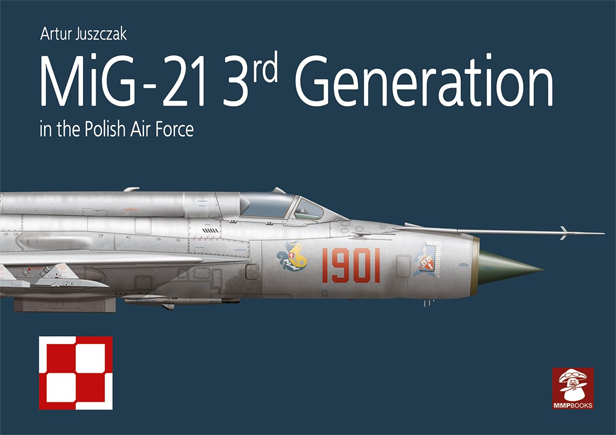
Coming soon from Fonthill Media and author Walter S. Zapotoczny is Sonderkommando Elbe: The Luftwaffe’s Kamikaze Force.

By September 1944 the Third Reich was under constant attack by Allied bombers and suffering an onslaught by the Red Army to the east. The Nazi high command struggled for ideas to reduce the effect of the ceaseless bombing and thereby create some breathing space to build and strengthen their new weapon: jet-propelled aircraft. They believed that this new invention could turn the tide of the war.

At the end of 1944 a proposal was offered by Oberst Hans-Joachim “Hajo” Herrmann. His plan called for 1,500 fighter aircraft to conduct a massive attack against an Allied bomber formation on April 7, 1945, inflicting such casualties that the Allies would think twice about continuing their bombing campaign. Attacking bombers was not a new idea, but the method of attack was new. The German pilots were to fly their planes into the bombers, causing enough damage to bring down the aircraft. Unlike the Japanese Kamikaze pilots who carried explosives on board and died in the attack, the German pilots were instructed to bail out and parachute to safety to fly another day.

The 224 page, hardcover book offers the full story of the unit and its pilots. The book is currently available for pre-order with release slated for March 30.

Product Page

Please Note: This post contains an Amazon affiliate link. When you purchase through links on our site, we may earn an affiliate commission.
Posted on

British, Dominions and US Wings: Air War Over Greece 1940–1950 Out Soon

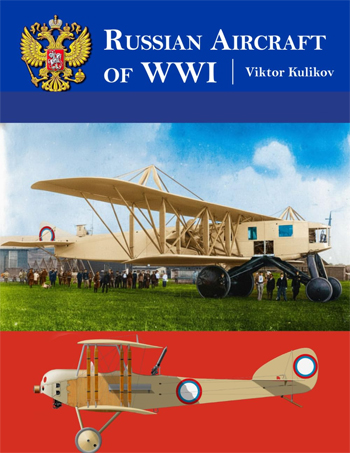
Soon to be released by Fonthill Media is Air War Over Greece 1940–1950: British, Dominions and United States Air Arms, author Victor Flintham’s examination of a neglected corner of military aviation history.

Following the Italian invasion of Greece in October 1940, the RAF reluctantly deployed three squadrons of Bristol Blenheim light bombers and one squadron of Gloster Gladiators, an obsolescent biplane fighter, to assist the Greek defenders. The fear among the Allies was that with Greece in Axis hands, enemy supply lines to North Africa would be significantly shortened, threatening the Allied position there and in the Middle East.

By the time Germany joined the invasion in April 1941, both the RAF and FAA had committed more squadrons and been joined by army units, but they were soon overwhelmed, retreating to Crete, from where they were evicted in May 1941 after a massive German paratroop operation. For the next three years the RAF and FAA attacked Axis forces on Crete, mainland Greece and in the Aegean with mixed success. In addition, Allied air arms, including USAAF units, dropped weapons and supplies to the Greek partisan groups. In late 1944, as the Germans were forced to withdraw from Greece, RAF units once again flew into Greek airfields, yet they were soon drawn into the bitter civil war, fighting alongside Greek government forces against Communist insurgents. After the final withdrawal of operational units in 1946, the RAF retained an air delegation in Athens until 1952, when Greece joined NATO.

The upcoming, 272 page hardcover release is currently available for pre-order with release slated for March 30.

Product Page

Please Note: This post contains an Amazon affiliate link. When you purchase through links on our site, we may earn an affiliate commission.
Posted on

Arming the Luftwaffe: Machine Guns, Cannon and Aerial Artillery that Powered German Air Combat, 1939–1945

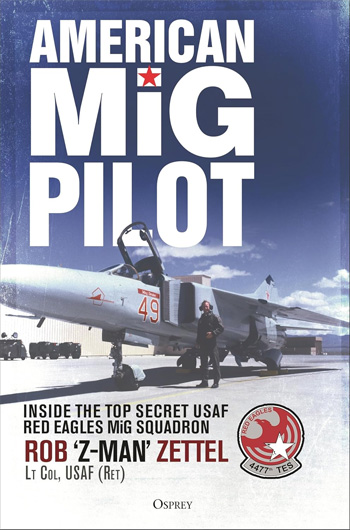
Soon to be released from Pen and Sword History and author Tim Heath is German Aircraft Weaponry: Machine Guns, Cannon and Aerial Artillery in Luftwaffe Service, 1939-1945. The book examines the use of the humble rifle calibre machine gun as an aircraft weapon along with the efforts to develop suitable cannon with greater destructive power for aircraft use, the advances made during the inter-war years and the various barrelled weaponry either used or proposed by the German Luftwaffe in the Second World War.

This work encompasses not only the technical and operational appraisals of the various weapons used by the German Luftwaffe aircrews, which include some of Germany’s leading surviving fighter aces of the Second World War, but also the armourers tasked with their day-to-day maintenance, the instructors and technicians on the ground, and those who found themselves at the receiving end of their firepower both in the air and on the ground. This unique work encompasses many new and previously unpublished testimonies as told by those who were there in their own words and for the first time.

The 256 page hardcover book is currently available for pre-order with release slated for March 30.

Product Page

Please Note: This post contains an Amazon affiliate link. When you purchase through links on our site, we may earn an affiliate commission.
Posted on

Photo Album Documents Captured / Destroyed Soviet Aircraft in WW2

Soon to be released in the US by MMP Books is Tomasz J. Kopański’s Barbarossa Victims Vol. 2, the 35th installment of the MMPBooks/Stratus “Camera On” series.

Like volume 1 in the series, Vol 2 features over 160 photographs of captured and destroyed Soviet aircraft from the Eastern Front in World War II. Most of the photographs were taken in situ, during and after the Operation Barbarossa – the attempted Nazi invasion of Russia.

The 184 page book is currently available for pre-order with release set for early January.

Product Page

Please Note: This post contains an Amazon affiliate link. When you purchase through links on our site, we may earn an affiliate commission.
Posted on

Fighting Falcons: New WWII Pacific Air War History Landing Soon

Coming soon from Naval Institute Press and author Peter F. Owen is Fighting Falcons: The Campaigns of VMF-221 in the Pacific . The book “offers a compelling account of Marine Fighting Squadron 221 (VMF-221), a unit that played a key role in the Pacific during World War II.”

Author Peter F. Owen examines the operational realities behind the squadron’s missions, analyzing the Marine Corps’ performance in the Pacific air war. He explores how missteps at higher levels of command shaped outcomes in the air, and he sheds light on the complex logistics and maintenance challenges crucial to success. Based on extensive research, Fighting Falcons provides new insight into how Marine aviation functioned at the squadron level. The book delivers a valuable perspective on one of the Marine Corps’ notable fighter squadrons and the larger story of how the United States fought—and learned—its way to victory in the Pacific.

The 304 page book is currently available for pre-order in hardcover and Kindle editions with release slated for March 17.

Product Page

Please Note: This post contains an Amazon affiliate link. When you purchase through links on our site, we may earn an affiliate commission.