Posted on

Mosquito: The Ultimate Guide to the ‘Mossie’

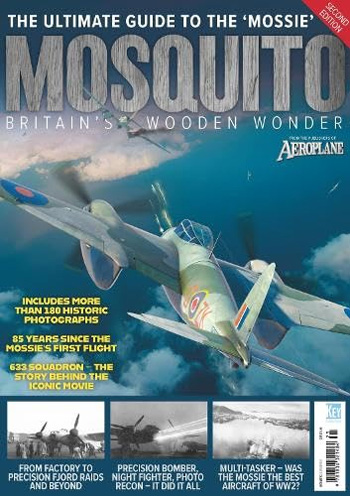
Coming soon from Key Publishing is Mosquito: The Ultimate Guide to the ‘Mossie.’

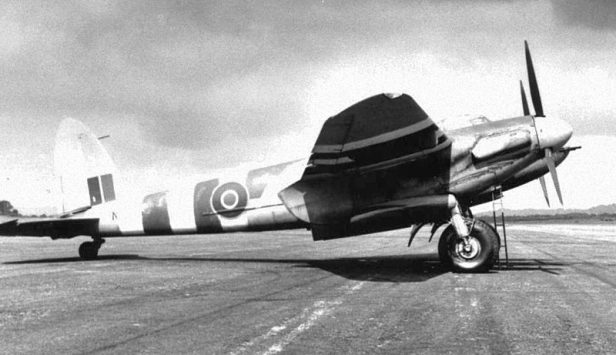
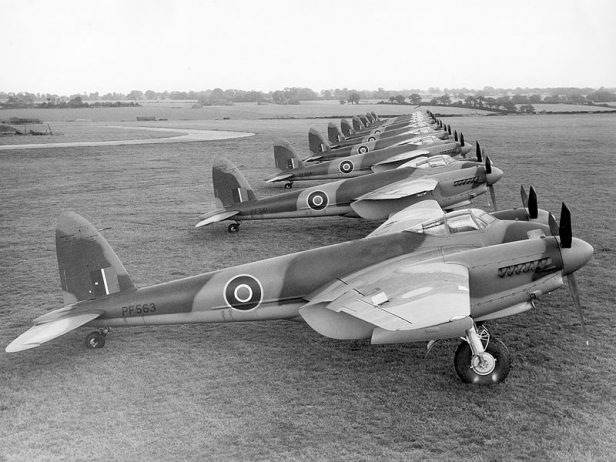
The de Havilland DH.98 Mosquito was one of the outstanding aircraft of World War Two, making a significant contribution to the Allied victory. Of mainly wooden construction, the ‘Mossie’ was one of the fastest operational aircraft in the world, and while designed as an unarmed high speed bomber, the ‘Wooden Wonder’ was quickly adapted as a night fighter, a fighter-bomber, and photo-reconnaissance aircraft. The Mosquito played a pivotal role in the bomber campaign, proving able to carry a 4,000lb bomb to Berlin, while giving its crew a much better chance of surviving the experience! It was also used for a succession of daring low level precision attacks against a range of targets, many of which are described in this amazingly researched 132-page special.

The publication is currently available for pre-order with release set for July 23.

Product Page

Please Note: This post contains an Amazon affiliate link. When you purchase through links on our site, we may earn an affiliate commission.
Posted on

An Illustrated History of the Mosquito’s Design, Construction and Far East Ops

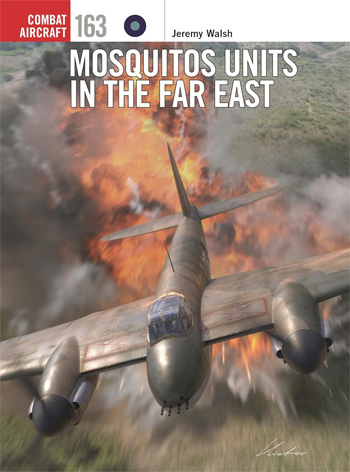
Coming later this year from Osprey Publishing and author Jeremy Walsh is Mosquito Units in the Far East, an illustrated history of the remarkable DH 98 Mosquito, from its unusual design and construction through to its pivotal actions the Far East.

The RAF and RAAF’s de Havilland DH 98 Mosquito played an important role in forcing the Japanese retreat from Burma and the Far East. Combining innovative composite-wood construction, world-class performance and beautifully balanced handling, the ‘Mossie’ excelled in intruder/strike and long-range photo-reconnaissance roles, despite its vulnerability to the hot, humid climate and challenging weather conditions. Moreover, Mosquito crews undertook their missions with great skill and determination, whether skimming the jungle to attack supply lines, supporting ground attack of artillery emplacements, denying airspace to the Japanese or identifying the enemy’s command centres.

In this new study, Mosquito specialist Jeremy Walsh reviews the aircraft’s background, its operational history across both RAF and RAAF squadrons in the Far East and its contribution to Allied success in this often ‘forgotten’ theatre. Accounts from aircrew bring first-hand perspectives to the story, while archive photographs and 21 newly commissioned aircraft profiles detail the aerodynamic efficiency and revolutionary nature of the Mosquito’s design.

The 96 page publication is currently available for pre-order in paperback and Kindle editions. Release is scheduled for September 22.

Product Page

Please Note: This post contains an Amazon affiliate link. When you purchase through links on our site, we may earn an affiliate commission.
Posted on

Mosquito Night Hunters: The Daring RAF Intruders Who Terrorized the Luftwaffe

Coming soon from Air World and author Jeremy Walsh is Mosquito Intruders – Target Europe: The RAF’s First Elite Night Raider Units

Using diaries, first-hand accounts, official records, and contemporaneous sources, the book chronicles the elite RAF Mosquito intruder squadrons—Nos. 23, 418, and 605—that conducted daring low-level night operations across Europe during WW2, targeting Luftwaffe airfields to intercept returning enemy bombers and fighters. The narrative traces the concept’s origins in the Battle of Britain, evolving from early Defiant and Boston aircraft to the superior de Havilland DH.98 Mosquito FB VI and NF II by mid-1943, highlighting the squadrons’ exceptional ‘Battle Honours’ in defending Malta, supporting Sicily’s invasion, aiding the Dambusters’ Dortmund-Ems Canal raid, spearheading D-Day attacks, and countering V1 flying bombs under charismatic fighter ace leadership. Featuring vivid portrayals of the Mosquito’s beautifully balanced design, speed, firepower, and resilience that earned aircrew reverence, the book immerses readers in these high-stakes missions’ development, execution, and pivotal role in Allied victory.

The 272 page, hardcover title is currently available for pre-order with a March 30 release.

Product Page

Please Note: This post contains an Amazon affiliate link. When you purchase through links on our site, we may earn an affiliate commission.
Posted on

De Havilliand Mosquito HJ711 Performs Successful Engine Test in Lincolnshire [Video]

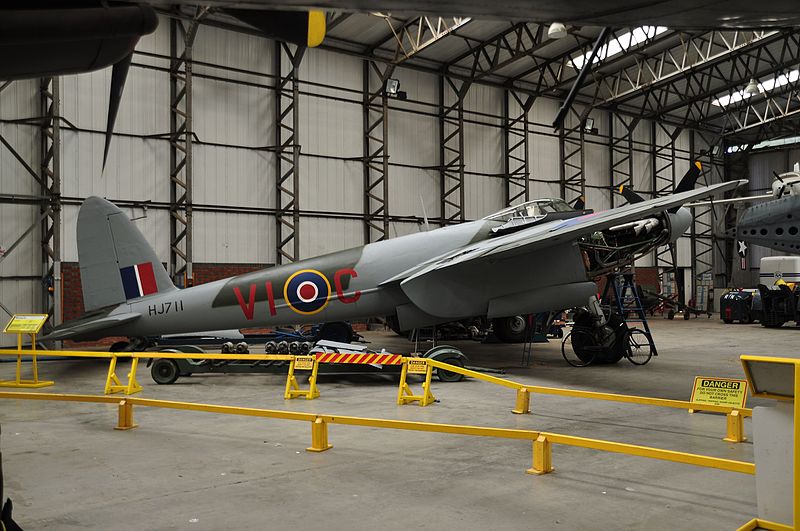
On September 19, Tony Agar’s de Havilland Mosquito NF.II HJ711 performed a successful run of its port engine at the Lincolnshire Aviation Heritage Centre.

As previously reported, the aircraft was built at Hatfield in 1943 and went on to serve with 141 and 169 Squadrons, scoring the latter’s first kill on January 30, 1944 when pilot Squadron Leader J.A.H. Cooper downed a Bf 110 over Berlin. Following the war, HJ711’s forward fuselage was transferred to RAF Air Training Command at Chingsford before the nose section resurfaced at the Reflectaire Museum in Blackpool. Agar acquired the remains in 1971 and began a long term restoration to taxiing condition using components of PF498, VA878, NT616, and RS715.

The machine spent many years at the Yorkshire Air Museum in Elvington, York before the decision was made to relocate it to Lincolnshire, which has additional facilities available to complete restoration work.

Click below to check out videos of Wednesday’s test.

Continue reading De Havilliand Mosquito HJ711 Performs Successful Engine Test in Lincolnshire [Video]

Posted on

Mosquito Pathfinder Trust to Return Wooden Wonder to UK Skies by 2020

The Mosquito Pathfinder Trust has announced “a commercial understanding with the Aircraft Restoration Company (ARC)” to “provide the suite of Engineering and Design Services” for a de Havilland Mosquito airframe that will be brought to airworthy condition before being transferred to the UK.

The machine in question has been under construction by Glyn Powell and is currently said to be 50% complete. The project is based on the remains of NZ2308, which was originally constructed at Bankstown near Sydney as an early model FB.40. It was initially allocated RAAF serial A52-20 before being converted to a T.43 dual control trainer and given the serial A52-1054. In 1947, the machine was acquired by the Royal New Zealand Air Force with less than 20 hrs of service time. Now identified as NZ2308, the Mosquito entered service with 75 Squadron at Ohakea and performed “numerous exercises and aerial demonstrations all over New Zealand.”

The aircraft was declared surplus in 1955 and sold to a private owner. Over the following years it languished outdoors until it was recovered by Powell, who spent the next 20 years working on the project, which included the scratch-built construction of an entirely new wooden airframe. Continue reading Mosquito Pathfinder Trust to Return Wooden Wonder to UK Skies by 2020

Posted on

New Engineering Plan Announced to Return DH Mosquito RL249 to UK Skies

1

Leicestershire-based charity The People’s Mosquito (TPM) has announced an “achievable, structured five-year engineering plan” to return de Havilland Mosquito RL249 to UK skies.

The news reportedly comes after close consultation with the historic aircraft experts at Retrotec, Ltd. and includes the launch of a dedicated fundraising campaign which seeks to raise “£499,000 over the next 12 months to deliver the successful front-end engineering, tooling and design and fabrication of the Mosquito FB.VI fuselage mould in the UK.”

The funding will reportedly support “crucial UK CAA due diligence from the outset of the project” and enable Retrotec’s engineers to analyze TPM’s massive technical library and develop exact computer aided design (CAD) models for the airframe. Additionally, the funding will allow Retrotec’s workshops to be reconfigured to accommodate the build and enable the fabrication the Mosquito’s unique fuselage mold, which will see the return of a manufacturing capability “not seen on these shores for more than 75 years.” Continue reading New Engineering Plan Announced to Return DH Mosquito RL249 to UK Skies

Posted on

“The People’s Mosquito” Awards Contract to Build, Test DH Mosquito RL249

An effort by Leicestershire-based charity The People’s Mosquito, Ltd. (TPM) to return a de Havilland Mosquito to UK skies has taken a major step forward with the announcement of a contract with East Sussex-based Retrotec, Ltd. to construct and test the machine.

The deal will provide Retrotec’s restoration experts with full access to TPM’s massive collection of Mossie engineering drawings and allow the aircraft to be to constructed in the UK. TPM Managing Director John Lilley states: Continue reading “The People’s Mosquito” Awards Contract to Build, Test DH Mosquito RL249