Posted on

Sopwith Camel Goes on Display at Pima Air & Space Museum

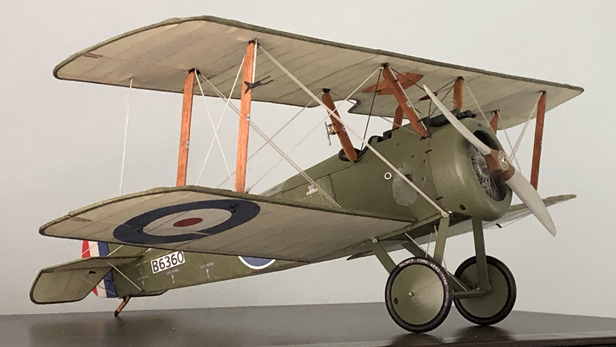
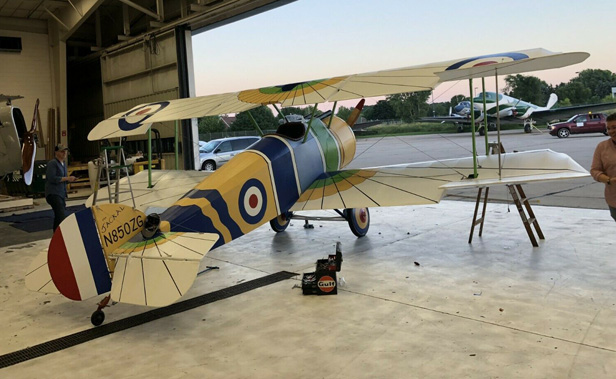
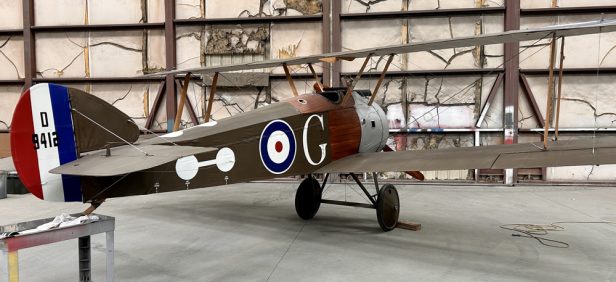
This week Pima Air and Space Museum in Tucson, Arizona placed their new Sopwith Camel on display.

The reproduction was originally constructed in Europe by John Shaw utilizing original drawings. A flight test was conducted in September 2017 which saw the machine reach roughly 150 ft before its original Clerget rotary engine “coughed and stopped,” resulting in a “heavy landing.” Thankfully Shaw escaped the incident, but the Camel suffered significant damage.

It was acquired by Pima in 2018 and restored for static display wearing the colors of a
Camel flown by Lt. Alfred John Haines of 45 Squadron in late 1918. It is again fitted with an original Clerget from the Pima collection.

For additional details on this aircraft, check out issues 1, 5 and 28 of The Flying Machine journal. For details on John Shaw’s second Sopwith Camel, check out issues 14 and 23.

Click below to view additional images.

Continue reading Sopwith Camel Goes on Display at Pima Air & Space Museum

Posted on

Latest Collection from Renowned Artist Ronny Bar Focuses on WW1 British Fighters

Aviation artist Ronny Bar’s latest collection of aircraft profiles will soon be released by Tempest. The new collection British Fighters of the Great War is a visual and historical celebration of Britain’s single-seat fighter aircraft of the First World War.

Renowned aviation artist Ronny Bar presents a remarkable collection of meticulously researched colour profiles, capturing 15 of the most important British ‘scout’ fighters in vivid, authentic detail. Each aircraft is illustrated in a constant scale, with side, upper, and underside views that provide invaluable reference for historians, enthusiasts, and modellers alike.

From the iconic Sopwith Camel, Pup, Dolphin and Snipe – legendary products of the Sopwith Aviation Company – to other pivotal types such as the Bristol Scout, DH-2, DH-5, FE-8, and SE-5a, this volume traces the evolution of British fighter design from the tentative early days of aerial reconnaissance to the hard-won air superiority of the war’s later years.

Set against the backdrop of rapid technological change, tactical experimentation, and the courage of the pilots who flew these machines, the book combines striking artwork with a deep understanding of the historical context. Every profile is based on photographic evidence and thorough research, with informed interpretation used only where the passage of time has left gaps.

The 264 page book expands on the author’s previous collections of profiles as an authoritative color guide and a showcase of one of the genre’s finest artists, offering an unmatched visual reference to the aircraft that helped shape the air war over the Western Front. The book is currently available for pre-order with release set for May 31.

Product Page

Please Note: This post contains an Amazon affiliate link. When you purchase through links on our site, we may earn an affiliate commission.

Posted on

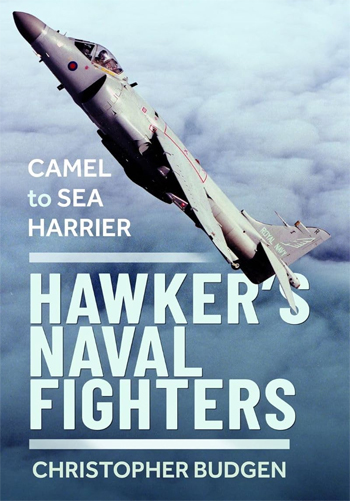
From Sopwith Camel to Harrier: Hawker’s Naval Fighters Chronicled in New Book

The naval fighters of Sopwith and Hawker will take center stage in author Christopher Budgen’s upcoming book Hawker’s Naval Fighters: Camel to Sea Harrier, released by Pen & Sword.

In 1912, TOM Sopwith transitioned from running a flying school to manufacturing aircraft, leveraging his nautical interests to create designs purchased by Britain’s Royal Navy. The onset of the First World War solidified the Sopwith Aviation Company’s reputation with aircraft like the Sopwith Camel widely used onboard the ships of the day. After the war, cancellations of government orders forced Sopwith Aviation into liquidation, However, a new company, the HG Hawker Engineering Company, was quickly formed, having been named after Sopwith’s test pilot, Harry Hawker. Throughout the 1920s and 1930s, Hawker produced designs that continued to be purchased by the Royal Navy, being used on the early aircraft carriers as well as the larger vessels of the fleet. With the outbreak of the Second World War, the RN’s Fleet Air Arm found itself woefully unprepared for battle, having mainly biplanes and slow monoplanes with which to face the modern German fighters and bombers. As a temporary solution, Hawker adapted the Hurricane into the Sea Hurricane. Hawker later developed advanced piston-engine fighters like the Fury and its naval counterpart, the Sea Fury, which saw action during the Korean War and Suez Crisis in 1956. The Sea Fury was succeeded by Hawker’s first jet, the Sea Hawk, marking the Fleet Air Arm’s transition into the jet age. The Sea Hawk also served the Indian Navy during its conflicts with Pakistan. Hawker’s successful Hunter, although primarily for the RAF, was used by the Royal Navy for land-based operations. Meanwhile, Hawker’s next design, the ground breaking Harrier, was ordered as the Sea Harrier; it saw action during the Falklands War, and, in due course, in the conflict in the former Yugoslavia and in Iraq. From its earliest days then, the Hawker Aircraft Company has supplied winning designs to the Royal Navy and to many navies overseas, a feat that few other companies could match.

The 232 Page hardcover book is currently available for pre-order with release scheduled for April 30.

Product Page

Please Note: This post contains an Amazon affiliate link. When you purchase through links on our site, we may earn an affiliate commission.

Posted on

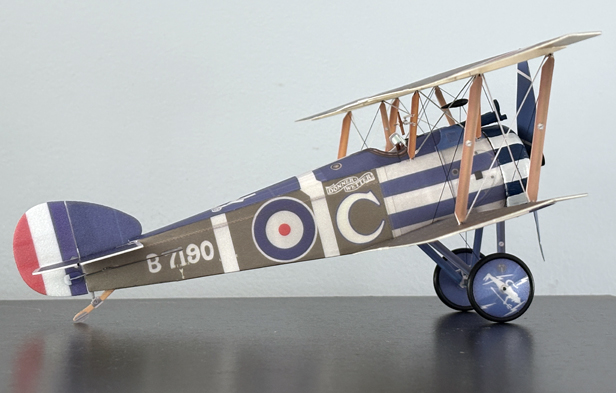
Microaces’ New “Donner Wetter” Sopwith Camel From Unboxing to First Flight [Video]

The latest video build log from DX Modelworks focuses on Microaces’ new “Donner Wetter” (Thunderstorm) RC Sopwith Camel representing B7190 of 10 Squadron RNAS.

The new video concisely details the project from unboxing to maiden flight, and like the channel’s previous videos, its photo documentation and tips will likely be helpful to anyone who would like to build the model themselves.

Click below to check it out. If you’re pleased with what you see, please consider subscribing to the channel. Likes and shares are also greatly appreciated!

Continue reading Microaces’ New “Donner Wetter” Sopwith Camel From Unboxing to First Flight [Video]

Posted on

Extremely Rare 1/16 Aero Graphics Sopwith Camel Kit Offered For Sale

Readers who are familiar with our YouTube channel DX Modelworks will no doubt remember the build log for the Aero Graphics Sopwith Camel, which is (to date), the most popular video on the channel. This is a superb balsa model designed by Dave Causer in 1/16 scale. Now discontinued, the kit is extremely rare and difficult to find – however an example is currently available for bidding on eBay. The listing states:

Lovely model kit of the Sopwith Camel which builds into a very scale flying model, perfect for the indoor flying season. Kit includes laser cut parts and covering tissue. The vac formed cowel is undamaged and the decals are in perfect condition all parts are present and still bagged.

Click here to check out the eBay listing, which includes several photos.

Please Note: This post contains an eBay affiliate link. When you purchase through links on our site, we may earn an affiliate commission.

Posted on

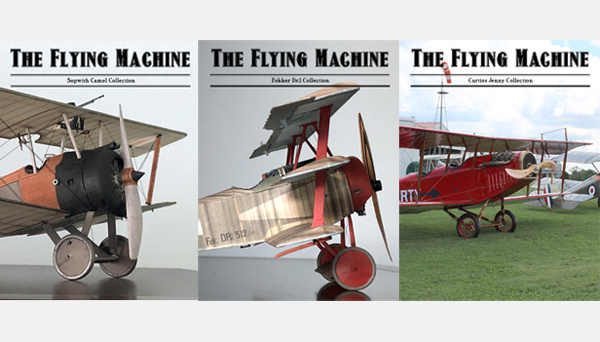
New Collections Focus on Sopwith Camel, Fokker Dr.1, Curtiss Jenny

Aerodynamic Media, LLC is proud to introduce a new series of Aircraft Collections, the first three of which are now available in the Special Releases section of our online store. These first three collections focus on the Sopwith Camel, Fokker Dr.1 and Curtiss Jenny. They compile nearly all related content that appeared in the in original run of The Flying Machine journal from 2016-2023, as well as bonus content. Click here to check them out.

Posted on

Scratch Build Log: Sopwith 2F.1 “Ship’s Camel” [Video]

A build log for a stick and tissue Sopwith 2F.1 “Ship’s Camel” has been added to our YouTube channel (DX Modelworks).

This model was scratch built using a combination of three-view drawings, period photographs and Sopwith factory drawings. The two part video series concisely details the project, and like the channel’s previous videos, its photo documentation and tips will likely be helpful to both new and experienced modelers alike.

Click below to check it out. If you’re pleased with what you see, please consider subscribing to the channel. Likes and shares are also greatly appreciated!

Continue reading Scratch Build Log: Sopwith 2F.1 “Ship’s Camel” [Video]

Posted on

Scratch Building the 1/16 Aero Graphics Sopwith Camel [Video]

The latest video from YouTuber DX Modelworks is up and it focuses on a scratch build of a 1/16 scale Sopwith Camel.

This particular build was previously offered as a kit by Aero Graphics and is intended as a conversion from CO2 to RC. Like the channel’s previous videos, its photo documentation and tips will likely be helpful to both new and experienced modelers alike.

Click below to check it out. If you’re pleased with what you see, please consider subscribing to the channel. Likes and shares are also greatly appreciated!

Continue reading Scratch Building the 1/16 Aero Graphics Sopwith Camel [Video]

Posted on

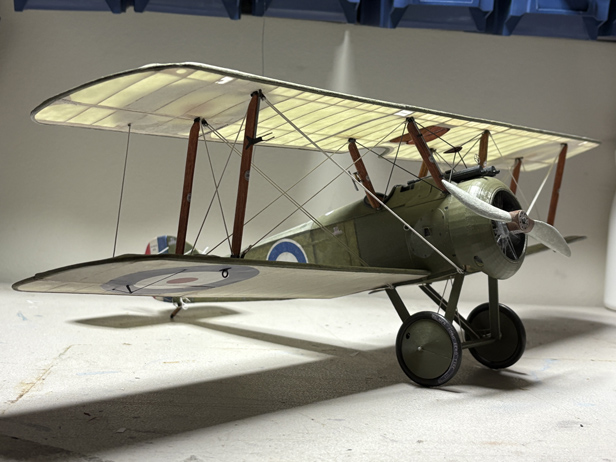
Build Log and Tips: Microaces RC Sopwith Camel [Video]

YouTuber DX Modelworks has created a new video documenting the construction of Microaces’ popular RC Sopwith Camel model kit in 1/24 scale.

In addition to its photo documentation, the video offers some tips that will likely be helpful to both new and experienced modelers alike.

Click below to check it out.

Continue reading Build Log and Tips: Microaces RC Sopwith Camel [Video]

Posted on

Sopwith Camel For Sale: “Full-Scale, Light Sport Experimental”

Please Note: This is an archived post. The information presented here may not be current and the associated listing may no longer be active.

A “full-scale, light sport experimental” Sopwith Camel has been spotted for sale. The listing states (in part):

This is a full scale Sopwith Camel built from an Airdrome Airplanes quick build kit. It has the chromoly tube frame for the fuselage. The kit was built according to the plans and recommendations and is fitted with a Lycoming 290 and Culver prop. The aircraft has a current N number and was well documented during the build. It has working control surfaces, has all gauges and seat installed. The aircraft needs finishing with weight and balance, wiring, plumbing, mags, battery, etc. The aircraft was trailered and shown at Oshkosh in 2018 with the WWI airplanes. The aircraft was built with the intention of flying, however the educational program’s aerospace engineering classes didn’t have continued support after the first year. Therefore the aircraft is for sale. Would consider selling airframe separate from the engine… Meets requirements for light sport experimental.

The machine is located in Perrysburg, Ohio and is currently being offered for US $25,000, although offers are also being accepted. Click here to check out the listing on eBay.

Please Note: This post contains an eBay affiliate link. When you purchase through links on our site, we may earn an affiliate commission.