Posted on

The Observer Corps: The Hidden Defenders Tracking Enemy Aircraft in Britain’s Skies

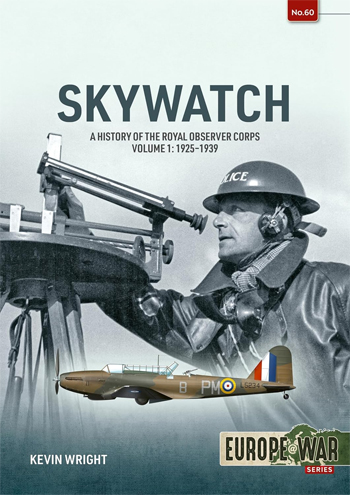
Soon to be released by Helion and Company and author Kevin Wright is Skywatch Volume 1: A History of the Royal Observer Corps, 1925 to 1939.

During World War One, London was vulnerable to air attacks by Zeppelins and later German bombers. To defend the capital, the London Air Defence Area was created to coordinate the efforts to protect it. However, after 1918, the system was quickly abandoned.

In the early 1920s, the Committee for Imperial Defence began to reconsider the problem. In 1924, the first experiment was conducted to monitor and report the movement of aircraft overland by using small groups of aircraft observers reporting to a central point. This successful experiment led to the creation of the Observer Corps in 1925 under the control of Police Chief Constables.

Originally intended to cover just the South East of England to protect London, as the threat from resurgent Nazi Germany grew, the Corps was gradually expanded to cover nearly the whole of Gt Britain by the start of the War. Now transferred to the control of the Air Ministry, Observer Corps Groups became a key part of Fighter Commands integrated air defence system, unique in that it was the only means to track the movement of aircraft once they crossed the coast and headed inland.

Using a combination of new research and access to official files, Volume One of Skywatch charts the development of the Observer Corps from its origins, the very beginnings, formation and growth through the 1920s. It critically examines how, in the rush to prepare for War in the late 1930s, the Observer Corps began to ready itself for War and its unique role, monitoring the skies of Britain.

The 76 page publication is currently available for pre-order in paperback format. Release is slated for April 30.

Product Page

Please Note: This post contains an Amazon affiliate link. When you purchase through links on our site, we may earn an affiliate commission.
Posted on

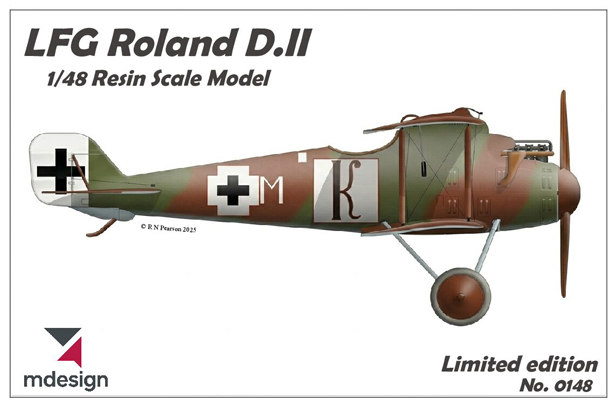
The SPAD A Series: Its Technical Development and Combat Use

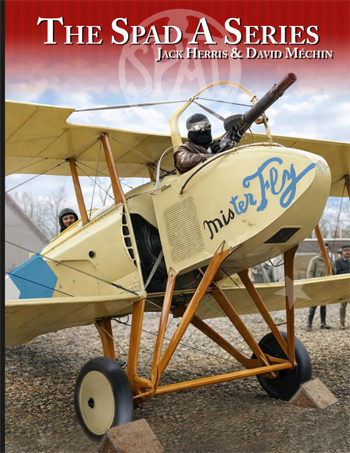
New from author Jack Herris and Aeronaut Books is The Spad A Series:

Spad is famous as the manufacturer of the Spad 13, the best Allied fighter of the Great War. However, Spad started the war with a much less successful aircraft, the Spad A, a two-seater of unusual configuration. This book describes its technical development and combat use. The story is told with 195 photos, color profiles of 18 aircraft, and scale drawings of two types.

The book spans 124 pages and is available in paperback edition.

Product Page

Please Note: This post contains an Amazon affiliate link. When you purchase through links on our site, we may earn an affiliate commission.

Posted on

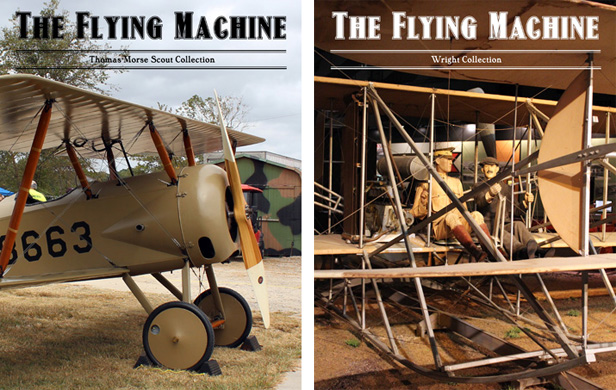
Thomas-Morse Scout, Wright Brothers Take Center Stage in New Collections

Aerodynamic Media, LLC is proud to introduce two new additions to our recently launched series of Aircraft Collections.

The new offerings focus on the Thomas-Morse Scout WW1 advanced trainer and the Wright brothers / Wright aircraft. They compile nearly all related content that appeared in the original run of The Flying Machine journal from 2016-2023, and also include bonus content.

Click here to check out new releases, as well as our previous collections focused on the Sopwith Camel, Fokker Dr.1 and Curtiss Jenny.

Posted on

Latest Collection from Renowned Artist Ronny Bar Focuses on WW1 British Fighters

Aviation artist Ronny Bar’s latest collection of aircraft profiles will soon be released by Tempest. The new collection British Fighters of the Great War is a visual and historical celebration of Britain’s single-seat fighter aircraft of the First World War.

Renowned aviation artist Ronny Bar presents a remarkable collection of meticulously researched colour profiles, capturing 15 of the most important British ‘scout’ fighters in vivid, authentic detail. Each aircraft is illustrated in a constant scale, with side, upper, and underside views that provide invaluable reference for historians, enthusiasts, and modellers alike.

From the iconic Sopwith Camel, Pup, Dolphin and Snipe – legendary products of the Sopwith Aviation Company – to other pivotal types such as the Bristol Scout, DH-2, DH-5, FE-8, and SE-5a, this volume traces the evolution of British fighter design from the tentative early days of aerial reconnaissance to the hard-won air superiority of the war’s later years.

Set against the backdrop of rapid technological change, tactical experimentation, and the courage of the pilots who flew these machines, the book combines striking artwork with a deep understanding of the historical context. Every profile is based on photographic evidence and thorough research, with informed interpretation used only where the passage of time has left gaps.

The 264 page book expands on the author’s previous collections of profiles as an authoritative color guide and a showcase of one of the genre’s finest artists, offering an unmatched visual reference to the aircraft that helped shape the air war over the Western Front. The book is currently available for pre-order with release set for May 31.

Product Page

Please Note: This post contains an Amazon affiliate link. When you purchase through links on our site, we may earn an affiliate commission.
Posted on

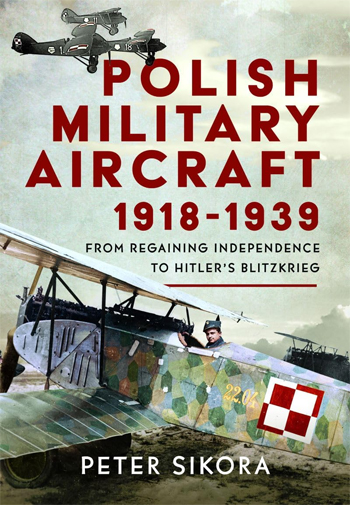
Flying Colours: Historic Aircraft Color Profiles By Richard J. Caruana

Coming soon from MMPBooks and Richard J. Caruana is Flying Colours of Richard J. Caruana, which focuses on illustrations of historic aircraft produced over his 50 year career.

During the last decade or so a considerable number of requests were received, especially from the younger generation, for me to put together a cross-section of my work into a book. Truly an impossible task considering the thousands of illustrations produced over these fifty years. It was therefore with this in mind that I’m embarking on this voyage of memories that will hopefully be met with approval by both those who remember the drawings in now-defunct or difficult to find publications and also those too young to have had the opportunity of enjoying them. It also gave me the chance to update older illustrations to today’s standards.

This release will be the latest in a series of publications focusing on his aircraft profiles. It will include the Fokker D.VII, FIAT CR.32, Fleet Air Arm Corsairs, Boulton Paul Defiant, Last of the Spitfires, USAF Starblazers, SEPECAT Jaguar and Guido Pongiluppi.

The 48 page, paperback publication is currently available for pre-order with release set for March 15.

Product Page

Please Note: This post contains an Amazon affiliate link. When you purchase through links on our site, we may earn an affiliate commission.
Posted on

Three Volume SPAD XIII Series Concludes With Study of Late Variants

New from Aeronaut Books and author Martin Schütz is The Spad S.XIII (Spa 13 C1): Volume 3: Late Version.

In the third and last Volume about the legendary Spad S.XIII all the available information of the late produced version by manufacturers Blériot and Kellner are provided. Detailed information about both manufacturers including their production blocks, their different camouflage systems, their lettering, hallmarks and their types of cockades used are provided in detail. A detailed look of all the units of the US Air Service that flew the type as well as listings of all the Spad aces of WWI and those US pilots in particular that made ace on a S.XIII are included. The internal and external bombing systems used on the S.XIII is explained as well as all the propellers in use and their manufacturers. This volume also throws a spotlight on the post war use of the S.XIII. More than 20 all new basic drawings, around 40 basic camouflage drawings and 37 all new 3- or 4-view color profiles of late type S.XIII for the USAS complete and round out this extraordinary and meticulously researched work. A benchmark for the hobby historian and modeler as well.

The book follows Vol 1 focused on early versions and Vol 2, which dealt with Mid/Late versions manufacturers Blériot, Bernard, Levasseur, and S.C.A.F. The new third volume spans 287 pages and is now available in paperback.

Product Page

Please Note: This post contains an Amazon affiliate link. When you purchase through links on our site, we may earn an affiliate commission.
Posted on

Skyhookers: An Illustrated History of Parasite Fighters

New from Air World and author William Wolf is Skyhookers: An Illustrated History of Hook-on Aircraft and Their Dirigible Motherships.

From the First World War’s Zeppelins to the Second World War’s large bombers, military aircraft were vulnerable to fast, manoeuvrable interceptors. To address this, fighter escorts were used, but their limited range often left bombers exposed. A solution was the use of Composite aircraft, where larger bombers carried smaller, short-range fighters, which could be launched and retrieved as needed.

Zeppelins, particularly vulnerable to interceptors, were ideal for this concept. During the First World War, Germany briefly experimented with carrying parasite aircraft, while the British conducted post-war trials using airships like His Majesty’s Airship R-23 and R-33, carrying fighters such as the Sopwith Camel and de Havilland DH.53 Humming Bird. However, successful hook-on/retrievals were only achieved with the Humming Bird.

The US Navy and Army further developed this concept. In 1918, the Navy launched a Curtiss JN ‘Jenny’ from a C-1 Blimp, and in 1924, the Army successfully flew a Sperry Messenger from a TC-Class airship. The US perfected the carry/launch/retrieval method for airship defence and scouting, notably with the USS Los Angeles, which carried aircraft on a ‘trapeze’ device. The Akron and Macon airships, with internal storage for aircraft, further advanced this technique, making them some of the most remarkable aircraft of their time.

The 200 page book is currently available in hardcover and Kindle editions.

Product Page

Please Note: This post contains an Amazon affiliate link. When you purchase through links on our site, we may earn an affiliate commission.
Posted on

From Sopwith Camel to Harrier: Hawker’s Naval Fighters Chronicled in New Book

The naval fighters of Sopwith and Hawker will take center stage in author Christopher Budgen’s upcoming book Hawker’s Naval Fighters: Camel to Sea Harrier, released by Pen & Sword.

In 1912, TOM Sopwith transitioned from running a flying school to manufacturing aircraft, leveraging his nautical interests to create designs purchased by Britain’s Royal Navy. The onset of the First World War solidified the Sopwith Aviation Company’s reputation with aircraft like the Sopwith Camel widely used onboard the ships of the day. After the war, cancellations of government orders forced Sopwith Aviation into liquidation, However, a new company, the HG Hawker Engineering Company, was quickly formed, having been named after Sopwith’s test pilot, Harry Hawker. Throughout the 1920s and 1930s, Hawker produced designs that continued to be purchased by the Royal Navy, being used on the early aircraft carriers as well as the larger vessels of the fleet. With the outbreak of the Second World War, the RN’s Fleet Air Arm found itself woefully unprepared for battle, having mainly biplanes and slow monoplanes with which to face the modern German fighters and bombers. As a temporary solution, Hawker adapted the Hurricane into the Sea Hurricane. Hawker later developed advanced piston-engine fighters like the Fury and its naval counterpart, the Sea Fury, which saw action during the Korean War and Suez Crisis in 1956. The Sea Fury was succeeded by Hawker’s first jet, the Sea Hawk, marking the Fleet Air Arm’s transition into the jet age. The Sea Hawk also served the Indian Navy during its conflicts with Pakistan. Hawker’s successful Hunter, although primarily for the RAF, was used by the Royal Navy for land-based operations. Meanwhile, Hawker’s next design, the ground breaking Harrier, was ordered as the Sea Harrier; it saw action during the Falklands War, and, in due course, in the conflict in the former Yugoslavia and in Iraq. From its earliest days then, the Hawker Aircraft Company has supplied winning designs to the Royal Navy and to many navies overseas, a feat that few other companies could match.

The 232 Page hardcover book is currently available for pre-order with release scheduled for April 30.

Product Page

Please Note: This post contains an Amazon affiliate link. When you purchase through links on our site, we may earn an affiliate commission.
Posted on

RFC in Combat: Rare Archive Images of WW1 Aerial Warfare

Coming soon from Pen & Sword and author Chris Goss is Royal Flying Corps In Combat: Rare Archive Images of Aerial Warfare Over the Western Front in WW1, which showcases an extraordinary collection of photos and stories of downed aircraft from the Western Front.

Each image tells the tale of the aviators behind them. For example, Second Lieutenant Gilbert Insall and Air Mechanic Thomas Donald, after their Vickers FB 5 Gunbus was damaged, made repairs under enemy fire and returned to base. They were shot down again weeks later, but Insall later escaped captivity and received the Victoria Cross. Chris Goss delves into the stories behind the crashes, even identifying enemy pilots who shot down some of the planes. The mysterious case of Second Lieutenant John Holtom’s DH 2, whose body was never recovered, remains unsolved. This book also reveals how many surviving pilots went on to have distinguished careers, including Montagu Chidson, who, after being captured in 1915, later rescued vital diamonds from Amsterdam in 1940 while serving with M.I.9. Royal Flying Corps in Combat is a captivating account of the aircraft, battles, and aviators of the First World War.

The 224 page, hardcover book is currently available for pre-order with release set for Feb 28.

Product Page

Please Note: This post contains an Amazon affiliate link. When you purchase through links on our site, we may earn an affiliate commission.
Posted on

New Book Explores All WW1 Russian Aircraft Types

New from Aeronaut Books is Russian Aircraft of WWI by noted aviation historian Viktor Kulikov.

The book covers all aircraft of Russian design and all aircraft of foreign design built under license in Russia. It includes more than 600 photos and drawings and scale drawings of 17 aircraft. In addition it has 17 color profiles.

The 422 page book is now available in paperback format.

Product Page

Please Note: This post contains an Amazon affiliate link. When you purchase through links on our site, we may earn an affiliate commission.