Posted on

U-2 Dragon Lady’s History and Unparalleled Pilot Training Explored in New Pictorial

Coming soon from Air World and author Ken Neubeck is The Lockheed U-2: A Photographic History of the Famous Cold War Spy Plane, which examines the unique history of the aircraft as well as the extensive pilot training and requirements to fly it, which is unparalleled with any other military aircraft training.

The Lockheed U-2 ‘Dragon Lady’ has long been associated as a symbol of the Cold War due to several news events of that era. Much of this was the result of the news surrounding well-known incident when Gary Powers’ U-2 was brought down by Soviet missiles over Russia in 1960 and his subsequent capture. There was also the events in 1962, when Major Rudolf Anderson Jr. was also shot down, this time over Cuba during the Cuban Missile Crisis.

Though it is commonly characterized as a spy plane, as the author reveals here there is so much more to the U-2 than that. Since the Cold War, and even with the advent of satellite and drone technology, many may not be aware that the U-2 is still flying today, and still performing vital surveillance missions in many of the world’s hot spots of military or political turmoil. These can often be demanding missions, flights which take place at high altitude and lasting for many hours, taxing the endurance of even the very best pilots. There is a demanding and robust selection process for potential U-2 pilots, all of which is detailed in Ken Neubeck’s absorbing commentary.

The 256 page hardcover book is currently available for pre-order with release scheduled for May 31.

Product Page

Please Note: This post contains an Amazon affiliate link. When you purchase through links on our site, we may earn an affiliate commission.

Posted on

Shaping the Avro Vulcan: A Full History of its Development and Engineering

Coming soon from Tempest and author Stephen Liddle is Shaping the Vulcan, a full history of the Avro Vulcan’s development and assessment of the technological and engineering breakthroughs which underpinned the construction of this unparalleled aircraft.

The Avro Vulcan is one of the most striking aircraft ever made – its enormous wing stretching back from an improbably thick leading edge marked by cavernous wing root engine intakes. Perhaps even more incredible, its first flight was made just over ten years after the introduction of the piston-engined Lancaster during the Second World War. Within a decade, technology had taken a giant leap from straight-winged slow-moving conventional bombers to this vast delta designed to carry a nuclear payload. But what led to such a radical configuration and what was the technology that enabled such an ambitious design? What possessed Avro to offer the Air Ministry such a futuristic aircraft and what prompted the Ministry to approve its development and entry into service?

The 350 page hardcover book is currently available for pre-order with release set for May 14.

Product Page

Please Note: This post contains an Amazon affiliate link. When you purchase through links on our site, we may earn an affiliate commission.

Posted on

New Book Shows Iconic XB-70 Valkyrie In All Its Glory

Coming soon from Air World and author Graham M Simons is North American XB-70 Valkyrie in Pictures: America’s Cold War Mach 3 Nuclear Bomber. The book explores the full story of the development of this legendary supersonic bomber using a unique collection of images. It also reveals the many challenges that the North American engineers faced, particularly with regards to engines and fuel, all of which are fully explained. In addition, it boasts first-hand testimony and analyses the accidents and incidents the aircraft were involved in, as well as a detailed timetable allowing the reader to comprehend the XB-70’s protracted history.

Flying at 70,000 feet, carrying nuclear weapons at Mach 3+ for thousands of miles, the North American Aviation XB-70 Valkyrie was not merely going to redefine military aviation, but the very nature of warfare itself. The XB-70 flew so fast and so high it would only appear on radar screens for a fleeting moment, making it impossible for enemy controllers to direct their interceptors to the target before it flew out of range. When it was first designed in the 1950s, the enemy, meaning at the time the Soviet Union, had no aircraft that could match the XB-70’s capabilities, rendering it almost invulnerable. But, just as the US was developing its technologies, so too were the Soviets. The introduction of their first surface-to-air missiles led to the US adopting low-level missions to sneak under radar. This effectively neutralised the XB-70’s main characteristics and, ultimately, the programme, which had cost the United States a staggering $800 million, the equivalent to $8.4 billion in modern terms, was cancelled.

The 256 page, hardcover book is currently available for pre-order with release slated for June 30.

Product Page

Please Note: This post contains an Amazon affiliate link. When you purchase through links on our site, we may earn an affiliate commission.
Posted on

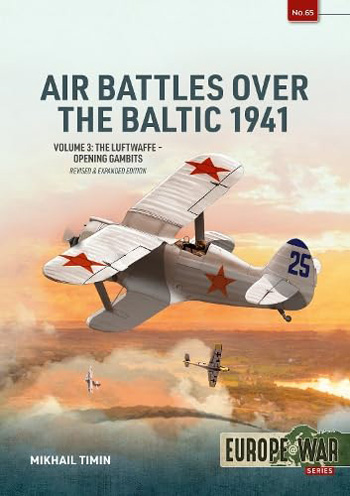
New Illustrated History Focuses on the Folland Gnat, Red Arrow and Cold War Fighter

Coming soon from Pen & Sword and author Ray Deacon is Folland Gnat: Red Arrow and Cold War Fighter, an illustrated and factual record of the challenges faced by William Petter, chief designer at Folland Aircraft, in gaining recognition for his cheap, lightweight fighter concept.

Petter saw the Gnat as a viable alternative to other front-line interceptors, such as the Hunter and Swift, under development in the early 1950s. He called his fighter the Gnat, although ‘pocket rocket’ became a popular alternative. Unperturbed at having failed to attract interest from the RAF or Air Ministry, Petter decided to proceed with a privately-funded prototype powered by an Armstrong-Siddeley Viper engine to prove his design’s viability. Named Midge, the aircraft made its maiden flight at Boscombe Down in August 1954 and performed well. In July of the following year, the prototype Gnat made its maiden flight powered by a more powerful Bristol Orpheus engine. The Ministry of Supply finally began to offer support, placing an order for six development Gnats for trials work, but no production orders were forthcoming. Conversely, the Indian Government was very impressed, placing orders for a batch of Gnat fighters, followed by licenced-manufacture of several hundred examples in India. The Gnat went on to serve the country well in two wars with neighbouring Pakistan. Recalled in detail are the shooting-down of a number of Pakistani F-86 Sabres by the Gnat leading to the legendary sobriquet, ‘Sabre Slayer’. At the other end of the spectrum, Finland decided to expand its air force with the purchase of a squadron of Gnat fighters. Anticipating a requirement for a Vampire T.11 replacement, Petter wasted no time in preparing designs for a tandem-seat trainer based on the Gnat fighter, his efforts being rewarded with orders for a production variant for the RAF. There are also detailed accounts of the aircraft’s impressive period displaying with the famous Yellowjacks and Red Arrows aerobatic teams.

The 240 page, hardcover book is currently available for pre-order with release set for May 30.

Product Page

Please Note: This post contains an Amazon affiliate link. When you purchase through links on our site, we may earn an affiliate commission.
Posted on

Vulcan to Spitfire and Back: Flying in an RAF Squadron During the Cold War

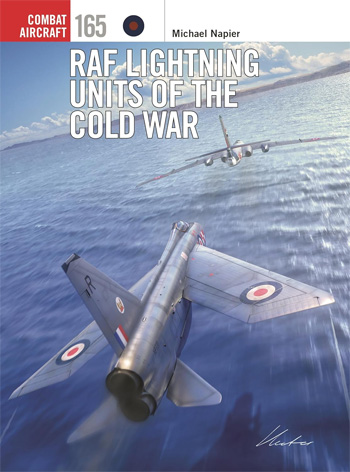
Coming soon from Fonthill Media and author Bill Perrins is From Vulcan to Spitfire and Back: A Life in Aviation, described as “a humorous, unguarded, and often self-deprecating account of what it was like to be part of an RAF squadron during the Cold War.”

Growing up in Belfast during the Troubles, Bill Perrins was a young man hell-bent on a career as a pilot. He made it through RAF pilot training—thanks more, perhaps, to sheer determination than aptitude—and finally graduated to the role of Vulcan pilot in time to take part in the 1982 Falklands War. After the RAF, Bill entered the world of commercial aviation, flying Boeing 747s and Dreamliners on long-haul, though he still found time to pilot the world’s only privately owned nuclear bomber, the mighty Vulcan XH558, at air shows, along with P51 Mustangs, Yaks and the legendary Spitfire. Way back in his boyhood, the fantasy of one day flying the Spitfire was where it had all begun—and it did not disappoint.

From Vulcan to Spitfire and Back: A Life in Aviation is… about the simple joys of flying, whether in the cockpit of the enormous delta-winged Vulcan or behind the sprightly controls of the inimitable Spitfire, and the camaraderie that comes with it, both in military and civil aviation.

The 224 page hardcover book is currently available for pre-order with release set for June 30.

Product Page

Please Note: This post contains an Amazon affiliate link. When you purchase through links on our site, we may earn an affiliate commission.
Posted on

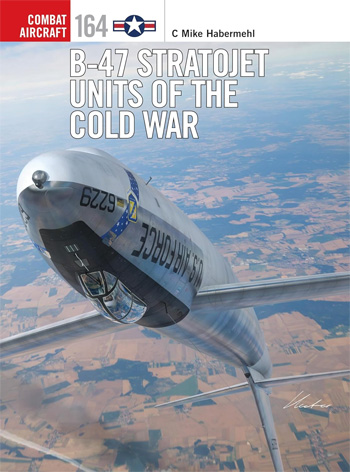
New Book Chronicles Perilous Work of USAF Combat Cameramen

Coming soon from Helion and Company and author Kevin Wright is USAF Combat Camera 1941–1991: The Brave Ones Shoot Bullets, the Crazy Ones Shoot Film, documenting USAF cinematographers and photographers and their frequently hazardous work.

USAF Combat Cameramen and later women have participated in every major US military operation and deployment worldwide. Whilst some of their wartime productions like the original Memphis Belle and The Last Bomb, rightly gained wide public acclaim, the vast majority of their work, often classified, was for the Pentagon’s eyes only. Their main role was to keep senior military commanders and decision-makers informed about USAF operations and to record the challenges faced by US armed forces on the ground.

Combat Camera charts those activities from their origins in Hollywood, producing military training films, through wartime movies, bomber operations over Europe and Japan, the liberation of France, the attacks on Hiroshima and Nagasaki, to Korea, Vietnam, Grenada, Panama and the 1991 Gulf War.

These events are explored mainly through personal accounts from the combat cameramen and women themselves. From acts of individual heroism, through organisational change, new equipment and their often ringside seats at historic events, Combat Camera captures the work of these remarkable men and women and has been produced with cooperation of the membership of the USAF Combat Camera Association.

This volume is profusely illustrated with original photographs and includes unique links to original motion footage shot by the USAF Combat Cameramen, in addition to the @War series signature colour artworks.

The 72 page paperback publication is currently available for pre-order with release set for June 15.

Product Page

Please Note: This post contains an Amazon affiliate link. When you purchase through links on our site, we may earn an affiliate commission.

Posted on

The Observer Corps: The Hidden Defenders Tracking Enemy Aircraft in Britain’s Skies

Soon to be released by Helion and Company and author Kevin Wright is Skywatch Volume 1: A History of the Royal Observer Corps, 1925 to 1939.

During World War One, London was vulnerable to air attacks by Zeppelins and later German bombers. To defend the capital, the London Air Defence Area was created to coordinate the efforts to protect it. However, after 1918, the system was quickly abandoned.

In the early 1920s, the Committee for Imperial Defence began to reconsider the problem. In 1924, the first experiment was conducted to monitor and report the movement of aircraft overland by using small groups of aircraft observers reporting to a central point. This successful experiment led to the creation of the Observer Corps in 1925 under the control of Police Chief Constables.

Originally intended to cover just the South East of England to protect London, as the threat from resurgent Nazi Germany grew, the Corps was gradually expanded to cover nearly the whole of Gt Britain by the start of the War. Now transferred to the control of the Air Ministry, Observer Corps Groups became a key part of Fighter Commands integrated air defence system, unique in that it was the only means to track the movement of aircraft once they crossed the coast and headed inland.

Using a combination of new research and access to official files, Volume One of Skywatch charts the development of the Observer Corps from its origins, the very beginnings, formation and growth through the 1920s. It critically examines how, in the rush to prepare for War in the late 1930s, the Observer Corps began to ready itself for War and its unique role, monitoring the skies of Britain.

The 76 page publication is currently available for pre-order in paperback format. Release is slated for April 30.

Product Page

Please Note: This post contains an Amazon affiliate link. When you purchase through links on our site, we may earn an affiliate commission.
Posted on

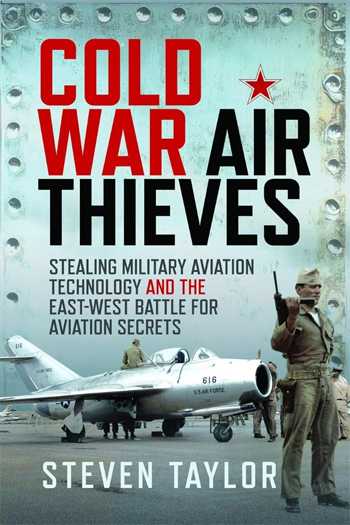
Thomas-Morse Scout, Wright Brothers Take Center Stage in New Collections

Aerodynamic Media, LLC is proud to introduce two new additions to our recently launched series of Aircraft Collections.

The new offerings focus on the Thomas-Morse Scout WW1 advanced trainer and the Wright brothers / Wright aircraft. They compile nearly all related content that appeared in the original run of The Flying Machine journal from 2016-2023, and also include bonus content.

Click here to check out new releases, as well as our previous collections focused on the Sopwith Camel, Fokker Dr.1 and Curtiss Jenny.

Posted on

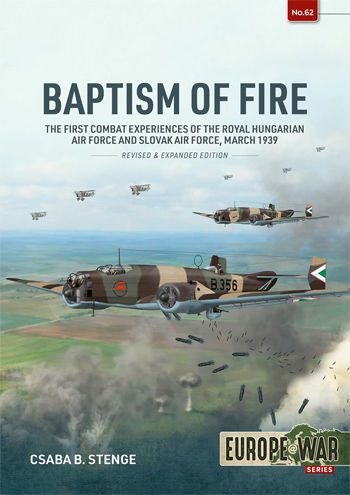
Finnish vs Russian Air Combat During the Winter War: An Illustrated Study

Coming this summer from Osprey and author Kari Stenman is Winter War 1939–40: Repelling the Soviets from Finnish skies, touted as the first illustrated study in English of the Finnish Air Force’s battle to repel the Soviet invaders during the Winter War, one of the greatest David-and-Goliath air battles in history.

In 1939, the Soviet Union invaded its neighbour Finland, sparking the Winter War. While Finland was heavily outnumbered in all respects, in few respects was the contest so uneven as in the air. In this book, veteran Finnish aviation historian Kari Stenman draws on his decades of research to present the first account in English of the Finnish Air Force’s defence of the country’s skies, a clash that pitted its 114 combat aircraft against the Soviets’ 2,318.

He explains that, equipped initially with a handful of British and Dutch aircraft, Finland’s air force adopted similar guerrilla tactics to its infantry. Fokker D.XXI interceptors were scattered to remote landing grounds to ambush the Soviets and give an impression of strength, while the bombers were first used for long-range reconnaissance and harassment. Over the course of the war, the Finns received new Gladiators, Fiat G.50s and French MS.406s, until at the close of the war, all flying units were thrown in to repel the Russian invasion across the frozen Gulf of Finland.

Illustrated with previously unpublished photos, superb original artwork, 3D diagrams and maps, this reveals for the first time the full story of how Finnish aviators fought for their country’s independence.

The 96 page publication is currently available for pre-order in paperback and Kindle editions. Release is set for June 16.

Product Page

Please Note: This post contains an Amazon affiliate link. When you purchase through links on our site, we may earn an affiliate commission.
Posted on

Pacific Turning Point: Airpower in New Guinea 1943–44

Coming soon from Osprey and authors Mark Stille and John Rogers is New Guinea 1943–44: The Allies assume the offensive, a fully illustrated history of airpower in the decisive stage of the New Guinea campaign, when the Allies could finally go on the offensive to shatter Japanese forces.

In this book, the second of two on the New Guinea campaign, Pacific War scholars Mark Stille and John Rogers draw upon years of research and Japanese, American and Australian sources to explain how the New Guinea air war turned against the Japanese between June 1943 and 1944. The over-extended IJAAF gradually lost combat strength in the face of vastly improved Allied airpower, leaving the Japanese unable to contend. One prong of the Allies’ air offensive targeted Japanese shipping to isolate its forces, while the other supported the ground offensives and landings that smashed Japanese forces and left most of them isolated for the rest of the war.

Packed with artwork, maps, and archive photos, this book explains how the lessons learned and the forces built up during the harsh struggle for Papua in 1942–43 transformed the Allies’ airpower into a decisive element in MacArthur’s 1943–44 campaign.

The 96 page publication is currently available for pre-order in paperpack and Kindle editions. Release is set for August 25.

Product Page

Please Note: This post contains an Amazon affiliate link. When you purchase through links on our site, we may earn an affiliate commission.