
Posted on

Air Battles Over the Baltic 1941: Second in Four Volume Series Coming Soon

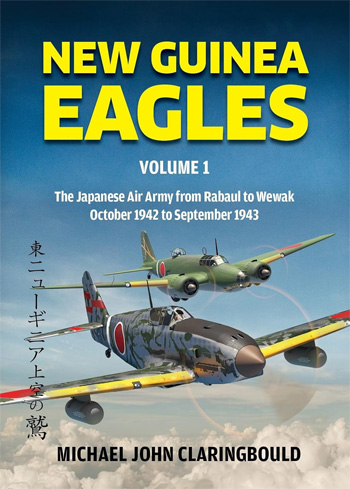
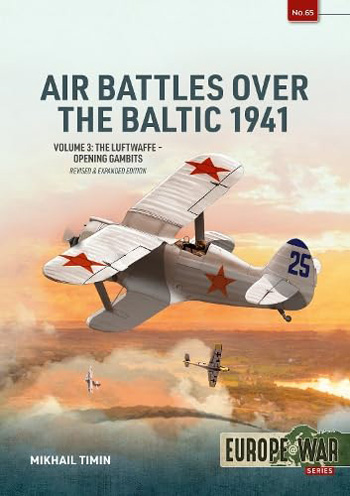
Coming soon from Helion and Company and author Mikhail Timin is the second volume in a major four-part study that examines the Soviet Air Forces stationed in the Baltic region in the months before the German invasion of June 1941.

Air Battles over the Baltic 1941 Volume 2: The Eve of War, Early 1941 examines the crucial months leading up to the German invasion of the Soviet Union. Drawing on Soviet and German archival sources, Timin reconstructs the condition of the Soviet Air Forces in the Baltic region during early 1941, and compares them directly with the Luftwaffe units preparing to strike across the border.

The book explores the Red Air Force’s continued efforts to expand and modernise. While some units received new fighters and bombers, many still relied on outdated types, and shortages of fuel, spares and ammunition undermined readiness. Training remained inconsistent, with thousands of inexperienced pilots entering frontline regiments, often with minimal flying hours. Timin demonstrates how Soviet commanders struggled to balance the urgent need for combat preparation with the administrative demands of constant reorganisations… Richly illustrated with colour profiles, photographs, maps and tables, this volume offers a balanced assessment of the strengths and weaknesses of both the Soviet and German alignments in the Baltic. It demonstrates how structural weaknesses, training shortfalls and misplaced assumptions left the Red Air Force dangerously exposed on the eve of war, setting the stage for the catastrophic battles of 22 June 1941.

The 108 page paperback book is currently available for pre-order with release set for May 31. This is also the set release date for Volume 1.

Product Page

Please Note: This post contains an Amazon affiliate link. When you purchase through links on our site, we may earn an affiliate commission.
Posted on

The Compelling Story of the SPAD Cannon Aircraft of WW1

Coming soon from Aeronaut Books and author Jonathan J Wagstaff is Boum! A History of the SPAD XII Canon: How France’s Greatest Ace & Aerospace Engineers of WWI Created the World’s First Production Canon-Armed Fighter

On 27th July 1917, a secret new weapon took to the skies over the Western Front. It carried a devastatingly large armament derived from naval designs and ingeniously engineered to fire through the propeller shaft of the aircraft. The secrecy of the project was such that even the sound of the weapon was reportedly censored in contemporary accounts.

When it finally entered combat, the impact of the 37mm canon on wood and canvas was overwhelming: “The effect was immediate, the aircraft was cut in two and burned, the wings went to one side, the fuselage to the other…”.

This book charts the remarkable story of the SPAD Canon aircraft of WWI — from early French experiments in canon-armed planes, to the power of one ace’s fame and family connections in steering government decisions, and the emergence of SPAD’s frontline types and their relatively obscure contribution to the conflict. It also explores the legacy they carried into the next great war.

Boum! is the first English-language study of the fascinating SPAD Canon aircraft. It shines a light on their history through newly rediscovered documents, photographs, and films from archives across the globe. This is a compelling story of innovation, ambition, and the people behind the machines, that will appeal to both general readers and aviation enthusiasts alike.

The book is heavily illustrated with 240 photos (28 in color), color profiles of 21 aircraft, four paintings, many drawings, and scale drawings of the Spad 12 and 14 in its 241 pages.

Product Page

Please Note: This post contains an Amazon affiliate link. When you purchase through links on our site, we may earn an affiliate commission.
Posted on

USN, USMC Aircraft History (1911–1919) Told With Photos, Drawings, Color Profiles

Recently released by Aeronaut Books and author Colin Owers are volumes 5 and 6 of USN and USMC Aircraft 1911–1919:

Volume 5 of this series covers the aircraft that the USN/UMC used in Europe in WWI when they could not obtain combat machines from the USA… The story is told in unprecedented detail from official records and personal reminiscences. The political background is also woven into the story as to why the US air services had to rely on foreign manufactured aircraft and not US manufactured ones. The post-war career of those that served in the USN/USMC is also covered.

Volume 6 completes the story of the foreign aircraft that the USN/USMC had to rely on in order to enter combat in WWI… The experimental aircraft that the USN was interested in are also covered as is the post-war career of some of these in the USN shipplane units.

Volume 5 offers 262 pages and is illustrated with 256 photographs, nine three view drawings, and 20 color profiles, as well as original drawings and sketches. Volume 6 has 205 pages with 192 photographs, nine color profiles and nine three-view drawings of significant types.

Product Page (Vol.5)

Product Page (Vol.6)

Please Note: This post contains an Amazon affiliate link. When you purchase through links on our site, we may earn an affiliate commission.

Posted on

Avro Vulcan AEO Sets Out to Answer Common Cold War Question in New Book

Coming soon from Air World and author Julian Grenfell is The Vulcan B2 in the Cold War: Could the V-Force Have Helped Defeat the Soviets. Written by an Air Electronics Officer with some 4,500 flying hours in Avro Vulcans, the new title sets out to answer the commonly asked question about Cold War V-force nuclear deterrent: “If the balloon had gone up, would it have got through?”

The Vulcan B2 in the Cold War analyses the state of air power in the early years of the Cold War, examining the hot wars of Korea and Vietnam, as well as the early versions of Soviet and Chinese air defence systems and how effective they might be at countering the RAF’s nuclear bomber fleet. The UK’s deterrent had to be survivable of a Soviet pre-emptive ballistic missile strike, or had to be airborne before such a strike took place. The early warning system provided Bomber Command’s headquarters with some 3½ minutes to 4½ minutes warning to get the V-force airborne. The average time to get these aircraft airborne was an astonishing 1 minute 53 seconds.

The author explains the ‘combat environment’ the Vulcan would have to fly into to be able to release its weapon. It would have to be capable of outpacing enemy fighters and avoid detection from the radars of surface-to-air missiles. Such factors were considered in what was called the ‘Probability of Kill’. The effectiveness of the Vulcan in evading Soviet defences was put to the test during several critical moments of the Cold War. One such instance was the Cuban Missile Crisis of 1962.

Another supremely important element of the Vulcan’s role was the nature of the weapon the Vulcan carried and its method of delivery. All of this is discussed in this intriguing investigation into how the Vulcan, and more specifically the B2 variant, would have fared should the Cold War have turned ‘hot’.

The 256 page, hardcover book is currently available for pre-order with release set for May 31.

Product Page

Please Note: This post contains an Amazon affiliate link. When you purchase through links on our site, we may earn an affiliate commission.
Posted on

Polish Military Aircraft and Pilots 1918-1939 Detailed in New Illustrated History

Coming soon from Air World and author Peter Sikora is Polish Military Aircraft 1918-1939: From Regaining Independence to Hitler’s Blitzkrieg, an illustrated history of Polish military aviation from 1917 to 1939, highlighting innovation, development, and wartime resilience.

The Polish Military Aviation can trace its origins to the second half of 1917, and was officially established when Poland regained her independence on 11 November 1918. The country was then able to build its own air force with men being proud to call themselves Poles again. Despite its difficult rebirth, in the 1930s Poland developed a wide range of its own aircraft. These included the PZL P.6 fighter which gained fame for being the most advanced of its day and the first fighter aircraft made of metal in the world, or PZL P.24 fighter considered by the RAF as a purchase option. Towards the end of the decade, however, foreign aircraft design had overtaken them…

As well as telling the story of the valiant Polish flyers, Polish Military Aircraft 1918-1939 includes a wonderful collection of photographs, the majority of which have never been seen in the West. Together, these take the reader on a journey throughout the early years of Polish military aviation, showing amazing pictures of German, Austro-Hungarian or Russian aeroplanes, in many cases scavenged by the Poles. Also included is selection of British aircraft which were used in Poland, as well as a host of photographs of Polish-designed and built machines, including these that had to face Luftwaffe in September of 1939.

The 272 page hardcover book is currently available for pre-order with release set for May 30.

Product Page

Please Note: This post contains an Amazon affiliate link. When you purchase through links on our site, we may earn an affiliate commission.
Posted on

U-2 Dragon Lady’s History and Unparalleled Pilot Training Explored in New Pictorial

Coming soon from Air World and author Ken Neubeck is The Lockheed U-2: A Photographic History of the Famous Cold War Spy Plane, which examines the unique history of the aircraft as well as the extensive pilot training and requirements to fly it, which is unparalleled with any other military aircraft training.

The Lockheed U-2 ‘Dragon Lady’ has long been associated as a symbol of the Cold War due to several news events of that era. Much of this was the result of the news surrounding well-known incident when Gary Powers’ U-2 was brought down by Soviet missiles over Russia in 1960 and his subsequent capture. There was also the events in 1962, when Major Rudolf Anderson Jr. was also shot down, this time over Cuba during the Cuban Missile Crisis.

Though it is commonly characterized as a spy plane, as the author reveals here there is so much more to the U-2 than that. Since the Cold War, and even with the advent of satellite and drone technology, many may not be aware that the U-2 is still flying today, and still performing vital surveillance missions in many of the world’s hot spots of military or political turmoil. These can often be demanding missions, flights which take place at high altitude and lasting for many hours, taxing the endurance of even the very best pilots. There is a demanding and robust selection process for potential U-2 pilots, all of which is detailed in Ken Neubeck’s absorbing commentary.

The 256 page hardcover book is currently available for pre-order with release scheduled for May 31.

Product Page

Please Note: This post contains an Amazon affiliate link. When you purchase through links on our site, we may earn an affiliate commission.

Posted on

New Photo Collection Showcases the Legendary F-4 Phantom in Multiple Roles

Coming soon from Air World and author Robbie Shaw is a unique photographic exploration of the legendary F-4 Phantom captured by author Robbie Shaw during his time as an Air Traffic Controller in the RAF.

The F-4 Phantom, first flown in 1958, became a versatile warplane, excelling as both an air superiority interceptor and a ground-attack bomber. It served with distinction in the US Navy, Marines, and Air Force, with various models like the F-4C, F-4G, and F-4E, and was used globally by NATO allies, Israel, Egypt, and many others. The Phantom, famously used in the Vietnam and Gulf Wars, continued in service for over six decades. It was also used as a target drone after retiring from front-line duties. As of 2024, the Phantom remains in service with countries like Greece, Turkey, and Iran, making it one of the longest-serving military aircraft in history.

McDonnell-Douglas F-4 Phantom in the Air: Aerial Photographs of the Famous Cold War Interceptor and Fighter-Bomber is described as a “breathtaking collection of air-to-air photographs, taken during seven flights, showcasing the Phantom in a variety of roles and settings. These images include variants like the RF-4C, F-4C/D/E/F/G/J/K, captured while flying with the RAF, USAF, Luftwaffe, and others. Additional photos from Shaw’s friends in the Falklands, Europe, and South Korea further enrich the book.”

The hardcover title spans 224 pages and is currently available for pre-order with release set for June 30.

Product Page

Please Note: This post contains an Amazon affiliate link. When you purchase through links on our site, we may earn an affiliate commission.
Posted on

Shaping the Avro Vulcan: A Full History of its Development and Engineering

Coming soon from Tempest and author Stephen Liddle is Shaping the Vulcan, a full history of the Avro Vulcan’s development and assessment of the technological and engineering breakthroughs which underpinned the construction of this unparalleled aircraft.

The Avro Vulcan is one of the most striking aircraft ever made – its enormous wing stretching back from an improbably thick leading edge marked by cavernous wing root engine intakes. Perhaps even more incredible, its first flight was made just over ten years after the introduction of the piston-engined Lancaster during the Second World War. Within a decade, technology had taken a giant leap from straight-winged slow-moving conventional bombers to this vast delta designed to carry a nuclear payload. But what led to such a radical configuration and what was the technology that enabled such an ambitious design? What possessed Avro to offer the Air Ministry such a futuristic aircraft and what prompted the Ministry to approve its development and entry into service?

The 350 page hardcover book is currently available for pre-order with release set for May 14.

Product Page

Please Note: This post contains an Amazon affiliate link. When you purchase through links on our site, we may earn an affiliate commission.
Posted on

New Book Shows Iconic XB-70 Valkyrie In All Its Glory

Coming soon from Air World and author Graham M Simons is North American XB-70 Valkyrie in Pictures: America’s Cold War Mach 3 Nuclear Bomber. The book explores the full story of the development of this legendary supersonic bomber using a unique collection of images. It also reveals the many challenges that the North American engineers faced, particularly with regards to engines and fuel, all of which are fully explained. In addition, it boasts first-hand testimony and analyses the accidents and incidents the aircraft were involved in, as well as a detailed timetable allowing the reader to comprehend the XB-70’s protracted history.

Flying at 70,000 feet, carrying nuclear weapons at Mach 3+ for thousands of miles, the North American Aviation XB-70 Valkyrie was not merely going to redefine military aviation, but the very nature of warfare itself. The XB-70 flew so fast and so high it would only appear on radar screens for a fleeting moment, making it impossible for enemy controllers to direct their interceptors to the target before it flew out of range. When it was first designed in the 1950s, the enemy, meaning at the time the Soviet Union, had no aircraft that could match the XB-70’s capabilities, rendering it almost invulnerable. But, just as the US was developing its technologies, so too were the Soviets. The introduction of their first surface-to-air missiles led to the US adopting low-level missions to sneak under radar. This effectively neutralised the XB-70’s main characteristics and, ultimately, the programme, which had cost the United States a staggering $800 million, the equivalent to $8.4 billion in modern terms, was cancelled.

The 256 page, hardcover book is currently available for pre-order with release slated for June 30.

Product Page

Please Note: This post contains an Amazon affiliate link. When you purchase through links on our site, we may earn an affiliate commission.
Posted on

New Illustrated History Focuses on the Folland Gnat, Red Arrow and Cold War Fighter

Coming soon from Pen & Sword and author Ray Deacon is Folland Gnat: Red Arrow and Cold War Fighter, an illustrated and factual record of the challenges faced by William Petter, chief designer at Folland Aircraft, in gaining recognition for his cheap, lightweight fighter concept.

Petter saw the Gnat as a viable alternative to other front-line interceptors, such as the Hunter and Swift, under development in the early 1950s. He called his fighter the Gnat, although ‘pocket rocket’ became a popular alternative. Unperturbed at having failed to attract interest from the RAF or Air Ministry, Petter decided to proceed with a privately-funded prototype powered by an Armstrong-Siddeley Viper engine to prove his design’s viability. Named Midge, the aircraft made its maiden flight at Boscombe Down in August 1954 and performed well. In July of the following year, the prototype Gnat made its maiden flight powered by a more powerful Bristol Orpheus engine. The Ministry of Supply finally began to offer support, placing an order for six development Gnats for trials work, but no production orders were forthcoming. Conversely, the Indian Government was very impressed, placing orders for a batch of Gnat fighters, followed by licenced-manufacture of several hundred examples in India. The Gnat went on to serve the country well in two wars with neighbouring Pakistan. Recalled in detail are the shooting-down of a number of Pakistani F-86 Sabres by the Gnat leading to the legendary sobriquet, ‘Sabre Slayer’. At the other end of the spectrum, Finland decided to expand its air force with the purchase of a squadron of Gnat fighters. Anticipating a requirement for a Vampire T.11 replacement, Petter wasted no time in preparing designs for a tandem-seat trainer based on the Gnat fighter, his efforts being rewarded with orders for a production variant for the RAF. There are also detailed accounts of the aircraft’s impressive period displaying with the famous Yellowjacks and Red Arrows aerobatic teams.

The 240 page, hardcover book is currently available for pre-order with release set for May 30.

Product Page

Please Note: This post contains an Amazon affiliate link. When you purchase through links on our site, we may earn an affiliate commission.