Posted on

USN, USMC Aircraft History (1911–1919) Told With Photos, Drawings, Color Profiles

Recently released by Aeronaut Books and author Colin Owers are volumes 5 and 6 of USN and USMC Aircraft 1911–1919:

Volume 5 of this series covers the aircraft that the USN/UMC used in Europe in WWI when they could not obtain combat machines from the USA… The story is told in unprecedented detail from official records and personal reminiscences. The political background is also woven into the story as to why the US air services had to rely on foreign manufactured aircraft and not US manufactured ones. The post-war career of those that served in the USN/USMC is also covered.

Volume 6 completes the story of the foreign aircraft that the USN/USMC had to rely on in order to enter combat in WWI… The experimental aircraft that the USN was interested in are also covered as is the post-war career of some of these in the USN shipplane units.

Volume 5 offers 262 pages and is illustrated with 256 photographs, nine three view drawings, and 20 color profiles, as well as original drawings and sketches. Volume 6 has 205 pages with 192 photographs, nine color profiles and nine three-view drawings of significant types.

Product Page (Vol.5)

Product Page (Vol.6)

Please Note: This post contains an Amazon affiliate link. When you purchase through links on our site, we may earn an affiliate commission.

Posted on

Arma Hobby Releases New Curtiss P-36C With 3D Printed Parts, Masks, 3 Liveries

Arma Hobby recently released their new Curtiss P-36C Hawk model kit in 1/72 scale.

The P-36C was an improved 1938–39 American fighter that refined the earlier P-36 with a stronger airframe, a 1,200 hp Pratt & Whitney R-1830-17 engine, and better armament, though it was still quickly overshadowed by more advanced wartime fighters. It was a sleek, all-metal monoplane with retractable landing gear and good handling, and only about 30 were built.

As previously reported, the offering (70082) includes 3D-printed spent-cartridge containers for the wing-mounted machine guns, painting masks for the cockpit and wheels, a 3D file for self-printing additional details (pilot’s seat with harness, fuselage bulkhead, instrument panel, exhaust pipes), and three marking options (27th Pursuit Squadron, 1st Pursuit Group, National Air Races, Cleveland, Ohio, September 1939; 27th Pursuit Squadron, USAAC, Selfridge Field, Michigan, 1939; 27th Pursuit Squadron, USAAC, Selfridge Field, Michigan, 1939).

Buy on eBay

Please Note: This post contains an eBay affiliate link. When you purchase through links on our site, we may earn an affiliate commission.

Posted on

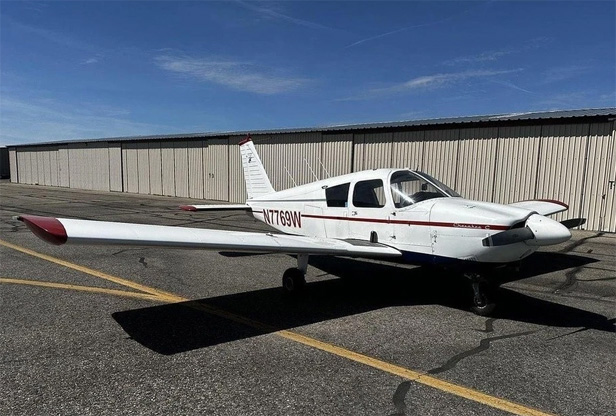
Piper Cherokee For Sale: “Current Annual, All ADs in Compliance, All Logs”

A 1968 Piper PA-28-140/150 Cherokee has been spotted for sale. The listing states (in part):

1968 PA-28-140/150 for sale — N5764F, S/N 28-25067. Total time airframe (TTAF): 4454 hours. Since major overhaul (SMOH): 1855 hours. Equipped with a Lycoming O-320-E2A engine producing 150 HP at 2700 RPM. Engine compression readings are 72/80, 72/80, 74/80, and 72/80. The annual inspection was completed in July 2025. The aircraft features a fresh interior with shoulder harnesses (STC), new tinted windows, and a new glareshield. All Airworthiness Directives (ADs) have been complied with, and all logbooks are available.

The aircraft is located in Lake Worth, Florida and is currently available for US $52,500 although offers are also being accepted. Click here to check out the eBay listing, which includes additional photos and details.

Please Note: This post contains an eBay affiliate link. When you purchase through links on our site, we may earn an affiliate commission.

Posted on

Avro Vulcan AEO Sets Out to Answer Common Cold War Question in New Book

Coming soon from Air World and author Julian Grenfell is The Vulcan B2 in the Cold War: Could the V-Force Have Helped Defeat the Soviets. Written by an Air Electronics Officer with some 4,500 flying hours in Avro Vulcans, the new title sets out to answer the commonly asked question about Cold War V-force nuclear deterrent: “If the balloon had gone up, would it have got through?”

The Vulcan B2 in the Cold War analyses the state of air power in the early years of the Cold War, examining the hot wars of Korea and Vietnam, as well as the early versions of Soviet and Chinese air defence systems and how effective they might be at countering the RAF’s nuclear bomber fleet. The UK’s deterrent had to be survivable of a Soviet pre-emptive ballistic missile strike, or had to be airborne before such a strike took place. The early warning system provided Bomber Command’s headquarters with some 3½ minutes to 4½ minutes warning to get the V-force airborne. The average time to get these aircraft airborne was an astonishing 1 minute 53 seconds.

The author explains the ‘combat environment’ the Vulcan would have to fly into to be able to release its weapon. It would have to be capable of outpacing enemy fighters and avoid detection from the radars of surface-to-air missiles. Such factors were considered in what was called the ‘Probability of Kill’. The effectiveness of the Vulcan in evading Soviet defences was put to the test during several critical moments of the Cold War. One such instance was the Cuban Missile Crisis of 1962.

Another supremely important element of the Vulcan’s role was the nature of the weapon the Vulcan carried and its method of delivery. All of this is discussed in this intriguing investigation into how the Vulcan, and more specifically the B2 variant, would have fared should the Cold War have turned ‘hot’.

The 256 page, hardcover book is currently available for pre-order with release set for May 31.

Product Page

Please Note: This post contains an Amazon affiliate link. When you purchase through links on our site, we may earn an affiliate commission.

Posted on

Italeri Releases CANT Z.1007 Alcione Kit With Six New Liveries

Italeri has released a new boxing of their CANT Z.1007bis Alcione model kit in 1/72 scale.

The CANT Z.1007 Alcione medium bomber, designed by Filippo Zappata, entered service in the late 1930s and was extensively used by the Regia Aeronautica during the Second World War. Characterized by a wooden structure, it featured the typical Italian three-engine configuration. More specifically, its three 1,000 hp Piaggio P.XI radial engines allowed the CANT Z.1007 to reach a maximum speed of 450 km/h. The aircraft could carry 1,200 kg of offensive payload housed in an internal bomb bay. The crew typically consisted of five men, which could increase to six with the addition of a photographic operator for reconnaissance and maritime patrol missions. It was mainly employed in the Mediterranean, Balkan, and North African theaters of operation and is often considered the best medium bomber of the Regia Aeronautica.

The kit (1479) includes new decals with marking options for six aircraft. Click below to check out the Buy on eBay, livery profiles and sprues.

Continue reading Italeri Releases CANT Z.1007 Alcione Kit With Six New Liveries

Please Note: This post contains an eBay affiliate link. When you purchase through links on our site, we may earn an affiliate commission.

Posted on

Kitfox Speedster Project For Sale: “Partially Assembled, With Avionics”

A partially assembled 1996 Kitfox Speedster kit has been spotted for sale. The listing states (in part):

Empennage- rudder, tail, vertical stab, horizontal stab and elevator are ready to cover… The wings will need the laker leading edges installed, the pitot probe installed and some sanding before they are ready to cover… It is sold with an FAA bill of sale. Highlights list of what is included: Delta Pop Experimental antenna (top Mount); Garmin Gap-26 unheated pitot probe and mounting plate; 2-Garmin generic Servo kits; Gtr-200 radio (used) Removed working; GDU-370 non-touch (used) purchased removed working; GTX-327 (Used) purchased removed working; 2-GSA-28 Autopilot servos; Garmin Can bus termination kit; Garmin GNC-507 control panel; GEA-24 Engine interface unit; WAT Microburst III position and strobe lights; G3X LRU standard kit GSU-25C, GTP-59, GMU-11, and configuration module. Complete wiring harness including firewall forward wiring for O-200 by Stark Avionics, Columbus, GA; 3D printed flaperon ends and flaperon clamping fixture; Grove spring gear (gun-drilled); Cleveland 6.00 wheels and brakes; Carbon fiber wing rib inserts (installed); Firewall forward kit for O-200; Laker leading edge kit; Other items included but too long to list.

The aircraft is located in Cornelia, Georgia and is currently available for US $35,000 although bids are also being accepted. Click here to check out the eBay listing, which includes additional photos and details.

Please Note: This post contains an eBay affiliate link. When you purchase through links on our site, we may earn an affiliate commission.

Posted on

Polish Military Aircraft and Pilots 1918-1939 Detailed in New Illustrated History

Coming soon from Air World and author Peter Sikora is Polish Military Aircraft 1918-1939: From Regaining Independence to Hitler’s Blitzkrieg, an illustrated history of Polish military aviation from 1917 to 1939, highlighting innovation, development, and wartime resilience.

The Polish Military Aviation can trace its origins to the second half of 1917, and was officially established when Poland regained her independence on 11 November 1918. The country was then able to build its own air force with men being proud to call themselves Poles again. Despite its difficult rebirth, in the 1930s Poland developed a wide range of its own aircraft. These included the PZL P.6 fighter which gained fame for being the most advanced of its day and the first fighter aircraft made of metal in the world, or PZL P.24 fighter considered by the RAF as a purchase option. Towards the end of the decade, however, foreign aircraft design had overtaken them…

As well as telling the story of the valiant Polish flyers, Polish Military Aircraft 1918-1939 includes a wonderful collection of photographs, the majority of which have never been seen in the West. Together, these take the reader on a journey throughout the early years of Polish military aviation, showing amazing pictures of German, Austro-Hungarian or Russian aeroplanes, in many cases scavenged by the Poles. Also included is selection of British aircraft which were used in Poland, as well as a host of photographs of Polish-designed and built machines, including these that had to face Luftwaffe in September of 1939.

The 272 page hardcover book is currently available for pre-order with release set for May 30.

Product Page

Please Note: This post contains an Amazon affiliate link. When you purchase through links on our site, we may earn an affiliate commission.

Posted on

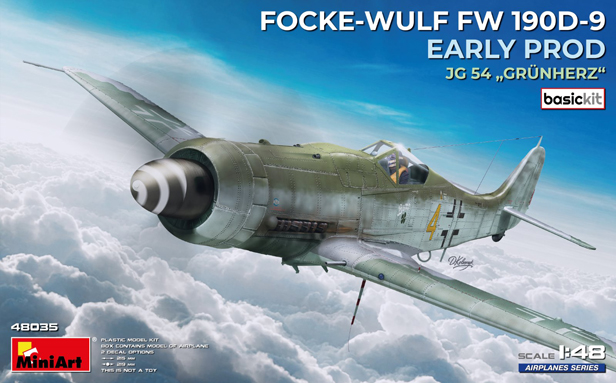
Italeri Releases Fw 190 A-7/A8 Focused on Luftwaffe Aces

Italeri has released a new boxing of their 1/72 Fw 190 A-7/A8 model kit focusing on Luftwaffe aces.

The Focke-Wulf Fw 190 was one of the best aircraft designed during the Second World War. Produced in more than 20,000 units starting in 1941, it was, together with the Messerschmitt Bf 109, the most famous fighter of the Luftwaffe. The Focke-Wulf Fw 190 A-8 was equipped with a BMW 801 D-2 twin-row, 14-cylinder radial engine delivering 1,700 hp, allowing it to reach a maximum speed of 653 km/h. It was heavily armed with two MG 131 machine guns and four 20 mm MG 151 cannons. In the first months of 1944, the A-8 version entered production, featuring an injection system capable of increasing engine power to over 1,900 hp for short periods. The Luftwaffe’s best pilots flew the famous fighter during the Second World War.

The kit (1490) includes markings for aircraft flown by Major. Maj. Heinz “Pritzl” Bär, Obstlt. Otto Kittel, Major Josef “Pips” Priller, Leutnant Anton Rudolf Piffer and Leutnant Gerhard Vogt. Click below to check out the Buy on eBay and box contents.

Continue reading Italeri Releases Fw 190 A-7/A8 Focused on Luftwaffe Aces

Please Note: This post contains an eBay affiliate link. When you purchase through links on our site, we may earn an affiliate commission.

Posted on

Aero L-29 For Sale: “Complete Logs, Pristine Cockpits”

An Aero L-29 has been spotted for sale. The listing states (in part):

The Aero L-29 Soviet Block Trainer is a single engine airplane manufactured by Aero Vodochody in the Czech Republic. This aircraft is known for its simple design and reliability, making it ideal for training purposes. This aircraft was one of 25 L-29s imported from Romania in the 90’s. FAA registered. Complete logs since new. Pristine cockpits with all fire control equipment (panels, sights, etc).

The aircraft is located in Kempner, Texas and is currently available for bidding. Click here to check out the eBay listing, which includes additional photos and details.

Please Note: This post contains an eBay affiliate link. When you purchase through links on our site, we may earn an affiliate commission.

Posted on

U-2 Dragon Lady’s History and Unparalleled Pilot Training Explored in New Pictorial

Coming soon from Air World and author Ken Neubeck is The Lockheed U-2: A Photographic History of the Famous Cold War Spy Plane, which examines the unique history of the aircraft as well as the extensive pilot training and requirements to fly it, which is unparalleled with any other military aircraft training.

The Lockheed U-2 ‘Dragon Lady’ has long been associated as a symbol of the Cold War due to several news events of that era. Much of this was the result of the news surrounding well-known incident when Gary Powers’ U-2 was brought down by Soviet missiles over Russia in 1960 and his subsequent capture. There was also the events in 1962, when Major Rudolf Anderson Jr. was also shot down, this time over Cuba during the Cuban Missile Crisis.

Though it is commonly characterized as a spy plane, as the author reveals here there is so much more to the U-2 than that. Since the Cold War, and even with the advent of satellite and drone technology, many may not be aware that the U-2 is still flying today, and still performing vital surveillance missions in many of the world’s hot spots of military or political turmoil. These can often be demanding missions, flights which take place at high altitude and lasting for many hours, taxing the endurance of even the very best pilots. There is a demanding and robust selection process for potential U-2 pilots, all of which is detailed in Ken Neubeck’s absorbing commentary.

The 256 page hardcover book is currently available for pre-order with release scheduled for May 31.

Product Page

Please Note: This post contains an Amazon affiliate link. When you purchase through links on our site, we may earn an affiliate commission.